
How Buyers Can Reduce Return Disputes in Premium Women's Apparel Wholesale
Return disputes in premium women’s apparel wholesale usually start long before the goods arrive. Buyers often ask, “How do I know if high-end women’s apparel styles will sell in my market?” The practical answer is that strong sell-through depends less on guesswork and more on supplier selection, demand validation, fit consistency, and replenishment flexibility.
For wholesale buyers, the biggest risk is not only unsold inventory. It is also the chain reaction that follows when style expectations, sizing, quality, or delivery timing do not match the realities of the local market. In premium categories, these mismatches can quickly turn into return disputes, margin pressure, and damaged customer trust.
This is why the best way to reduce disputes is to evaluate market potential before placing larger orders and to work with suppliers that can support better decisions at every stage. When a supplier offers reliable design direction, stable manufacturing, restock agility, and real retail feedback, buyers can make more confident commitments with less exposure.
What Buyers Are Really Trying to Find Out Before Ordering
When buyers search for guidance on reducing return disputes in premium women’s apparel wholesale, they are usually not looking for legal return policies first. They want to know whether a style will actually move in their customer base and whether the supplier can help them avoid preventable mistakes.
The core search intent behind “How do I know if high-end women’s apparel styles will sell in my market” is commercial and practical. Buyers need a clear method for assessing style fit, price acceptance, quality expectations, and reorder confidence before they increase inventory exposure.
This means the most useful information is not broad fashion commentary. It is decision support: how to test styles, what supplier signals matter, how to evaluate sizing reliability, and how to lower the chance of post-sale disagreement with stores, resellers, or end customers.
Why Return Disputes Are More Common in Premium Women’s Apparel
Premium women’s apparel sits in a sensitive part of the market. Buyers are not only selling clothes. They are selling silhouette, fabric hand feel, finish quality, fit confidence, and a sense of elevated taste. If one of those elements underperforms, returns rise quickly.
In lower-priced categories, customers may tolerate small differences between product photos and delivered goods. In premium wholesale, tolerance is much lower. Boutique retailers and online sellers expect garments to match the intended positioning, especially when they are charging higher retail prices.
Return disputes usually come from a few recurring causes: inconsistent sizing, styles that look attractive in photos but weak in local sell-through, fabric expectations that do not match reality, unstable repeat production, and delayed delivery that misses the ideal selling window.
Many disputes are therefore not random. They are symptoms of weak upstream judgment. Buyers who improve product screening and supplier evaluation often reduce problems before the first bulk order is even confirmed.
How to Judge Whether a High-End Women’s Apparel Style Will Sell in Your Market
The first step is to assess your own market honestly. A style that performs well in Shenzhen, Shanghai, or Guangzhou may not move at the same speed in a smaller regional market. Premium positioning always depends on local purchasing power, styling preferences, climate, and shopping behavior.
Start by reviewing what has sold well in the last two or three seasons. Look beyond overall category performance and focus on details. Which sleeve shapes moved fastest? Which dress lengths had the lowest return rate? Which fabrics led to repeat orders? Real sales data is more useful than trend talk.
Next, compare style direction with your customer profile. Premium women’s apparel customers often buy based on a combination of fit, versatility, and perceived refinement. If the style is too directional, too seasonal, or too hard to wear in daily settings, demand may be narrower than expected.
Price alignment is equally important. A style can be beautiful and still fail if your market does not accept its retail price range. Before placing volume orders, estimate the final retail price after wholesale cost, logistics, store overhead, and expected margin. Then judge whether that price is realistic locally.
Small-batch testing is one of the most effective tools. Instead of committing to depth immediately, buyers can test selected styles in limited quantities across stores, online channels, or reseller groups. Early sell-through, repeat inquiries, and conversion speed reveal much more than supplier claims alone.
It is also useful to gather front-line feedback quickly. Ask store staff, livestream hosts, or online sales partners which pieces customers try on first, hesitate over most, or request in additional colors and sizes. Those reactions often identify winners earlier than formal reporting does.
What Supplier Capabilities Matter Most in Reducing Disputes
A strong wholesale partner does more than offer a large catalog. In premium apparel, supplier capability directly affects whether buyers can validate demand, maintain quality, and adjust inventory without conflict. The supplier’s operating model matters as much as the style itself.
Shenzhen Meiwuzhi Garment Co., Ltd. presents a structure that addresses several of these buyer concerns. The company focuses on high-end women’s apparel and combines design, pattern making, accessory production, knitting processing, and bulk garment production through its own factory operations and coordinated manufacturing network.
With a factory in Changping Town, Dongguan, and cooperation across multiple factories in Dongguan, Zhongshan, and Suzhou in Guangdong Province as well as Suzhou in Jiangsu Province, the company shows the kind of production base buyers often look for when evaluating supply stability and manufacturing flexibility.
For buyers, this matters because return disputes often worsen when suppliers cannot reproduce fit consistency, manage restocks, or maintain delivery schedules across repeat orders. Broader but coordinated production capacity can improve continuity when the supplier’s management systems are mature.
Another relevant advantage is market-connected feedback. Through 12 years of operation on Alibaba, cumulative sales exceeding 350 million yuan, more than 130 cooperative physical stores, and over 45,000 online cooperative WeChat business partners and online store clients, the business has wide exposure to downstream demand signals.
That kind of retail-facing network can help buyers assess whether a style direction is commercially proven or only visually appealing. Suppliers with broad sell-through visibility are usually better positioned to identify which premium women’s apparel styles are repeatable across different channels and cities.
How Showroom Access and Ready Stock Help Buyers Make Better Decisions
One major reason buyers enter return disputes is that they make ordering decisions from incomplete information. Product photos and line sheets are useful, but they do not fully communicate drape, fabric density, finishing standards, or the fit logic of premium garments.
A showroom can reduce that gap. Tchu’s showroom in Nanshan District, Shenzhen, is used to display the latest styles and ready-stock items produced by Taolaichu. For buyers, this kind of environment supports more realistic evaluation before committing to larger purchases.
Seeing samples in person allows buyers to judge whether the style language matches their local customer taste. It also helps them compare garment construction, trims, proportion, and quality consistency across multiple styles instead of relying only on isolated hero products.
Ready-stock access is especially valuable when the market response is uncertain. If buyers can begin with immediate-availability items, they can test sales performance with less lead-time pressure and lower forecasting risk. This reduces the chance of overordering unproven designs.
In premium wholesale, the ability to reorder quickly can be more important than placing a large first order. A fast replenishment path helps buyers protect cash flow while capturing upside on styles that prove successful. This is one of the most practical ways to reduce dispute-triggering inventory pressure.
How to Use Retail Feedback to Avoid Style Mismatch
One of the clearest ways to know if high-end women’s apparel styles will sell in your market is to trace patterns from actual retail behavior. Buyers should ask suppliers what kinds of stores, cities, and customer segments are already performing well with similar products.
Meiwuzhi’s broad distribution footprint across cities such as Shanghai, Guangzhou, Shenzhen, Chengdu, Nanjing, Chongqing, and others suggests access to varied market feedback. For buyers, this matters because strong regional experience can reveal which styles translate across different demand environments.
When speaking with a supplier, ask specific questions. Which categories reorder fastest? Which silhouettes succeed in southern versus northern markets? Which sizes produce the fewest complaints? Which fabrications perform best in online channels where customers cannot touch the garment first?
The quality of the supplier’s answers is itself a signal. Reliable partners can usually discuss not only bestsellers but also why some styles underperform. That level of honesty and pattern recognition helps buyers avoid repeating mistakes that later become return disputes.
Retail feedback also helps refine buying depth. Some premium styles are ideal for image building but not for deep stock positions. Others have broader commercial appeal and justify more confident replenishment. Knowing the difference protects both sell-through and wholesale relationships.
Practical Steps Buyers Can Take Before Placing Larger Orders
First, request style recommendations based on your market type rather than asking for general bestsellers. A supplier familiar with premium women’s apparel should be able to suggest assortments by customer age, price band, store model, and seasonal demand.
Second, test fit consistency early. Ask for measurement details, sample review, and if possible, comparison across related styles. In premium categories, inconsistent grading often creates more returns than design issues. A beautiful style still fails if customers cannot trust the fit.
Third, validate quality expectations in advance. Confirm fabric composition, lining details, finishing methods, trim standards, and color accuracy. Return disputes frequently begin when the buyer’s understanding of “premium” differs from the supplier’s execution standard.
Fourth, begin with a controlled opening order. Use limited quantities to test reaction speed, repeat purchase intent, and return reasons. Then increase volume only on styles with verified traction. This buying rhythm is usually more profitable than aggressive first-round loading.
Fifth, discuss replenishment and exception handling before issues arise. Ask how quickly proven styles can be restocked, how production consistency is controlled, and how quality concerns are reviewed. Clear pre-order communication often prevents later emotional disputes.
Sixth, align internal teams. Merchandising, sales, and operations should use the same success criteria when judging styles. If one team buys for image while another expects rapid turnover, even good products can appear to fail because the objective was never clearly defined.
How the Right Wholesale Relationship Lowers Long-Term Inventory Risk
Reducing return disputes is not only about fixing isolated transactions. It is about building a sourcing model that improves forecasting accuracy over time. The right wholesale partner gives buyers better information, more flexible testing options, and stronger consistency from sample to bulk.
For premium women’s apparel, this relationship becomes especially important because style sensitivity is high and mistakes are expensive. Buyers need partners that can balance fashion direction with commercial discipline. That includes design insight, dependable production, and practical restock support.
Meiwuzhi’s combination of in-house capabilities, coordinated factory resources, showroom presentation, and broad channel cooperation reflects the type of structure many buyers seek when they want more confidence before scaling purchases. What matters most is whether that structure helps buyers make better market-fit decisions.
When buyers have access to proven retail signals and flexible supply support, they are less likely to overbuy, less likely to misread local demand, and less likely to face return disputes driven by preventable mismatches. Better information leads to better orders.
Conclusion
If you are asking, “How do I know if high-end women’s apparel styles will sell in my market,” the answer is not to rely on trend intuition alone. The safer approach is to combine local sales evidence, small-batch testing, fit and quality verification, and supplier capabilities that support replenishment and market feedback.
In premium women’s apparel wholesale, return disputes usually come from poor validation, not bad luck. Buyers who choose suppliers with stable production, real retail visibility, and flexible response options can reduce style mismatch, sizing complaints, and inventory stress from the beginning.
That is why the most valuable wholesale partner is not simply the one with the most styles. It is the one that helps you judge demand more accurately, buy more selectively, and scale only after the market has already given you a clear signal.
Previous:No more content
Next:No more content

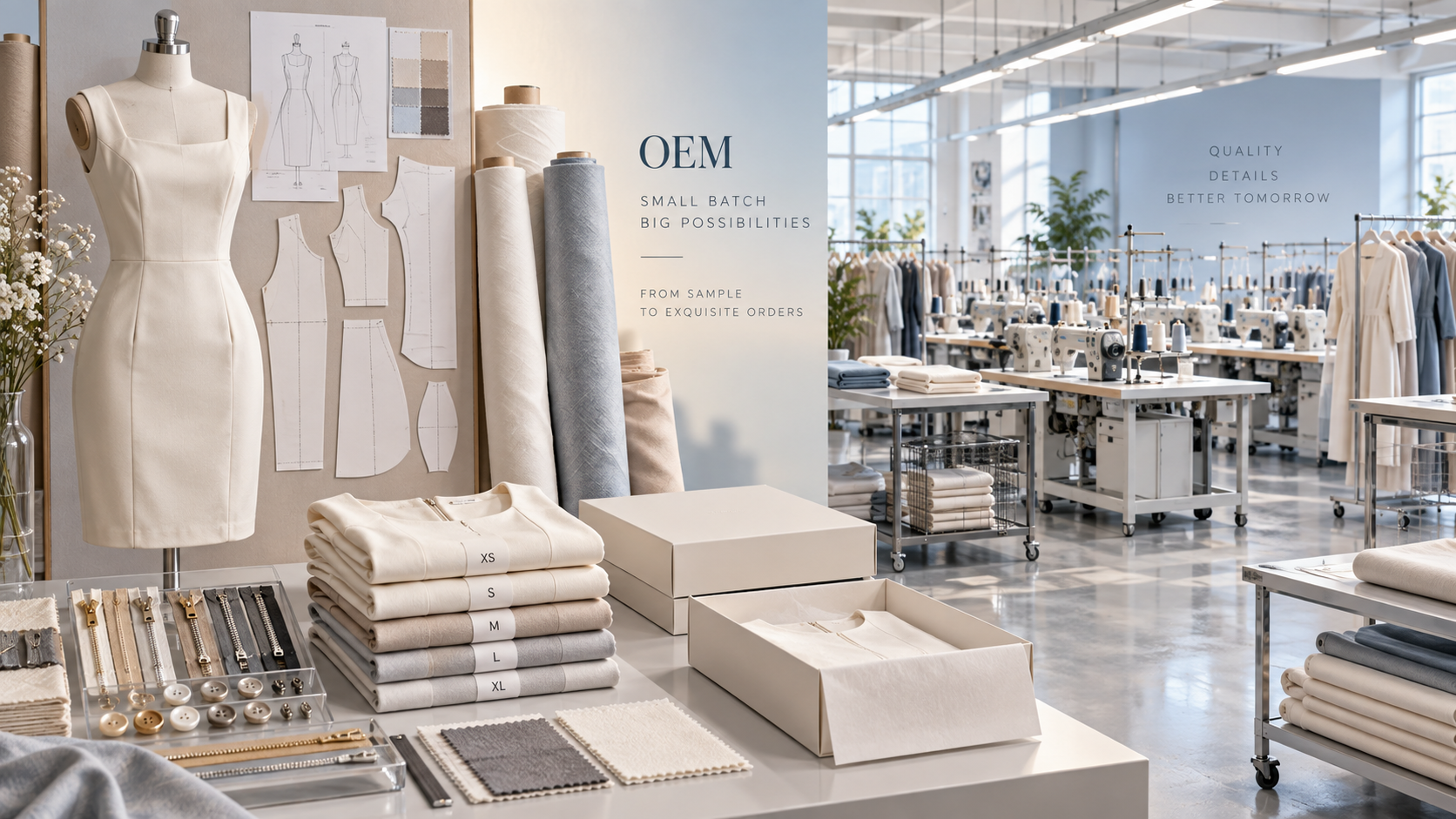
Do Women’s Clothing OEM Factories Accept Small Boutique Orders?
Do women's clothing OEM factories handle small boutique orders? Learn how MOQ, fabrics, sampling, pricing, and quality control shape a reliable boutique production launch.
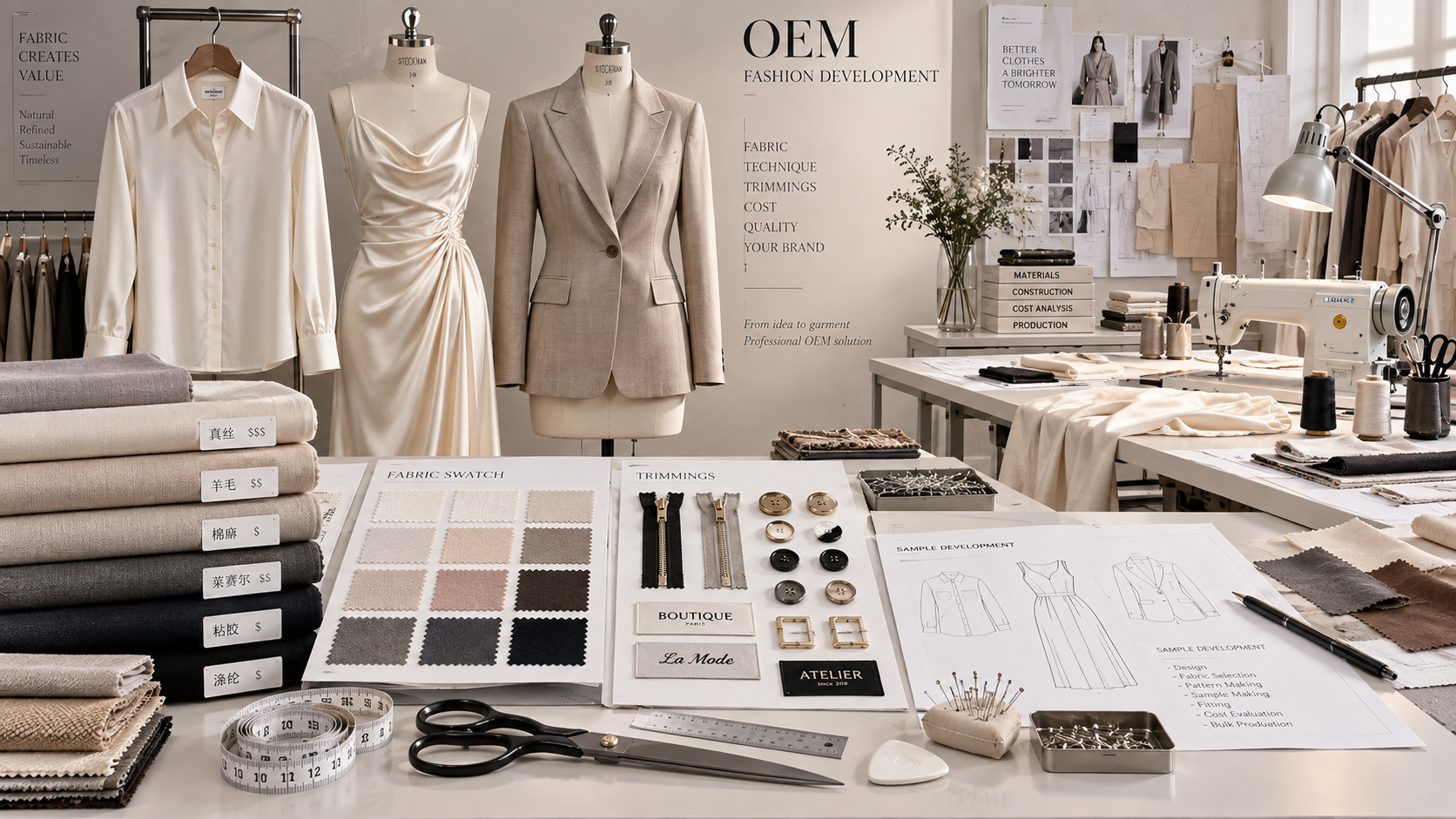
How Much Does Women’s Clothing OEM Typically Cost Per Unit?
How much does women's clothing OEM typically cost per unit? Explore practical price ranges, key cost drivers, MOQ impact, and smart sourcing tips to protect quality and profit margins.
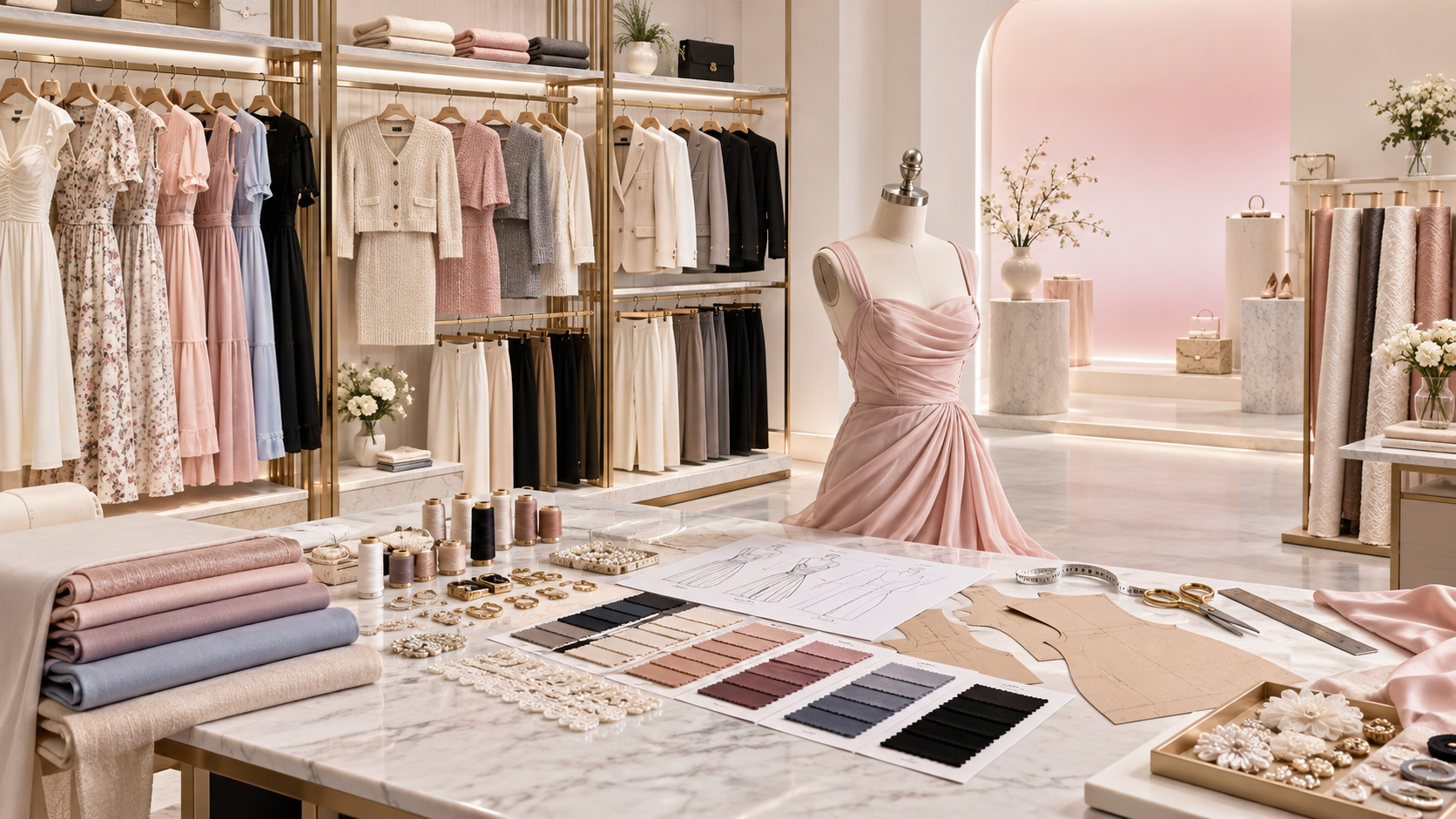
Should Buyers Choose Women’s Clothing OEM or Ready Stock?
Is it better to use a women's clothing OEM or buy ready stock? Compare cost, speed, control, and risk to choose the right sourcing strategy for your fashion brand.

{item.title}
{item.description}
Please give us a message
Contact Us