
How Buyers Should Review Payment Terms for Premium Women's Apparel Orders
Before placing premium women’s apparel orders, buyers should understand what payment terms are typical for high-end women's apparel factory orders and what quality documents should high-end women's apparel suppliers provide. Just as important are clear contracts, return policies, and shipping choices. Reviewing these details carefully helps reduce inventory risk, protect cash flow, and ensure the styles you choose can truly succeed in your market.
For wholesalers, boutique retailers, online sellers, and new brand founders, payment terms are not just a finance topic. In high-end women’s fashion, they directly affect production scheduling, fabric commitment, quality control, shipment release, and your ability to react to slow-moving stock within 30 to 90 days after delivery.
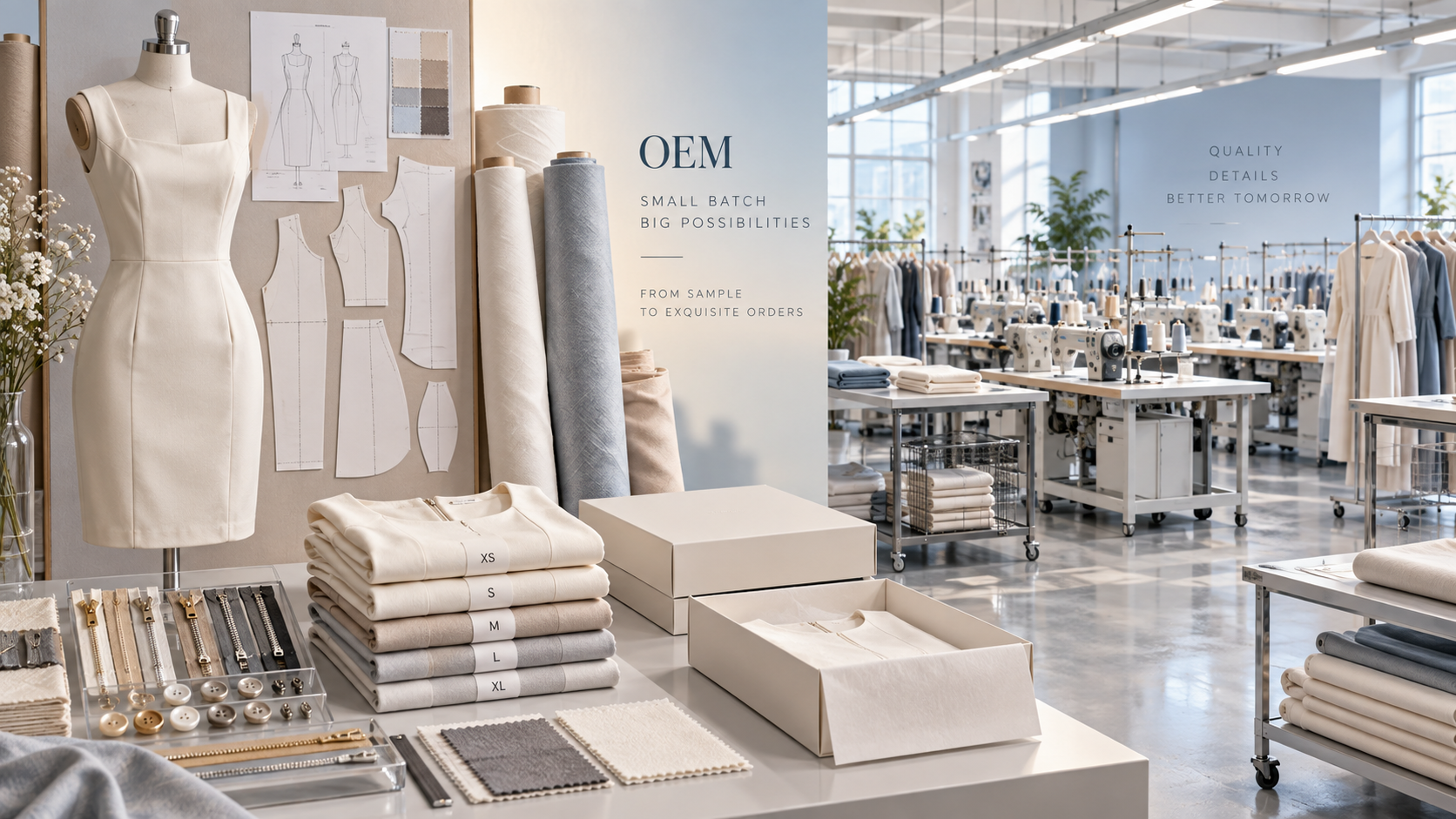
This matters even more when working with a supplier that combines in-house development and wider factory coordination. Shenzhen Meiwuzhi Garment Co., Ltd., with its own factory in Changping, Dongguan, collaboration across more than 10 partner factories, and a 12-year Alibaba operating history, reflects a supply model many buyers now prefer: design support, pattern making, knitting, accessories, bulk production, and market-facing showroom display in one linked network.
If you are evaluating premium women’s apparel sourcing, the right review framework should cover 6 core areas: deposit structure, final payment trigger, documentation, contract clauses, return handling, and logistics timing. Missing even 1 of these can create margin pressure that is far more expensive than a small unit-price difference.
Why Payment Terms Need Special Attention in Premium Women’s Apparel
High-end women’s apparel orders are different from basic commodity garments because they often involve more style variation, more fabric sensitivity, and stricter finishing standards. A typical order may include 20 to 80 SKUs, multiple size ratios, and lower per-style volume, which means cash flow exposure is spread across many fashion bets rather than one simple replenishment line.
Buyers often ask, “What payment terms are typical for high-end women's apparel factory orders?” In practice, common structures include 30% deposit and 70% before shipment, 50% deposit for custom fabrics or trims, or staged payment tied to sample approval, bulk cutting, and final inspection. The more customized the order, the less flexible the payment structure usually becomes.
Why premium orders carry higher risk than basic apparel buys
Premium fashion uses more expensive inputs such as specialty woven fabrics, custom dye lots, linings, beading, embroidery, lace, or knit structures. Once these materials are cut, their resale value falls quickly. That is why factories usually ask for an advance payment high enough to cover material exposure, often within 3 to 7 days after order confirmation.
For buyers, the commercial risk is different: style acceptance in the local market may only become clear after 2 to 4 weeks of selling. This is why questions like “How do I know if high-end women's apparel styles will sell in my market” and “How to manage inventory risk when stocking high-end women's apparel” should be reviewed together with payment terms, not after payment is already locked.
Common payment structures buyers should compare
Before approving a supplier, buyers should compare commercial terms in a structured way. The table below shows how different payment models affect risk, flexibility, and cash flow in premium women’s apparel sourcing.
The best term is not always the lowest deposit. The best term is the one that matches style complexity, production cycle, and your ability to sell through inventory within the first season. For many buyers, a slightly higher deposit is acceptable if documentation, QC discipline, and delivery visibility are stronger.
Four payment checkpoints to request
- Confirm the exact deposit percentage and payment deadline, usually within 3 to 5 working days.
- Define the trigger for balance payment: inspection pass, packing completion, or pre-shipment approval.
- State whether sample fees, pattern fees, and fabric development charges are refundable or deductible.
- Clarify penalties or remedies if delivery is delayed by more than 7 to 14 days beyond the agreed window.
What Buyers Should Verify Before Sending Any Deposit
A deposit should only be released after buyers complete a document and process review. In premium women’s apparel, weak paperwork often leads to the most expensive disputes: wrong fabric hand feel, color mismatch, trim inconsistency, size deviation, and unclear return eligibility after goods arrive.
This is where the question “What quality documents should high-end women's apparel suppliers provide” becomes central. Good suppliers should be able to provide at least 5 to 8 key records depending on order type, especially when styles involve custom pattern making, specialty knitting, or sustainable fabrics.
Core documents that protect the buyer
The exact paperwork may differ by product category, but buyers should request a complete documentation pack before bulk production begins. The following table outlines the most practical files to review and why they matter in wholesale purchasing.
If a supplier cannot provide these basic records consistently, buyers should be cautious, even if the quoted price is attractive. In premium apparel, clarity before production is usually cheaper than negotiation after shipment.
Questions to ask about custom development and sustainability
Many buyers also ask, “Do high-end women's apparel factories accept custom pattern making?” and “Can high-end women's apparel be produced with sustainable materials?” The answer is often yes, but both choices change payment and delivery expectations. A custom pattern may add 5 to 15 days, while specialty sustainable fabrics can extend sourcing lead time by 7 to 21 days depending on mill availability.
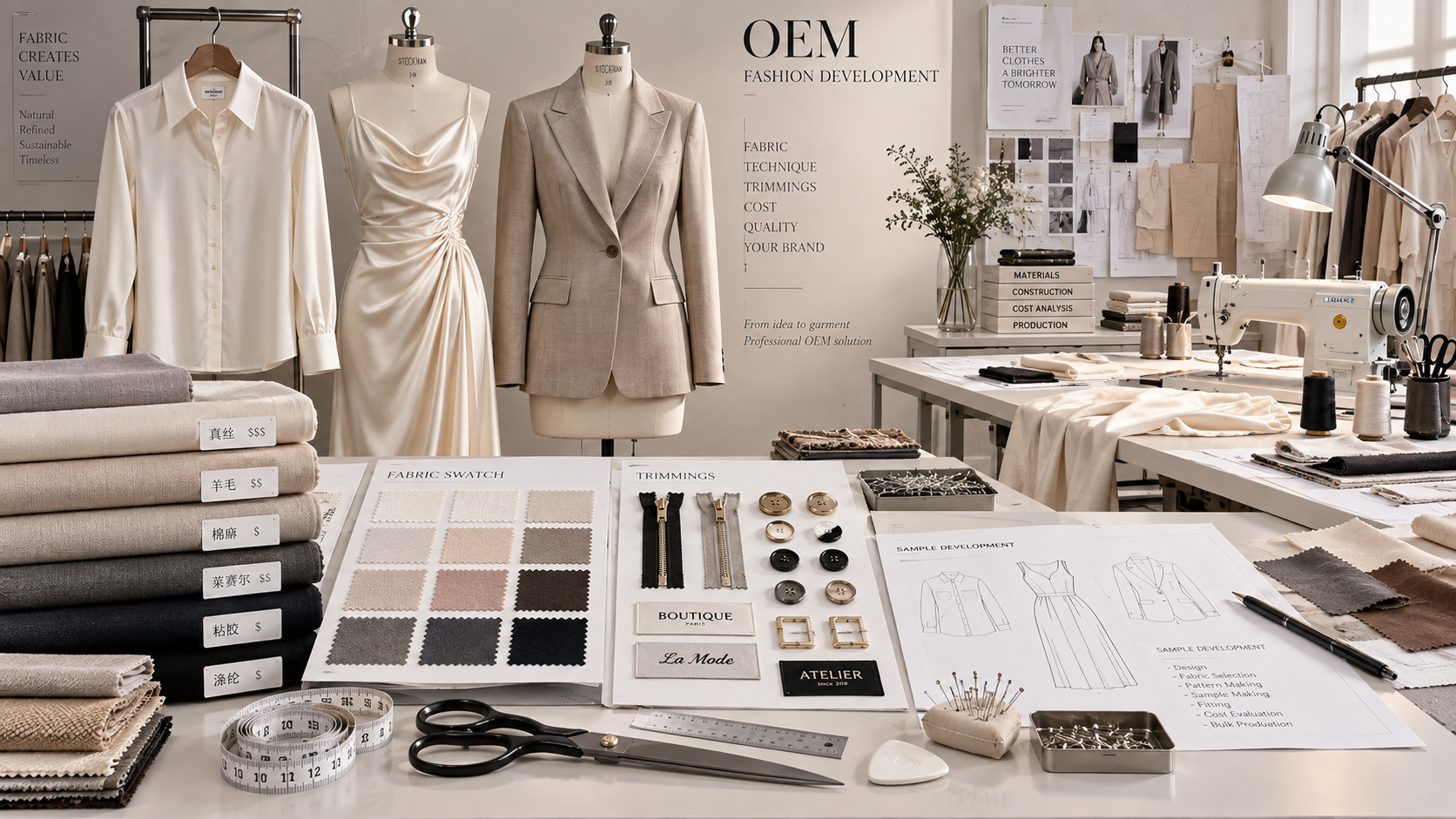
For a supplier like Meiwuzhi, where the own factory covers design, pattern making, accessories, knitting processing, and bulk production, buyers should ask which steps are handled internally and which are coordinated with partner factories. This helps estimate lead time reliability and identify where approval delays are most likely to occur.
Minimum review checklist before deposit release
- Approve the sample and note any revision points in writing.
- Confirm MOQ by color and by size range, not just total order quantity.
- Check whether fabric substitutions require your written approval.
- Confirm production lead time, usually 20 to 45 days after approvals, depending on complexity.
- Define defect tolerance, measurement tolerance, and claim window after receipt.
Contract Clauses, Returns, and Inventory Risk Control
Payment terms only work well when matched with a clear wholesale agreement. Buyers frequently ask, “What should be in a contract for high-end women's apparel wholesale agreement?” The answer is simple: every commercial promise that matters to margin should appear in writing, especially quality standards, delivery windows, return conditions, and shipment responsibilities.
This is also where “How to handle returns on high-end women's apparel wholesale purchases” must be addressed. Return rights in B2B apparel are usually narrower than in retail. Many factories will not accept returns for slow sales, but they may accept claims for manufacturing defects, major measurement errors, or shipment shortages if reported within 3 to 10 days after receipt.
Contract terms that should never be left vague
- Exact SKU list, color references, size breakdown, and order quantity.
- Fabric composition and whether substitutions are allowed.
- Approved sample as the bulk benchmark.
- Production and shipment timeline, including delay notification rules.
- Inspection method: in-line, final, third-party, or buyer-appointed review.
- Return or claim process, including evidence required and response time.
- Payment release trigger and ownership of goods before final settlement.
How to reduce inventory risk before goods arrive
A buyer evaluating “Is high-end women's apparel resale a good business for new entrepreneurs” should be realistic: it can be attractive, but success depends on buying discipline more than gross margin on paper. New sellers often overbuy 10 to 20 styles without enough local demand testing, then discover only 30% to 40% of the assortment moves quickly.
A safer approach is to start with narrower depth and stronger validation. Review 3 things before placing larger repeat orders: first, whether your target customer accepts the price point; second, whether the fit profile matches your market; third, whether at least 2 sales channels can absorb stock if one channel slows down.
For example, a supplier connected to both physical retailers and online wholesale demand can provide broader style feedback. Meiwuzhi’s network, including over 130 cooperating physical stores and more than 45,000 online cooperative WeChat business partners and online store clients, suggests a market-facing environment where buyers can ask better questions about style rotation, reorder logic, and seasonality risk.
Practical ways to manage stock exposure
- Start with a test order covering 5 to 12 key styles instead of a broad first-season buy.
- Prioritize styles with stronger size tolerance, such as knits or adjustable silhouettes.
- Negotiate split shipments if the order spans more than 30 days of production.
- Use pre-selling, live-streaming, or showroom preview data before confirming repeat volume.
- Review markdown risk at the 45-day and 90-day mark, not just at season end.
Shipping Choices and Final Payment Release
Another frequent question is, “What shipping options exist for high-end women's apparel wholesale orders?” Buyers should choose logistics based on season timing, unit value, and packaging sensitivity. Premium garments with embroidery, structured tailoring, or wrinkle-sensitive fabrics may justify faster transport if late arrival would destroy the selling window.
In many apparel programs, the real shipping decision is not air versus sea alone. It is whether the order should move in 1 batch or 2 batches, whether urgent SKUs should be split, and whether the balance payment is released before loading or after final carton verification. These details affect both cost and sell-through timing.
Comparing shipping methods for premium apparel
The table below shows how common shipping methods differ for high-end women’s apparel wholesale orders. Buyers should compare not only transit time, but also handling risk, carton compression, and seasonal urgency.
For many buyers, split shipment is underused. It can reduce inventory burden, improve early cash recovery, and lower markdown exposure if the first batch validates demand before the second batch arrives.
Final payment should follow a release checklist
Before paying the balance, buyers should complete a 5-point review: inspection result, packing list accuracy, carton count, shipping mark confirmation, and image or video proof of finished goods. If the order is large, add a spot check for top-selling SKUs and high-risk embellishment styles.
This step is especially important when the supplier works across multiple production resources. A coordinated network can improve capacity and style range, but buyers should still confirm where each order stage is controlled and how final QC is unified before shipment leaves the factory.
How Buyers Can Build a Smarter Long-Term Supplier Relationship
The strongest buying results usually come from repeatable processes, not one-time bargaining. Once a supplier proves dependable on sampling, bulk consistency, and communication speed, buyers can gradually improve terms through order planning instead of pushing only on price.
A practical path is to begin with a smaller order, review sell-through within the first 30 to 60 days, then discuss reorder timing, seasonal capsules, and possible exclusivity by territory or channel. This approach is often more valuable than chasing the lowest initial quote from an untested factory.
What experienced buyers typically improve over time
- Better forecast accuracy by category, not just total units.
- Faster sample approval cycles, often cut from 10 days to 5 to 7 days.
- More precise reorder decisions based on proven winners.
- Reduced claim rates through tighter tech packs and fit comments.
- More flexible payment and shipment planning after stable cooperation is established.
When evaluating suppliers in the premium women’s apparel segment, buyers should look for evidence of integrated development ability, responsiveness, and market understanding. A company such as Shenzhen Meiwuzhi Garment Co., Ltd., with its own production functions, showroom support, and broad downstream cooperation across physical and online channels, may suit buyers who need both manufacturing execution and style commercialization support.
Careful review of payment terms, quality documents, contracts, return handling, and shipping choices helps buyers protect cash flow while improving the odds that each collection performs in the market. If you are planning premium women’s apparel sourcing and want a more reliable structure for development, wholesale ordering, or repeat production, contact us to discuss your requirements, request a tailored sourcing plan, or learn more about available women’s fashion solutions.
Previous:No more content
Next:No more content

Do Women’s Clothing OEM Factories Accept Small Boutique Orders?
Do women's clothing OEM factories handle small boutique orders? Learn how MOQ, fabrics, sampling, pricing, and quality control shape a reliable boutique production launch.
How Much Does Women’s Clothing OEM Typically Cost Per Unit?
How much does women's clothing OEM typically cost per unit? Explore practical price ranges, key cost drivers, MOQ impact, and smart sourcing tips to protect quality and profit margins.
Should Buyers Choose Women’s Clothing OEM or Ready Stock?
Is it better to use a women's clothing OEM or buy ready stock? Compare cost, speed, control, and risk to choose the right sourcing strategy for your fashion brand.

{item.title}
{item.description}
Please give us a message
Contact Us