
How to start a women's clothing line using OEM manufacturing in 2026
Starting a women’s clothing line using OEM manufacturing in 2026 isn’t about finding *any* factory—it’s about identifying the right kind of partner at the right stage of your brand’s development. Many founders assume OEM means “handing off sketches and waiting for boxes,” but in practice, the gap between a good idea and a sellable garment hinges on three things: how deeply your OEM can support design iteration, how flexibly they handle small-batch realism, and whether their production ecosystem matches your actual go-to-market plan—not just your long-term vision.
First, clarify what “OEM” really means for you—right now
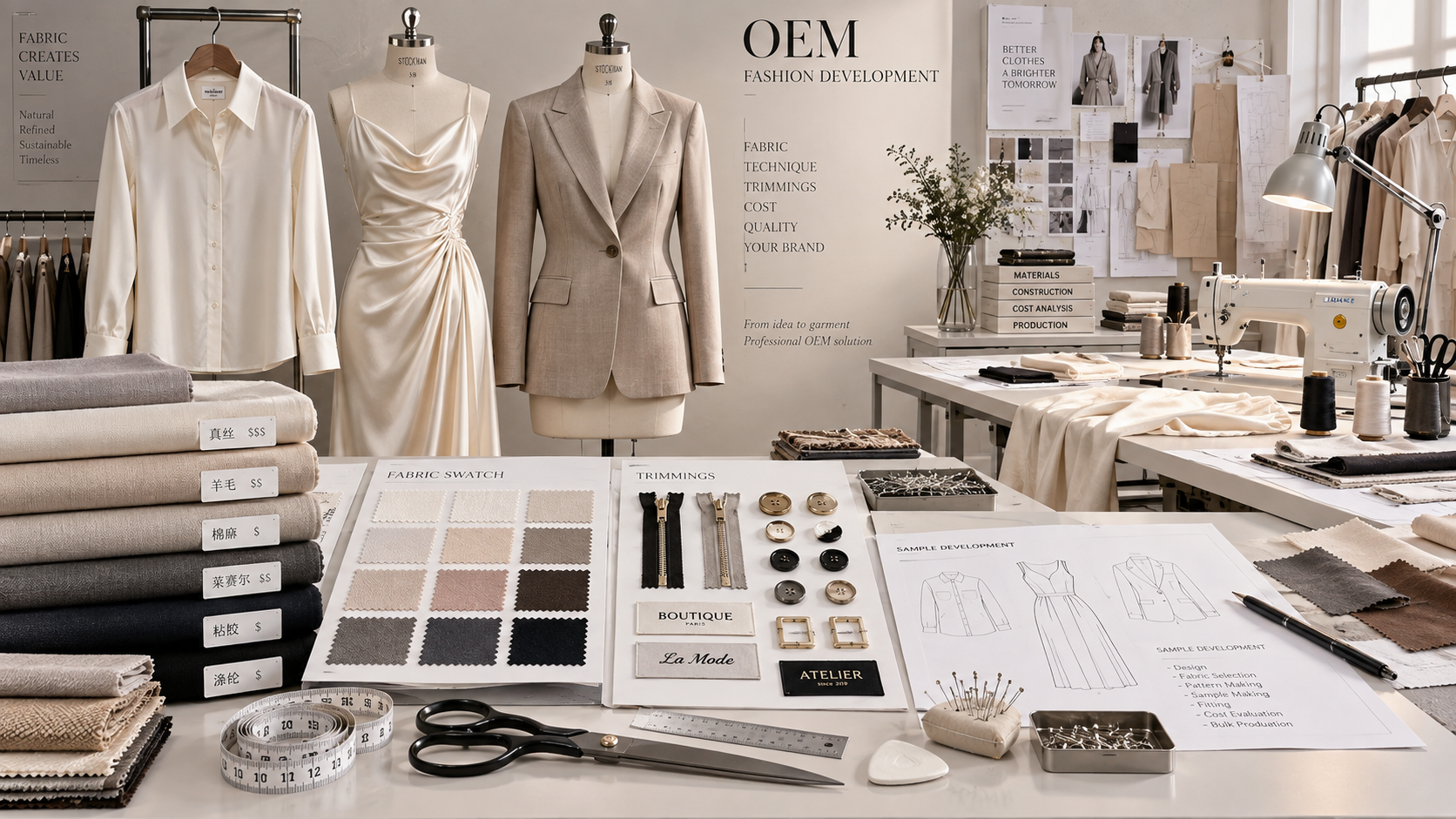
OEM (Original Equipment Manufacturing) is often misused in fashion. Some suppliers call themselves OEM if they sew to your spec—but offer no pattern adjustments, no fabric sourcing guidance, and no fit feedback. True OEM support for early-stage women’s apparel brands includes design translation: turning mood boards or rough sketches into technical flats, grading patterns across sizes, producing accurate fit samples, and adjusting based on real-body wear tests—not just mannequin photos. If your current concept lives in Canva mockups or Instagram saves, you need a partner who bridges that gap before bulk production begins. That’s not optional—it’s where most new lines stall.
This matters because women’s sizing, drape, and construction expectations have shifted significantly since 2020. Consumers now expect consistent fit across tops, bottoms, and dresses—even in sub-500-unit batches. A factory that only executes pre-approved tech packs may deliver technically correct garments that still feel “off” to customers: sleeves too tight across the bicep, waistbands rolling, knit fabrics losing shape after one wash. These aren’t quality failures—they’re design-execution gaps. The right OEM doesn’t just manufacture; they co-validate decisions with you, using real-time fit data and material behavior knowledge.
Your first 100 units shouldn’t cost like your first 10,000
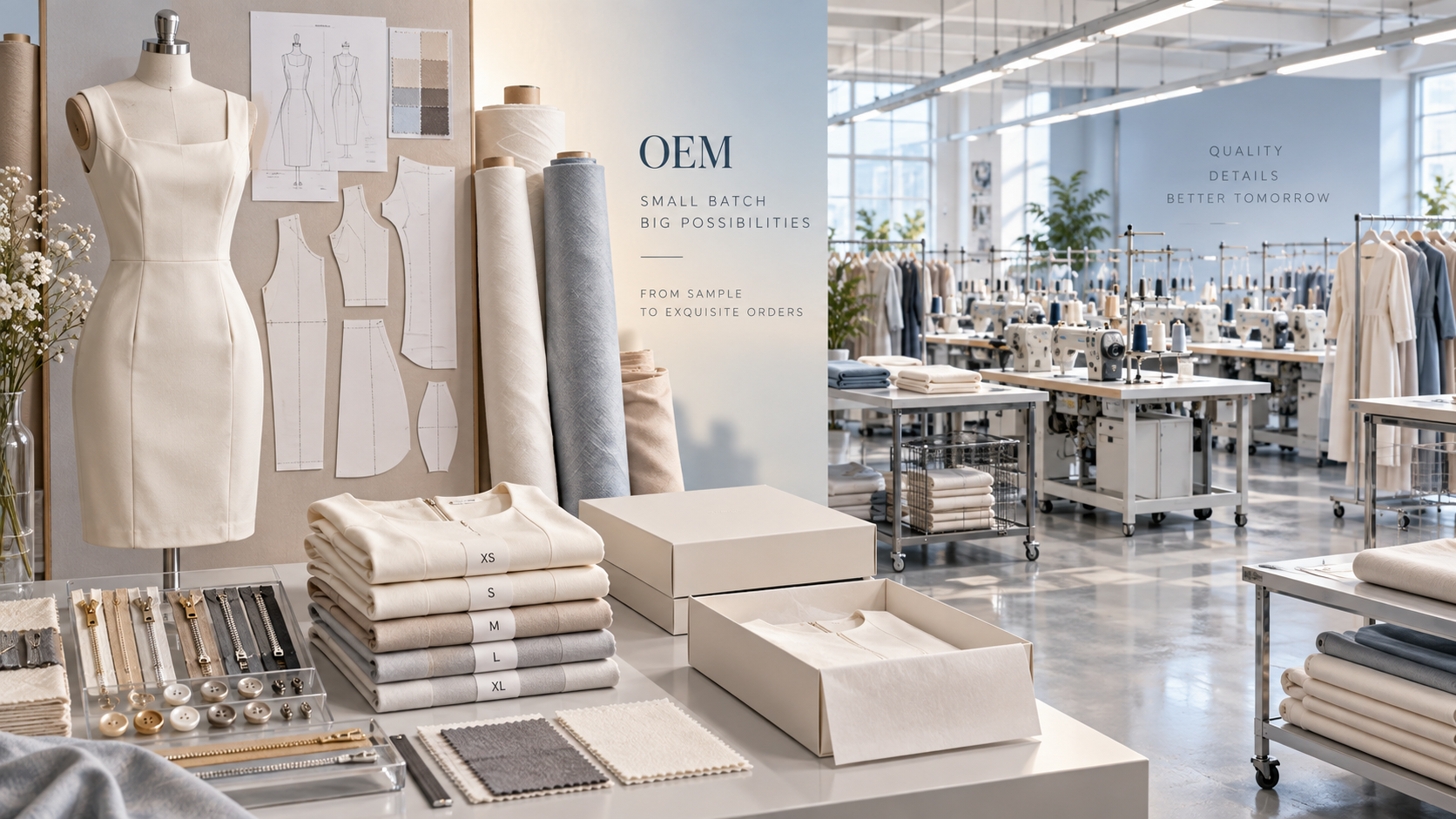
New brands often overcommit to MOQs (minimum order quantities) before testing demand. In 2026, that’s increasingly unnecessary—and risky. Leading OEM partners now structure production in tiers: prototype (1–3 pieces), pre-production sample (5–10), fit batch (50–100), and then scalable bulk. Each tier serves a distinct purpose: the prototype validates construction logic; the fit batch tests real-wear performance across diverse body types; the bulk run locks in cost and timeline.
What separates effective OEM partners is how they treat those early tiers—not as loss leaders, but as integrated learning steps. For example, some factories absorb minor pattern tweaks during the fit batch phase without recharging for new sampling. Others provide digital fit reports with annotated photos and measurement deviations—so you know *why* a sleeve feels restrictive, not just that it does. This level of collaboration prevents costly rework later and builds confidence before scaling.
Location and network matter more than “certifications”
You’ll see many factories highlight ISO or BSCI certifications. Those are baseline hygiene factors—not differentiators. What actually impacts speed, flexibility, and problem-solving is physical proximity to key inputs: fabric mills, trim suppliers, dye houses, and logistics hubs. Dongguan, Zhongshan, and Suzhou aren’t popular by accident. They host dense clusters of specialized subcontractors—knit mills that adjust gauge mid-run, button suppliers with 200+ stock finishes, embroidery units that digitize logos in under 48 hours. A single OEM with direct access to that ecosystem can compress timelines that would take weeks elsewhere.
But access alone isn’t enough. You need coordination. That’s why some OEMs operate across multiple cities *with shared systems*: unified ERP tracking from pattern to packing, synchronized QC protocols, and cross-factory capacity sharing. When your best-selling dress sells out in week two, a truly integrated network can shift 300 units from a Zhongshan knit facility to a Dongguan assembly line—without retooling delays or inconsistent stitching. That responsiveness isn’t built into every “OEM” label. It’s earned through years of managing real volatility.
Don’t outsource your brand voice—outsource execution
Your OEM should never define your aesthetic. But they *must* understand how to protect it. That means knowing when a “premium” finish requires specific needle types and thread tension, how certain silks behave differently on high-speed lockstitch vs. coverstitch machines, or why a curved hem on lightweight rayon needs stay-stitching *before* pressing—not after. These aren’t theoretical details. They’re the difference between a $129 dress that feels luxurious and one that looks like fast fashion.
Shenzhen Meiwuzhi Garment Co., Ltd., for instance, handles design, pattern-making, accessory production, knitting, and bulk sewing under one operational umbrella—and coordinates with over ten certified factories across Guangdong and Jiangsu. Their own facility manages the front-end creative work, while their extended network handles volume-sensitive stages. This structure avoids the handoff friction common in fragmented OEM arrangements. Their Taolaichu showroom in Shenzhen isn’t just a sales space—it’s where emerging brands physically test styles against real hangers, lighting, and fabric drape before committing. Over 130 physical retail partners and 45,000+ online clients didn’t scale through specs alone. They scaled because the OEM understood how a garment moves, sells, and survives its first 30 wears.
Ask these four questions before signing anything
- “Can you produce my first 80 units using the same fabric lot, trims, and operator team as my fit batch?” — If not, consistency will break.
- “What’s your average turnaround time from approved tech pack to shipped fit samples—and what’s included in that timeline?” — Watch for hidden steps like “fabric procurement lead time” buried outside quoted dates.
- “Do you share fit feedback digitally—with annotated photos and measurement deltas—or only verbally?” — Verbal notes get lost. Digital records build institutional memory.
- “If I need to adjust one style mid-bulk (e.g., lengthen sleeves), what’s your process—and is there a minimum change quantity?” — Flexibility here signals real operational control.
Starting a women’s clothing line using OEM manufacturing in 2026 isn’t about minimizing cost—it’s about maximizing learning velocity. Your first collection isn’t meant to be perfect. It’s meant to teach you what customers respond to, what fits need refinement, and which production choices create real margin—or hidden risk. Choose an OEM that treats your early batches as collaborative diagnostics, not transactions. Because the fastest path to a sustainable brand isn’t skipping steps. It’s making each one count.
Previous:No more content
Next:No more content

Do Women’s Clothing OEM Factories Accept Small Boutique Orders?
Do women's clothing OEM factories handle small boutique orders? Learn how MOQ, fabrics, sampling, pricing, and quality control shape a reliable boutique production launch.
How Much Does Women’s Clothing OEM Typically Cost Per Unit?
How much does women's clothing OEM typically cost per unit? Explore practical price ranges, key cost drivers, MOQ impact, and smart sourcing tips to protect quality and profit margins.
Should Buyers Choose Women’s Clothing OEM or Ready Stock?
Is it better to use a women's clothing OEM or buy ready stock? Compare cost, speed, control, and risk to choose the right sourcing strategy for your fashion brand.

{item.title}
{item.description}
Please give us a message
Contact Us