
Should brand founders visit OEM factories before placing bulk orders?
Should brand founders visit OEM factories before placing bulk orders?
Yes—but not just to “check boxes.” If you’re launching a premium women’s apparel line and planning your first 5,000-unit order, walking into a factory isn’t about ticking off a due diligence item. It’s about catching the gap between what’s promised on Alibaba and what actually lands in your warehouse six weeks later: inconsistent seam allowances, fabric shrinkage no one mentioned, or a fit that looks right on a mannequin but collapses on real bodies.
We’ve seen it too many times—founders who skip the visit, then spend three months reworking samples, renegotiating deadlines, or absorbing freight costs for air-shipped replacements. That’s not inefficiency. It’s misalignment, baked in before cutting the first pattern.
What changes when you go in person—and what doesn’t
A factory visit won’t fix poor communication habits, unrealistic timelines, or mismatched expectations about minimums or MOQ flexibility. But it *does* expose where those gaps live—in real time, in physical space.
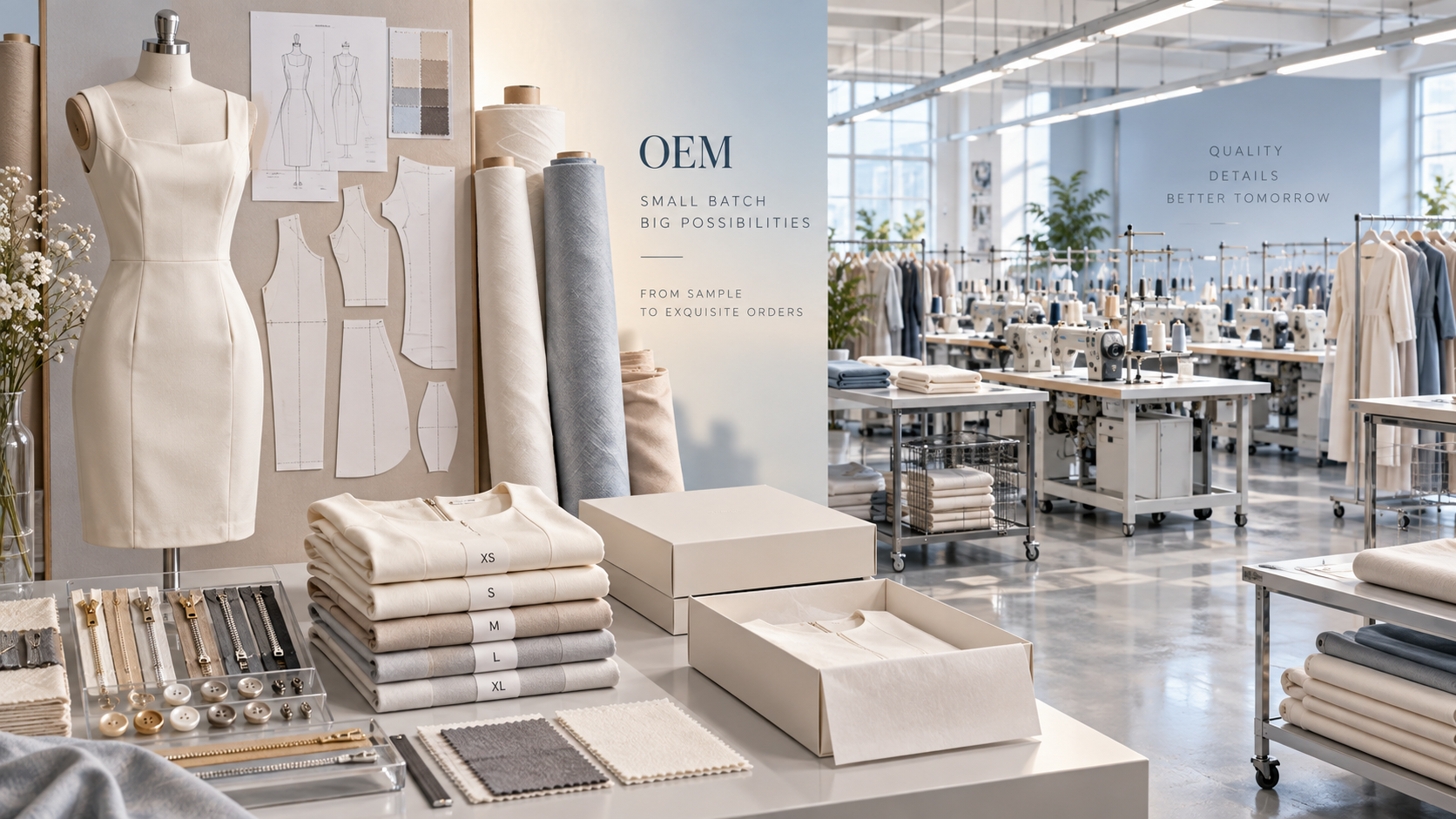
At Meiwuzhi’s own facility in Changping Town, Dongguan, for example, you’ll see how tightly knit their design-to-production loop is: pattern makers sit two desks from sample sewers, who share the same fabric inspection station with sourcing staff. That proximity matters. When you point to a drape issue on a prototype blouse, the pattern cutter can adjust the front panel *that afternoon*, not next month after three rounds of email revisions.
But here’s the catch: Meiwuzhi also works with over ten partner factories across Guangdong and Jiangsu—each with its own workflow rhythm, quality thresholds, and capacity constraints. A visit to their Dongguan base tells you how *they* operate—not necessarily how their Suzhou knitwear partner handles gauge consistency or how their Zhongshan woven shirt unit manages collar stand height tolerance. So if your order spans multiple facilities (say, knits from Suzhou + tailoring from Zhongshan), you need to prioritize which line gets boots-on-ground attention—not all of them.
The three things you *must* verify onsite—no exceptions
Not every detail needs scrutiny. Focus on what breaks orders—and what can’t be fixed remotely.
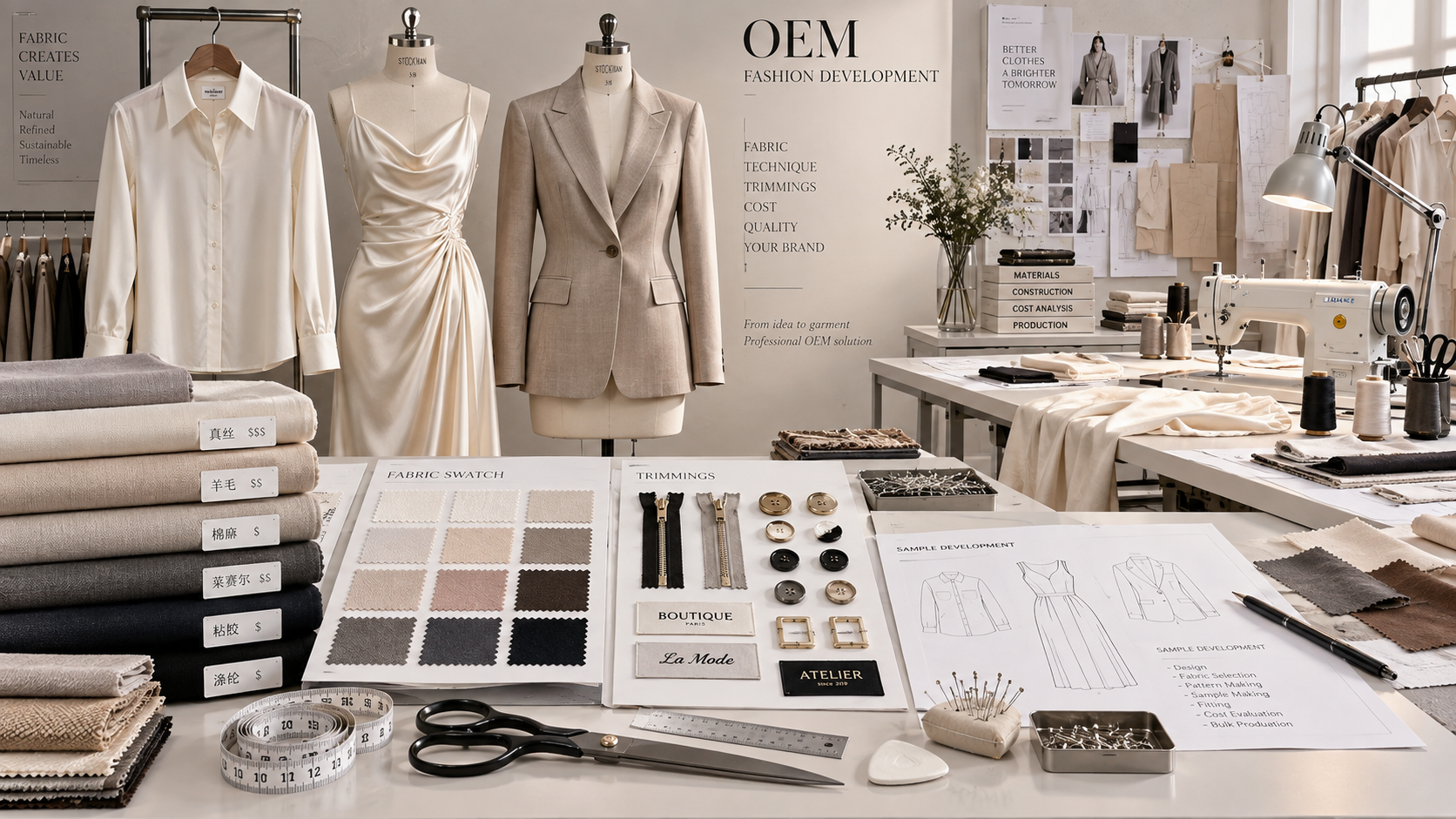
Fabric behavior under production conditions. Swatch books lie. A silk-blend charmeuse may drape beautifully in a showroom but twist unpredictably on an industrial feed-off table. Watch how it feeds through the cutter’s spreader. Ask to see the same fabric used in a recent bulk run—not just the current sample batch. At Meiwuzhi’s Dongguan plant, we’ve seen clients discover mid-visit that their chosen viscose jersey stretches 8% more on automated cutters than on manual tables—a difference that throws off sleeve cap ease and shoulder seam alignment.
Fit consistency across size runs. Don’t just check the sample in size M. Pull three garments—S, M, L—from the current production line. Lay them flat. Compare shoulder slope, waist suppression, and hem curvature. Small deviations compound across 500 units. One founder found her “true-to-size” dress ran small in hip circumference only in size XL—because the grading team used outdated block data. That wasn’t visible in photos or video calls.
How QC actually works—not how it’s described. Ask to sit beside the final inspection station for 20 minutes. Count how many pieces get flagged. What’s rejected? Is it fabric flaws, stitching tension, or labeling errors? More telling: what gets *passed* that shouldn’t? We once watched a batch of cashmere-blend sweaters cleared despite visible pilling on sleeves—because inspectors were trained to check only body panels, not high-friction zones. That detail only surfaced when someone paused the line and asked, “What’s your pilling standard for knits?”
When skipping the visit makes sense—and when it’s reckless
If you’re ordering 300 units of a single SKU, using stock fabric and existing patterns, and have worked with the same factory for 18+ months with zero fit or quality surprises—then yes, a visit adds little marginal value. You’ve already built calibration.
But if this is your first order with Meiwuzhi—or any vertically integrated supplier—and it includes custom development, new fabrications, or multi-facility production, skipping the visit means outsourcing your judgment to JPEGs and Zoom thumbnails. And JPEGs don’t show how a seam allowance shifts when the operator changes mid-shift. Thumbnails don’t capture how light hits a print under fluorescent vs. natural lighting in the packing room.
Meiwuzhi’s Shenzhen showroom (Room 508, Zhongxing Industrial City) serves as a useful prelude—you can feel fabrics, try on stock styles, and review fit standards against live models. But it’s not a substitute. The showroom shows what *can* be done. The factory shows what *will* be done—at scale, under pressure, with real labor, real machines, real material variance.
Your visit isn’t about trust—it’s about calibration
Founders often frame this as “Do I trust them?” That’s the wrong question. Trust is earned over time. Calibration is verified in person.
You’re not auditing—they’re not your employees. You’re aligning language: What does “medium stretch” mean to their cutter? How do they define “even topstitching”? Where do they draw the line on acceptable dye lot variation? These definitions live in muscle memory and shop-floor habit—not contracts or spec sheets.
Twelve years, ¥350M+ in Alibaba sales, and 130+ physical retail partners didn’t come from flawless specs alone. They came from founders who showed up—not to supervise, but to learn how the machine actually hums. Because the first bulk order isn’t just about units shipped. It’s about whether your brand’s reputation survives the unboxing.
So ask yourself: Is this order the foundation—or the test run? If it’s the foundation, your presence isn’t optional. It’s the first stitch in the seam that holds everything together.
Previous:No more content
Next:No more content

Do Women’s Clothing OEM Factories Accept Small Boutique Orders?
Do women's clothing OEM factories handle small boutique orders? Learn how MOQ, fabrics, sampling, pricing, and quality control shape a reliable boutique production launch.
How Much Does Women’s Clothing OEM Typically Cost Per Unit?
How much does women's clothing OEM typically cost per unit? Explore practical price ranges, key cost drivers, MOQ impact, and smart sourcing tips to protect quality and profit margins.
Should Buyers Choose Women’s Clothing OEM or Ready Stock?
Is it better to use a women's clothing OEM or buy ready stock? Compare cost, speed, control, and risk to choose the right sourcing strategy for your fashion brand.

{item.title}
{item.description}
Please give us a message
Contact Us