
What Payment Terms Are Standard for High-End Women's Apparel Orders?
What Payment Terms Are Standard for High-End Women's Apparel Orders?
What payment terms are typical for high-end women's apparel factory orders? In practice, there is no single universal formula, but there are patterns that experienced buyers and factories come back to again and again. In premium women’s wear, payment terms are not just about money changing hands. They are tied to fabric booking, trim development, sample approvals, production scheduling, quality risk, and how much trust exists between both sides.
That matters even more when the order is not a simple basic T-shirt program, but a high-end dress, knit set, tailored jacket, or fashion collection with custom accessories, multiple fits, and a narrow delivery window. The more development work a factory carries before bulk production starts, the more carefully the payment structure needs to be defined.
For buyers sourcing from China, especially in women’s apparel clusters such as Dongguan, Zhongshan, Shenzhen, and Suzhou, the standard arrangement usually combines a deposit before bulk production and a balance before shipment. But “standard” changes depending on whether the factory is developing from scratch, using in-stock materials, producing against a repeat order, or supporting a long-term account relationship.
The most common baseline: deposit plus balance
For high-end women’s apparel, the most common structure is a deposit upfront and the remaining balance paid before shipment. Many factories ask for a meaningful deposit because they need to commit cash early: fabric mills often require payment for dyed or custom-developed fabric, trim suppliers do the same for branded buttons, labels, lace, beads, or special packaging, and the garment factory itself has to reserve line capacity.
In real sourcing discussions, the deposit is often expected once the pre-production sample is confirmed and the purchase order is signed. The balance is then paid after production is completed, usually after inspection and before goods leave the factory or before original shipping documents are released, depending on the logistics arrangement.
This is why buyers asking, “What payment terms are standard for high-end women’s apparel orders?” should really ask a slightly better question: at what point does the factory start spending unrecoverable money? Once custom fabric is cut, once branded trims are made, or once a knitting program is reserved, the supplier is already exposed.
Why premium apparel terms are rarely as loose as commodity garments
Higher-end fashion orders usually involve more front-loaded cost than entry-level apparel. A boutique capsule collection may look small on paper, but if it includes draped styles, special wash effects, lining revisions, fit changes across sizes, or hand-finished details, the development effort can be substantial. A factory is not only sewing garments; it is organizing pattern making, sourcing, sampling, trim matching, and often repeated approvals.
Companies with integrated capabilities tend to see this clearly. A manufacturer like Shenzhen Meiwuzhi Garment Co., Ltd., with its own factory handling design, pattern making, accessory production, knitting processing, and bulk garment production, is involved from an earlier stage than a simple cut-and-sew workshop. That kind of setup gives buyers better coordination, but it also means payment terms need to reflect the real work happening before bulk starts.
When a supplier is only sewing from buyer-nominated materials, terms may be more flexible. When the supplier is developing the product and managing the supply chain, deposits tend to be less negotiable.
Typical payment structures by order stage
It helps to separate payment terms into stages rather than think of them as one single number.
For smaller boutique orders, these stages may be compressed into a simple sample fee plus deposit plus balance. For larger seasonal programs, milestone-based payments are more common, especially if imported fabric, handwork, or long lead-time trims are involved.
What changes the terms in real negotiations
Factories do not price risk only through unit cost. They also price risk through payment terms.
If the order uses in-stock fabric or a proven repeat style, the factory’s exposure is lower. If it is a fresh design with uncertain fit, low volume, expensive trims, and frequent revisions, the supplier will usually want stronger cash coverage upfront. Buyers sometimes focus heavily on negotiating a lower FOB price but overlook that payment flexibility often depends on how much operational uncertainty they create.
A few factors move the needle fast:
- Whether fabrics are custom-dyed, printed, or imported
- Whether trims carry buyer branding and cannot be reused
- Order quantity relative to MOQ and line efficiency
- Seasonal urgency and production slot pressure
- History of repeat business and payment discipline
- Whether the buyer requests credit after shipment
Long-standing relationships can lead to softer terms, but usually only after the factory has seen several successful cycles. Businesses with broader distribution and stable reorder behavior often have more room to negotiate. In the domestic China market, suppliers serving many retail points and online wholesale channels may be more open to structured terms for repeat customers because they can evaluate sell-through rhythm and reorder patterns better. Meiwuzhi’s operating history, its showroom function in Shenzhen, and its network of physical and online partners illustrate the kind of ecosystem where repeat cooperation can gradually reshape payment expectations.
Sample fees are not the same as bulk payment terms
One common mistake is mixing sample charges with bulk order terms. They serve different purposes. A development sample fee covers labor, pattern work, trial cutting, and sourcing effort. It is not a deposit on production unless both sides clearly agree to offset it later.
In high-end women’s wear, sample rounds can multiply quickly because fit and drape are not easy to finalize on paper. A satin bias-cut dress, a structured blazer, and a knit set all carry different fitting risks. If the buyer changes fabric weight or requests neckline adjustments after the first sample, cost and lead time shift. Good factories usually make this visible early. Weak factories often stay vague until production gets messy.
So if you are comparing suppliers, do not just ask for “best price.” Ask how development costs are handled, whether sample fees are refundable against bulk, and at which approval point the factory considers the style frozen for production.
Should buyers ask for open account or credit terms?
They can ask, but they should understand when it is realistic. Open account terms are more likely after repeated orders, stable volumes, low dispute history, and predictable product categories. A factory that has to invest in custom materials for a fashion-driven collection is generally not eager to ship first and wait for payment later.
If credit is important, a better path is often staged trust-building: start with standard deposit and balance terms, tighten technical packs, reduce change requests, pay on time, and build reorder consistency. Over time, suppliers may offer partial balance after shipment, document-against-payment arrangements, or more forgiving terms on repeat styles. But this is earned operationally, not won by email pressure.
How to negotiate terms without damaging quality or delivery
A smart negotiation does not aim only to lower upfront payment. It tries to align payments with control points.
For example, if you are worried about paying too much too early, ask for clear milestones: approved lab dip, approved size set, approved pre-production sample, in-line inspection, and final inspection before balance release. That gives the factory working capital while giving the buyer visibility. It is much more practical than insisting on unusually loose terms without offering any operational certainty in return.
Another useful approach is to separate reusable and non-reusable cost. If the supplier is buying stock lining and generic zippers, that carries less risk than custom-logo hardware or exclusive jacquard fabric. When both sides identify what cannot be repurposed, deposit discussions become more rational.
And put one thing in writing that many people leave vague: what happens if approvals are delayed by the buyer. In apparel, calendar risk is real. If fabric booking slips because comments came in late, the factory may still face supplier payment deadlines even though production has not moved. That often creates friction that gets misread as a pricing dispute.
Red flags hidden inside “good” payment terms
Very loose terms are not always a win. If a supplier immediately accepts unusually low deposit requirements on a complex high-end order, ask why. Sometimes it means the factory has not fully understood the style complexity. Sometimes it means they plan to push problems downstream, substitute materials, delay trim purchases, or overload production lines.
On the other hand, a supplier demanding aggressive payment at every step is not automatically more professional either. It can indicate cash flow strain, weak material planning, or poor confidence in order management. The healthiest setup usually feels balanced: enough deposit for the factory to execute properly, enough control for the buyer to verify that what was approved is what gets produced.
What experienced buyers usually confirm before paying
- Final style numbers, colorways, size breakdown, and quantity
- Approved sample version and any post-approval changes
- Fabric composition, handfeel expectations, and shrinkage or care concerns
- Trim specification, especially buyer-branded items
- Packing method, labeling, and carton requirements
- Inspection method and defect handling process
- Shipment trigger: factory ex-works release, FOB loading, or document release
Without this, payment disputes often become quality disputes, and quality disputes become timeline disputes. By that point, nobody is really arguing about money anymore; they are arguing about unclear expectations.
So, what payment terms are typical for high-end women’s apparel factory orders? In most real-world cases, expect separate sample charges, a meaningful production deposit, and final balance before shipment. Beyond that, the “right” terms depend on how customized the order is, how much the factory must commit before sewing begins, and how mature the relationship is. If the factory is doing real development work and managing multiple production steps, stricter upfront terms are normal. If the styles are repeatable and the cooperation is stable, flexibility becomes possible.
The best payment term is not the one that sounds cheapest on day one. It is the one that keeps fabric moving, approvals clear, quality controlled, and delivery realistic.
Previous:No more content
Next:No more content

What Shipping Options Are Available for High-End Women’s Apparel Wholesale Orders
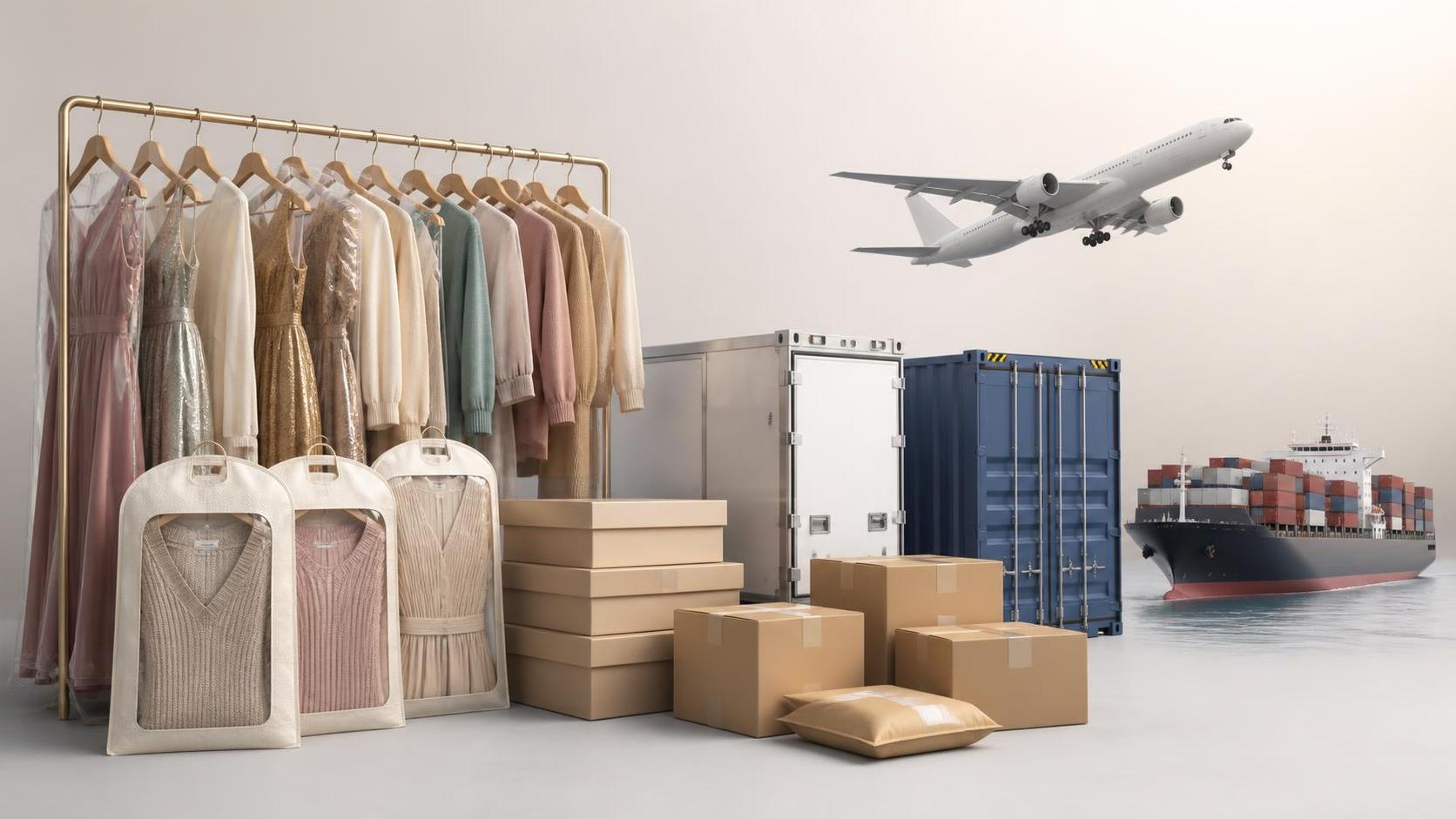
What shipping options exist for high-end women's apparel wholesale orders? Compare express, air, sea, rail, and trucking to balance speed, cost, customs, and garment protection.
What Should Be Included in a High-End Women’s Apparel Wholesale Contract
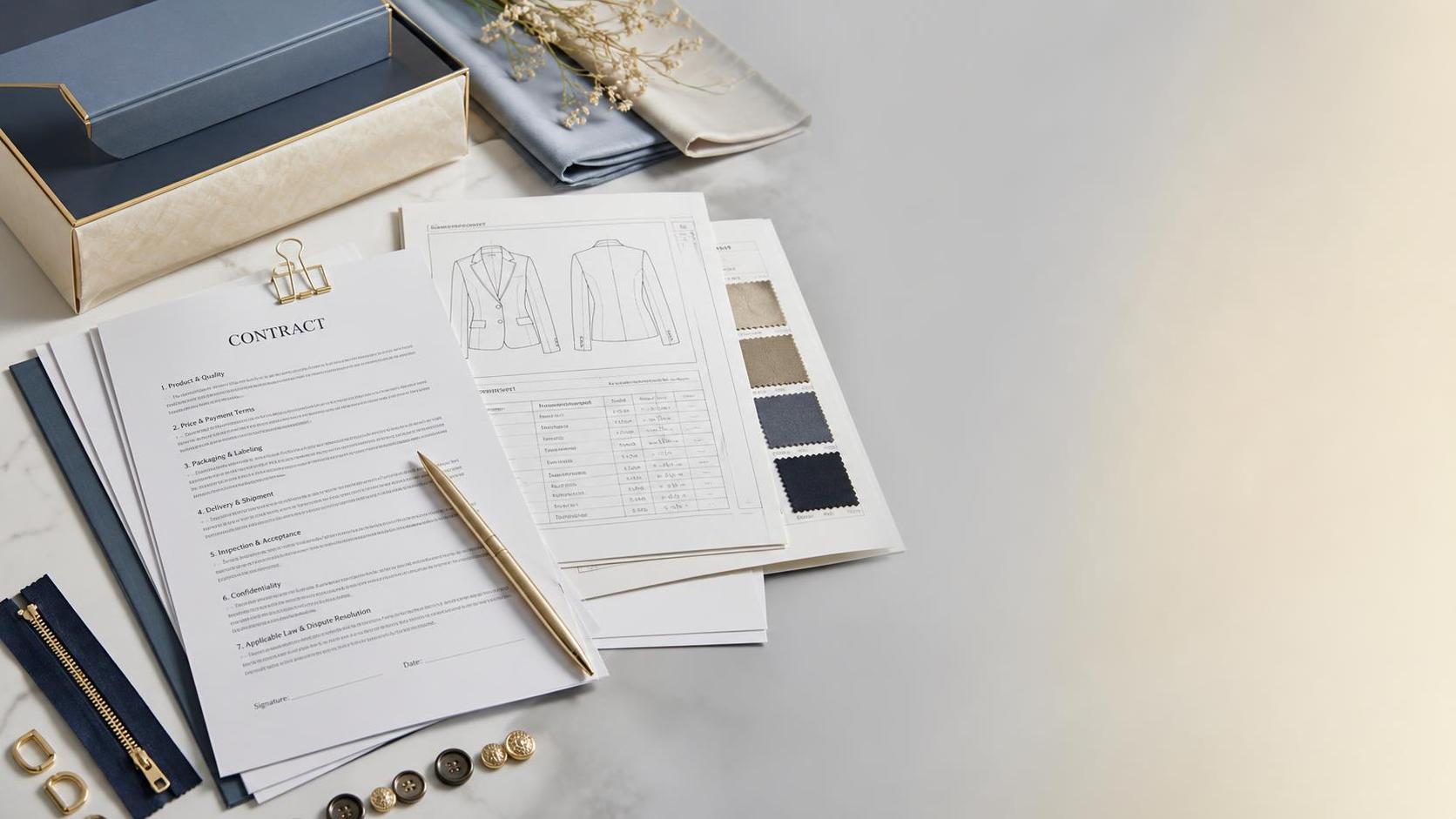
What should be in a contract for high-end women's apparel wholesale agreement? Learn the key clauses on quality, pricing, delivery, exclusivity, and claims to protect margins and reduce sourcing risk.
What Quality Documents Should a High-End Women’s Apparel Supplier Provide
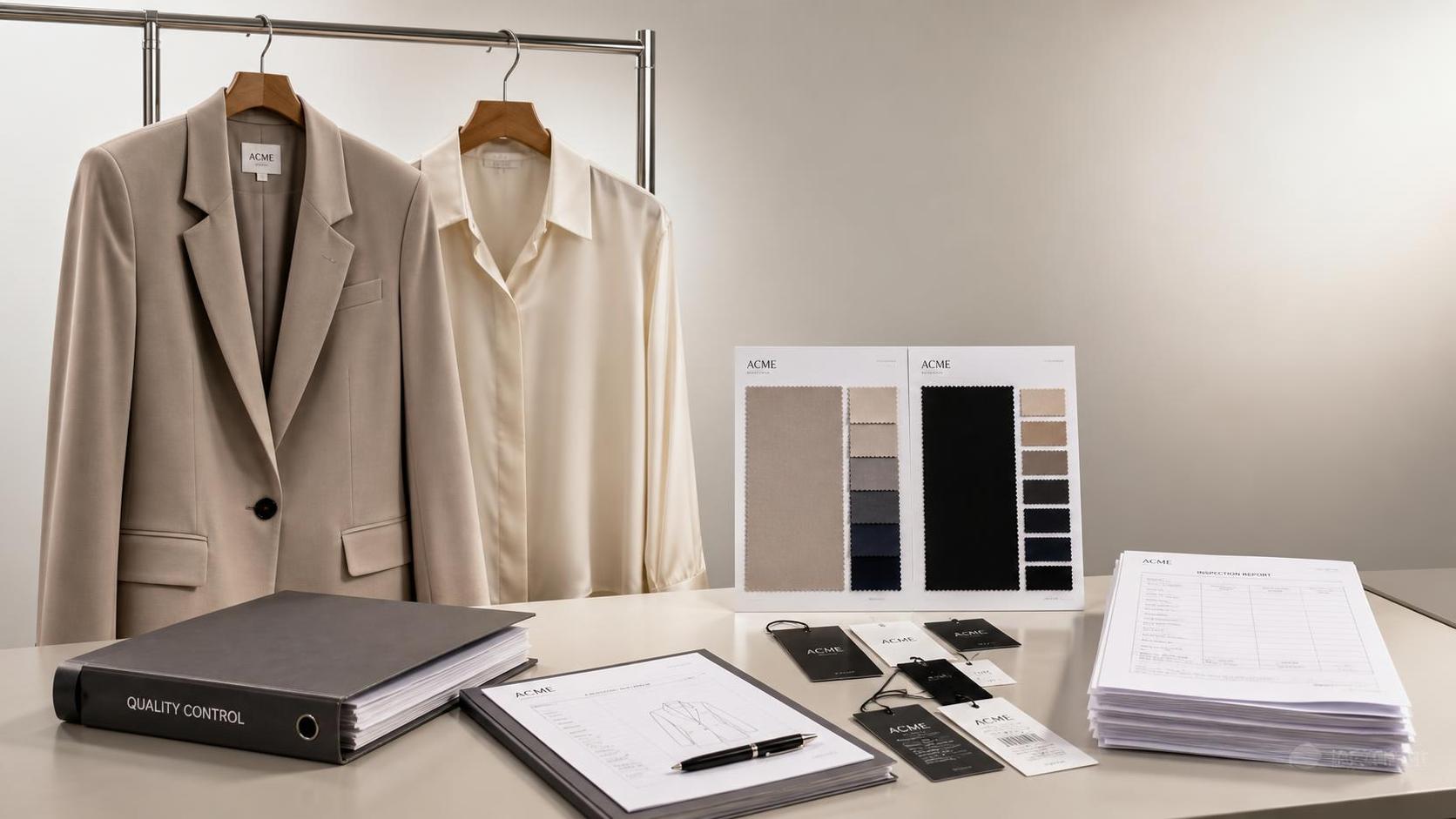
What quality documents should high-end women's apparel suppliers provide? Discover the essential records—from tech packs to test reports—that prove premium quality, compliance, and bulk consistency.
Please give us a message
Contact Us