
How Long Does Custom Sampling Take for High-End Women's Apparel?
A launch calendar can look comfortable until the first sample arrives and the fit is not quite right. For fashion brands and retailers, understanding high-end women's apparel custom sampling turnaround is therefore about more than knowing when a package will ship. It means allowing enough time to develop the pattern, source suitable materials, evaluate the garment, and make informed revisions before committing to production.
As a planning estimate, a straightforward first sample made with available materials may take around one to three weeks after the manufacturer has received a complete brief. A more complex design, custom-developed fabric, or several rounds of revisions can extend the process to four to eight weeks or longer. These are illustrative ranges, not guaranteed lead times: confirm the schedule for each style with the factory, including material sourcing, feedback, and shipping.
Sampling timelines compared: simple styles versus complex development
Two garments with the same retail positioning can require very different amounts of work. A silk-look blouse made from stocked fabric and an existing block is not on the same development path as a tailored jacket with a new silhouette, custom lining, and specialized trims.
These ranges can overlap, and a factory may quote outside them. They also should not be added together automatically: sourcing and pattern work may run in parallel, while some revisions cannot begin until the previous sample has been reviewed. International delivery, customs clearance, holidays, and buyer approval time may be separate from the factory's quoted sampling period.
What actually happens during custom garment sampling?
The word “sample” can describe several different garments. A first sample tests whether the design can be translated into a physical piece. A revised fit sample checks changes. A pre-production sample may be used to confirm agreed details before bulk cutting. When comparing manufacturers, ask which of these stages their timeline covers.
1. Brief review and feasibility
The process begins when the manufacturer has enough information to assess the design: sketches or reference garments, measurements, construction details, fabric preferences, and quantities under consideration. The factory may need to clarify how a neckline should sit, whether a skirt is lined, or which details are essential rather than decorative.
A brief that says “similar to the reference” can leave too much open to interpretation. Even a few annotated photographs and a clear measurement chart can prevent a week of questions later.
2. Pattern making and material preparation
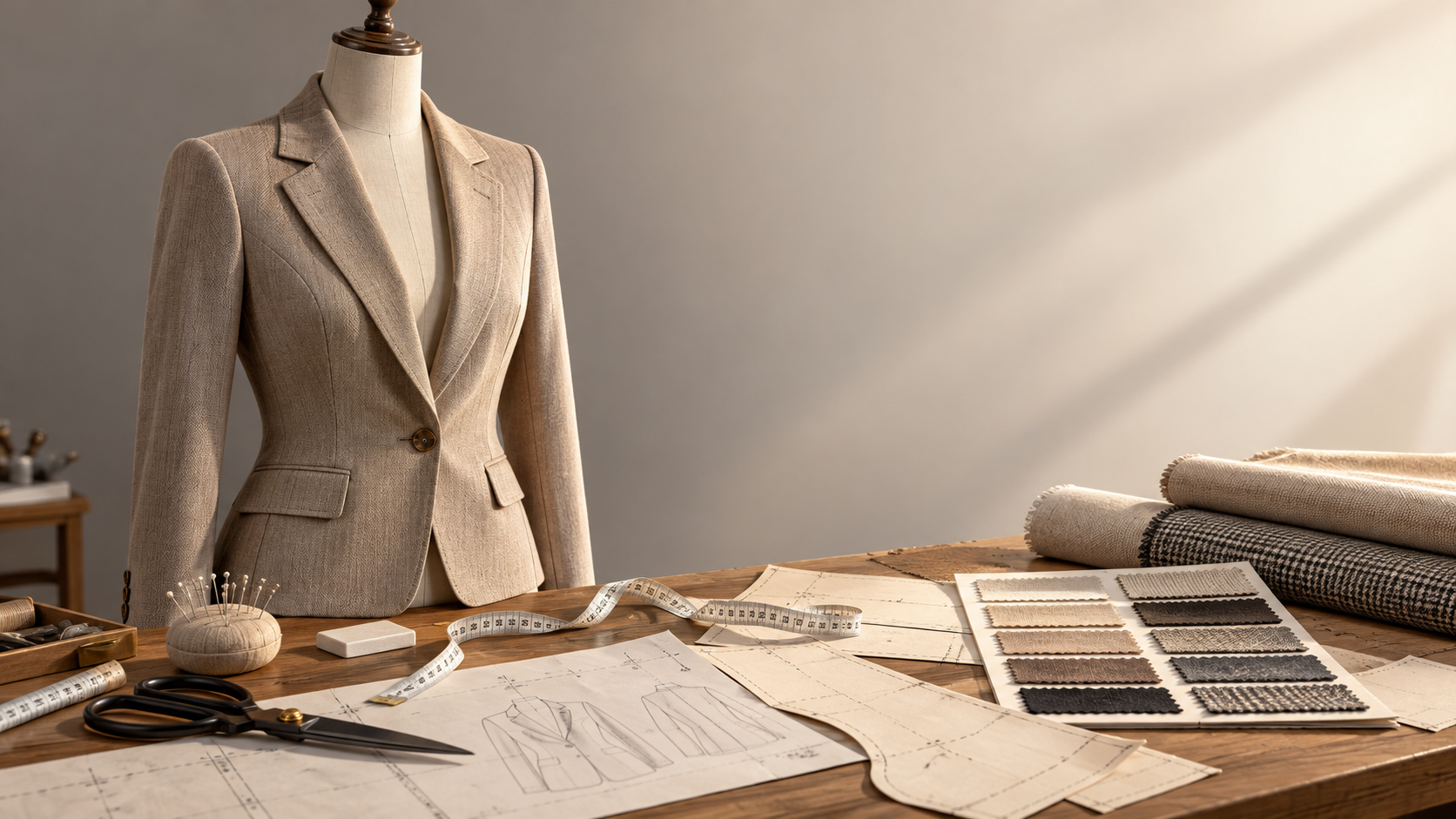
A pattern maker translates the design into individual pieces. If the style can be adapted from an existing block, this stage may be shorter than creating a new pattern from scratch. However, the starting block still needs to suit the intended customer: a relaxed blouse and a close-fitting dress require different approaches to ease and balance.
At the same time, the team checks fabric, lining, buttons, zippers, labels, and other components. A sample made with a substitute fabric can help test proportions, but it may not show how the final garment will drape, stretch, or hold its shape. Discuss substitutions before work begins and identify which conclusions can reasonably be drawn from them.
3. Cutting, sewing, and initial inspection
Once the pattern and materials are ready, the sample is cut and sewn. High-end construction often requires attention to details that are easy to underestimate: matched patterns, clean internal finishing, precise topstitching, secure closures, and consistent seam allowances. A garment with a lining, structured shoulder, or concealed fastening generally has more operations to coordinate than an unlined top.
The factory should then check the sample against the available specifications. This is a useful point to request photographs and key measurements before shipment, especially when an obvious issue could be corrected locally.
4. Fit review and revisions
The buyer reviews the garment on a fit model, dress form, or intended wearer, depending on the purpose of the sample. Measurements matter, but so do movement and visual balance: a jacket may measure correctly across the bust yet pull when the arms move, while a dress may fall differently from the sketch because of fabric weight.
Clear, consolidated feedback helps the next round move forward. Instead of saying “the fit feels off,” specify where the garment is tight or loose, how much change is requested, and whether related features such as the armhole or sleeve should be reassessed. Mark photographs and send one agreed set of comments rather than several conflicting messages.
Which factors have the greatest effect on turnaround?
Available fabric versus custom-developed material
Stock fabric can simplify planning when its composition, color, weight, and quantity are already acceptable. Custom dyeing, printing, knitting, or finishing introduces additional approvals and supplier schedules. If an exact color match is important, allow time to review the relevant color submission under suitable lighting before authorizing the next step.
For early fit work, some brands choose a readily available fabric with similar weight and stretch. That can keep development moving, but it is not a reliable final test if the substitute behaves differently from the production material.
New pattern versus an existing fit block
An established block gives the pattern maker a starting point, particularly when a brand already has a consistent size and fit standard. A new silhouette may require more experimentation, especially for fitted bodices, tailored trousers, draped details, or garments that must balance structure with comfort.
Reusing a block does not guarantee a quick approval. Changing the fabric or adding a lining can alter how the garment sits, so the sample still needs to be evaluated as a complete design.
One decision-maker versus scattered feedback
Factory work is only part of the elapsed time. A sample that waits several days for comments can delay the next round even when the sewing itself is straightforward. Internal disagreements about length, fit, or trim can also generate avoidable revisions.
Before the sample arrives, decide who will attend the fitting, who has final approval, and how comments will be consolidated. A clear decision process is particularly valuable when merchandising, design, and sales teams all have input.
Construction quality versus an unrealistic deadline
Premium womenswear is often judged at close range. A collar should lie neatly, a lining should not pull, and closures should operate smoothly. Rushing a sample may reveal the general shape, but it can leave insufficient time to assess finishing or correct a difficult construction detail.
If the launch date is tight, ask the manufacturer which decisions can be separated. You may be able to review fabric and trim options while the pattern is being developed, for example. Compressing every stage into one approval, however, can move unresolved issues into bulk production.
First sample, revised sample, and production sample: why the distinction matters
A common planning mistake is to treat the first completed garment as production-ready. A first sample is often a development tool: it shows what works and what needs discussion. Depending on the project, it may use substitute materials or require visible changes to fit and construction.
A revised sample tests agreed corrections. If the shoulder, waist, and sleeve have all changed, review how those changes interact rather than checking each measurement in isolation. A pre-production sample, where requested and agreed, should reflect the approved specifications and intended production materials as closely as possible.
Ask the factory to state which sample is included in its quotation and how additional rounds are handled. Also confirm who pays for sample making, material development, revisions, and shipping. Those terms vary by project; an attractive initial lead time is less useful if its scope leaves important approvals out.
How to prepare a brief that helps the factory give a realistic date
You do not need a large technical department to start a useful conversation. You do need enough detail for the manufacturer to understand both the garment and the decisions that remain open. Include the following wherever possible:
- Design references: front and back sketches or photographs, with details marked clearly.
- Measurements: a size chart, intended sample size, key garment measurements, and preferred fit.
- Materials: fabric composition, approximate weight, stretch, color, lining, and acceptable alternatives.
- Construction: seams, closures, pockets, edge finishes, labels, and any details that affect appearance or comfort.
- Commercial context: estimated order quantity, target market, desired production date, and any deadline that cannot move.
- Approval process: the person responsible for feedback and whether photographs can be reviewed before shipment.
If you are unsure about a specification, say so rather than guessing. A manufacturer can discuss options, but the schedule should allow for those choices. It is also worth distinguishing a required delivery date for the sample from the date by which bulk production must be complete; the two are connected but are not interchangeable.
Questions to ask when comparing garment manufacturers
Lead time is easier to compare when every supplier is answering the same question. Ask when the clock starts: at the first inquiry, after payment, after all specifications are confirmed, or once materials arrive? Then clarify whether the estimate covers working days or calendar days and whether shipping is included.
Other useful questions include:
- Will pattern making and sourcing happen in-house or through external partners?
- Are the proposed fabric and trims available now, and what happens if they are not?
- What information is needed before the first sample can begin?
- How are fit comments recorded, and who confirms that changes are understood?
- How long might a typical revision take for this particular design?
- Can the approved sample be reproduced with the materials and construction planned for bulk production?
Shenzhen Meiwuzhi Garment Co., Ltd. operates its own factory in Changping Town, Dongguan, with capabilities covering design, pattern making, accessory production, knitting processing, and bulk garment production. It also works with partner factories. For a buyer considering a custom project, that range of activities makes it useful to discuss which work will be handled for the specific style, which materials need to be sourced, and how sample approval will connect to production planning. A project-specific quotation remains necessary to establish the timeline.
Build the launch schedule backward from approval
Start with the date by which production must be ready, then work backward through manufacturing, pre-production approval, revisions, shipping, and the first sample. Include time for your own team's review as well as the factory's work. If a garment uses custom materials or has a demanding fit, leave additional room rather than assuming the first version will be final.
The most useful sampling schedule is not simply the shortest one. It is the one that makes responsibilities, material availability, review stages, and decision dates visible to both sides. With that clarity, brands and retailers can protect the details that make a high-end garment worth producing—and approach the launch with fewer surprises.

What Export Compliance Rules Apply to Wholesale Women's Apparel?
Master high-end women's apparel export wholesale compliance with practical guidance on customs, labeling, safety and shipment records for U.S. and EU markets.
How Long Does Custom Sampling Take for High-End Women's Apparel?
High-end women's apparel custom sampling turnaround can range from 1–3 weeks to 8 weeks or longer. Explore key timelines and plan your launch with confidence.
What Are Wholesale Price Ranges for High-End Women's Apparel in 2026?
Explore the high-end women's apparel wholesale price range 2026 with illustrative costs, sourcing tips, and landed-cost insights to plan a profitable collection.

{item.title}
{item.description}
Please give us a message
Contact Us