
How to Choose a Bulk Supplier for High-End Women's Apparel
A strong sample and an attractive quotation are not enough to identify a reliable high-end women’s apparel bulk production supplier. The more useful test is whether the supplier can reproduce an approved garment consistently, in the required quantities and sizes, using the agreed materials and within a workable delivery schedule.
The right choice depends on the order. A retailer replenishing proven styles from stock faces a different set of risks from a brand developing a tailored collection from original patterns. Comparing suppliers on the same price-per-piece basis can conceal differences in development support, fabric commitments, quality control, and responsibility for subcontracted work.
Start with the supply model, not the catalogue
Apparel suppliers may offer ready-made stock, adapt existing designs, manufacture from buyer-provided specifications, or develop garments from an initial concept. These models can overlap, but they do not provide the same level of control.
Ready-stock suppliers can suit a business that needs to test styles without committing to full production. The trade-off is less control over fabric, fit, branding, and repeat availability. Before ordering, check whether the displayed size and color quantities are physically available and whether future replenishment depends on a new production run. A repeat order made months later may come from a different fabric lot or revised pattern.
Suppliers offering modifications to existing styles provide a middle ground. Changing labels or packaging is relatively straightforward; changing a neckline, length, lining, or fabric can affect the pattern and production process. Ask which changes are included in the quoted price and which trigger new sampling, minimum quantities, or delivery dates.
Full-development manufacturers are more appropriate when fit, proprietary design, and material selection are central to the brand. Their value lies partly in pattern making, sourcing, construction advice, and sample revisions—not just sewing capacity. Development requires more decisions and approvals, however, and a manufacturer’s design capability should not be assumed to include unlimited revisions or exclusive ownership.
When comparing offers, specify the same scope: garment design, pattern development, materials, labels, packaging, testing, and shipping terms. Otherwise, a low quote may simply omit work included by another supplier.
Factory ownership matters less than control over the production route
A supplier operating its own factory may offer direct access to production staff and clearer oversight of the processes performed on site. A company coordinating several factories may offer broader category coverage or access to specialized processes. Neither model guarantees quality: an owned facility can still outsource work, while a multi-factory supplier can manage subcontractors effectively.
Ask where the proposed order will actually be cut, sewn, finished, and inspected. Confirm whether embroidery, knitting, washing, printing, or other relevant processes will be subcontracted. The important distinction is between a supplier that can identify and control each production stage and one that cannot explain where the garments will be made.
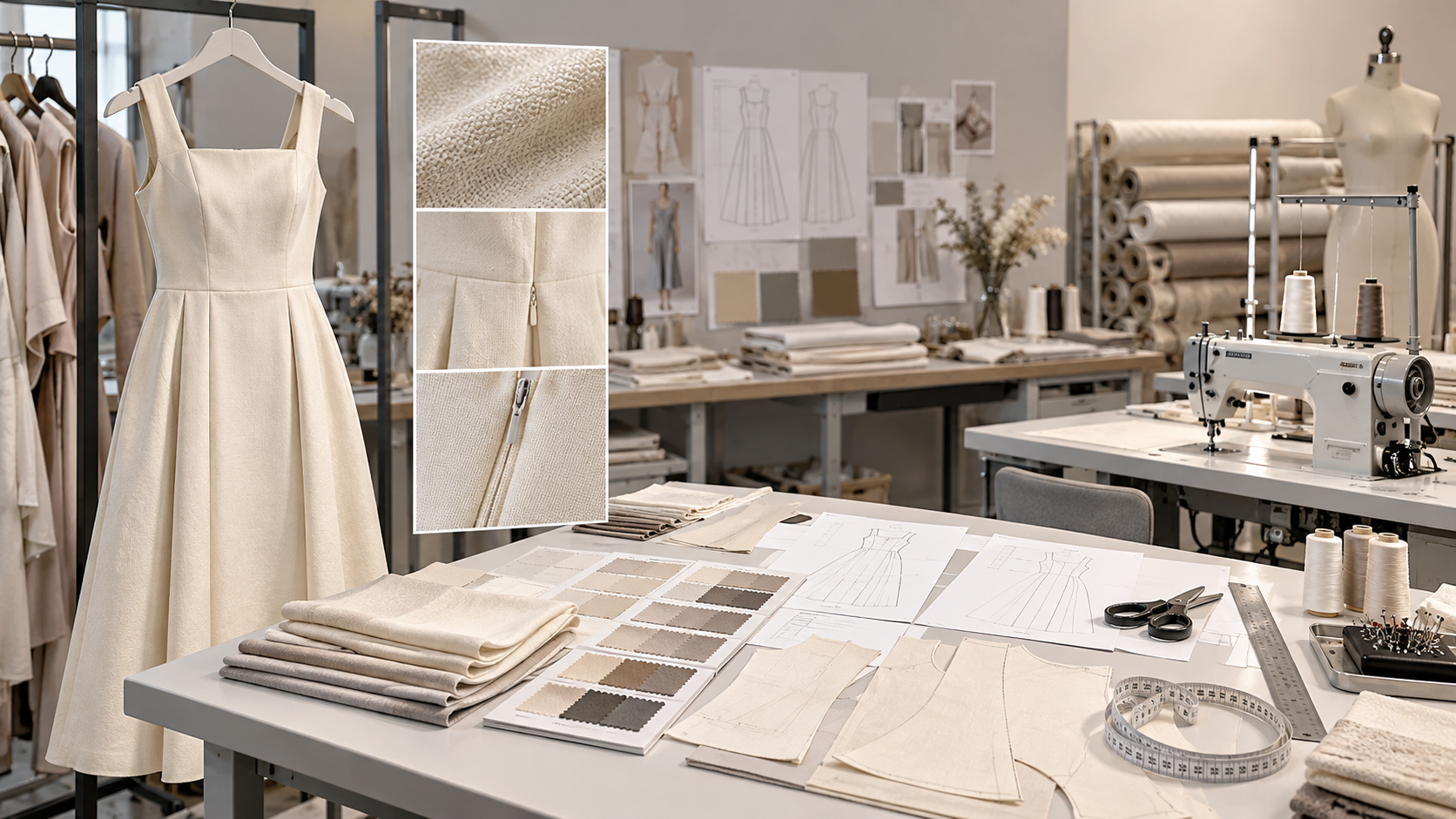
For a complex dress, for example, the quoted supplier may develop the pattern while another facility handles sewing and a separate workshop applies embellishments. That arrangement can be viable, but every handoff introduces a need for clear specifications and accountability. Establish who approves subcontractors, communicates changes, and resolves defects if the finished garment fails inspection.
Capacity should also be assessed at the level of the proposed product, not only through a factory’s overall output. A facility producing simple knit tops at scale may not have the same capability for structured jackets, delicate silk, or garments requiring careful pattern matching. Request evidence of comparable construction and ask how the supplier plans to allocate the order alongside existing commitments.
Evaluate quality through repeatability, not a single sample
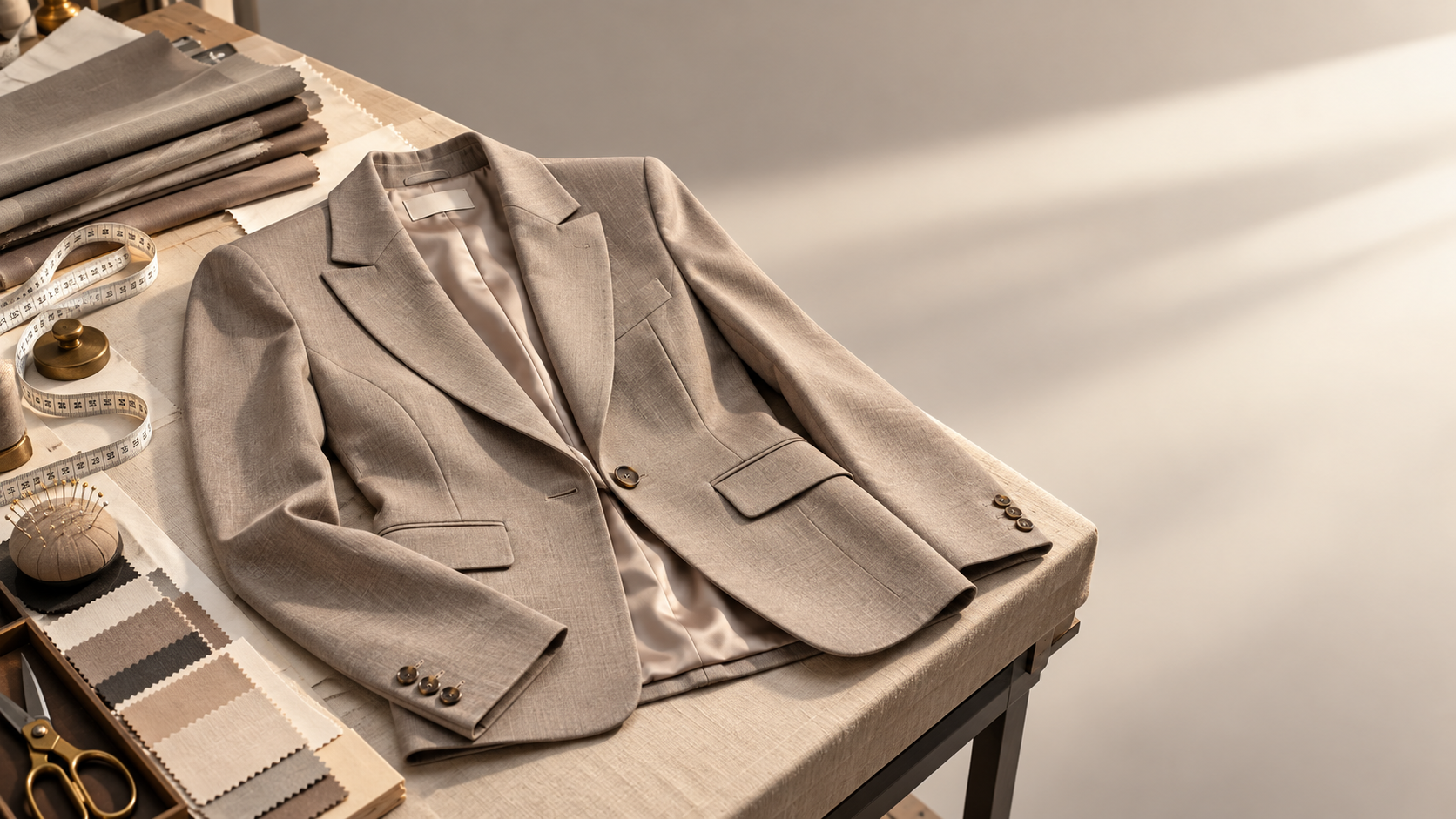
A development sample demonstrates an interpretation of the design. It does not prove that bulk production will use the same fabric lot, trims, machinery, operators, or finishing process. High-end apparel is particularly sensitive to differences that may be hard to see in a catalogue: how a collar sits, whether a lining pulls, how a zipper behaves, or whether paired pieces match in color.
A useful evaluation separates several stages:
- Initial sample: Assess the supplier’s interpretation of the design, construction choices, and ability to identify missing information.
- Fit sample: Check the garment on the intended body form or fit model, including movement, balance, and areas where measurements alone do not reveal problems.
- Pre-production sample: Approve the final construction and materials, subject to any documented exceptions, before bulk production proceeds.
- Production inspection: Compare garments from the order against the approved reference and agreed specifications rather than relying on visual impressions alone.
The distinction between a sample made by a specialist sample room and garments made on a production line deserves attention. Ask whether the bulk team receives the approved pattern, construction notes, and sample, and how revisions are communicated. A beautiful sample made through techniques that cannot be repeated at the agreed price is a poor basis for an order.
Document measurable requirements in a specification sheet: finished measurements by size, tolerances, seam and stitch details, trim placement, labels, pressing, and packing. Include photographs or sketches for features that are difficult to describe. For fit-sensitive garments, define which measurement points are critical and how they will be measured. A tolerance has little value if the supplier and buyer measure from different points.
Compare fabric and trim commitments carefully
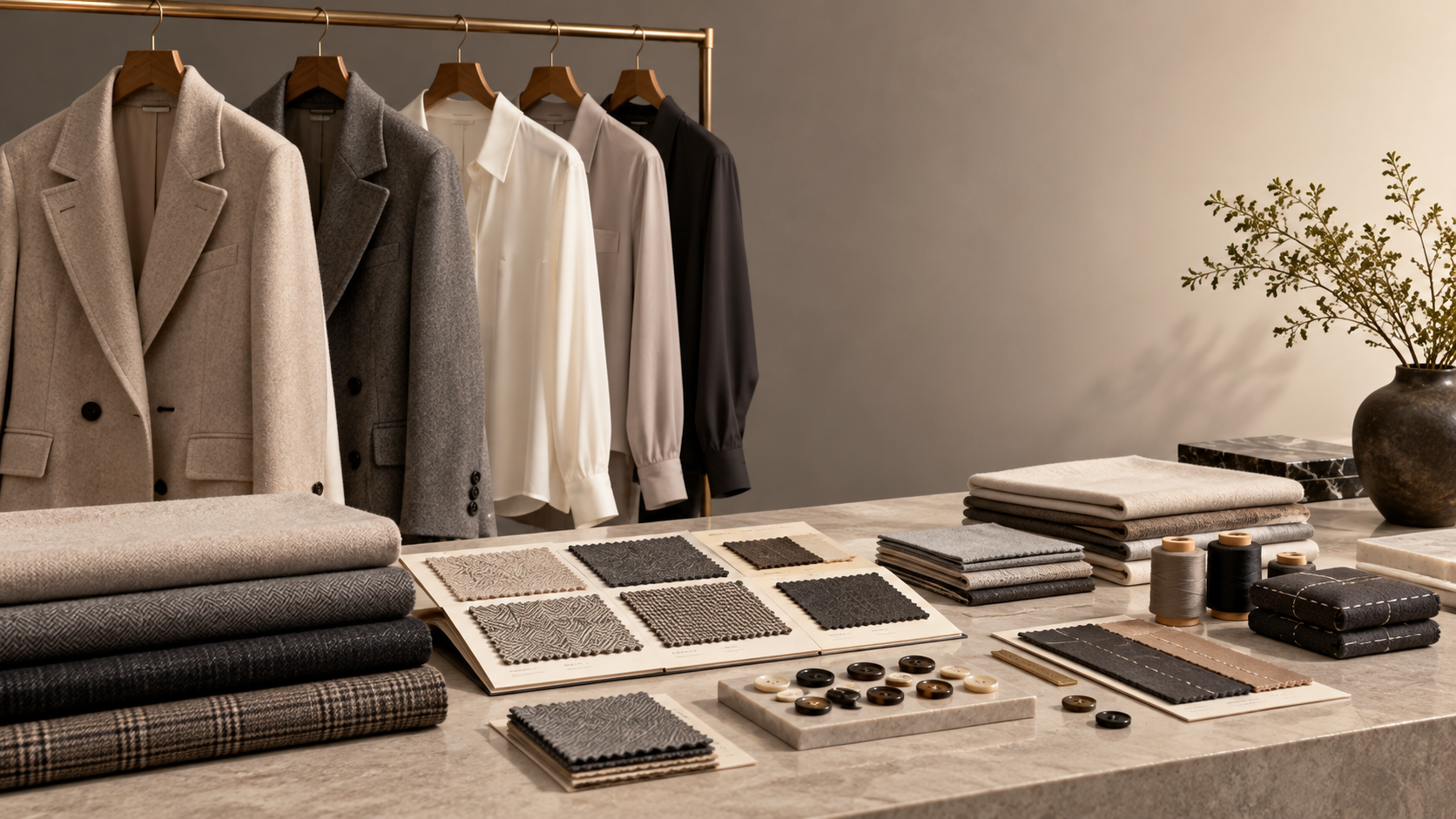
Fabric can account for much of the difference between two quotations that appear to describe the same garment. Fiber content alone is not enough: fabric weight, weave or knit structure, finish, hand feel, opacity, and color can all affect the result. Two fabrics described as wool blends, for example, may perform and drape quite differently.
Request a fabric specification and a physical swatch where practical. For production, agree on the reference for color and appearance, the acceptable variation, and the process for approving the actual production material. Review lining, interlining, buttons, zippers, thread, and other visible or functional trims as well. A supplier should not substitute an approved component without authorization, even when it describes the replacement as equivalent.
Ask whether the quoted material is held in stock or must be ordered, and whether its minimum quantity applies per color or across the order. A fabric mill’s minimum can make a small run expensive even when the garment factory accepts a low minimum order. There may also be extra fabric charges for wastage, matching checks or stripes, or maintaining nap direction.
Testing requirements should follow the garment and its destination. Depending on the product, relevant checks may include colorfastness, dimensional stability, seam performance, fiber composition, or restricted substances. Agree in advance on who selects the test method, pays for testing, supplies samples, and handles a failure. Care instructions should reflect the materials and construction rather than being copied from a similar garment.
Read minimum orders and prices at the style-and-color level
A supplier’s advertised minimum order quantity rarely tells the whole story. An order of 500 garments may be acceptable as one style in one color but not as five styles in several colors and size ranges. Each variation affects cutting efficiency, material sourcing, labeling, and the risk of unused components.
Ask for minimums by style, color, fabric, and size distribution. Clarify whether a reorder qualifies for the same minimum and price, particularly if the original fabric is no longer available. A low garment minimum is less valuable if custom fabric, labels, or special trims must be purchased in quantities far beyond the planned run.
Compare quotations using a common cost structure. A useful comparison includes:
- Sample and pattern charges, including revision limits and whether any fees are credited against a bulk order.
- Unit price by quantity, with fabric, lining, trims, labels, and packaging clearly identified.
- Costs for testing, inspections, special finishing, and additional samples.
- Freight and delivery responsibilities under the agreed trade term, plus applicable duties and taxes where relevant.
- Payment schedule, currency, and conditions under which material or production prices may change.
One supplier may quote a higher unit price but include branded packaging and an agreed fabric quality; another may quote only for a basic garment. The lower initial figure is not necessarily the lower landed cost. Equally, a premium quotation does not establish premium capability unless the construction, materials, and control measures justify it.
Test the delivery schedule against the approval process
Production lead time should not be confused with the time from placing an order to receiving saleable stock. Fabric sourcing, sample revisions, testing, booking production capacity, shipping, customs clearance, and corrections can all affect the overall schedule. Ask suppliers to show the sequence and identify when their stated lead time starts.
For instance, a manufacturer may begin counting only after deposit receipt, final sample approval, and arrival of all materials. If fabric approval takes longer than expected, the original delivery date may no longer be realistic even though the sewing period remains unchanged. Agree on approval deadlines and the consequences of late changes from either side.
A credible schedule identifies dependencies rather than promising a single date without explanation. Ask how the supplier communicates delays, whether partial shipments are possible, and what happens if a required component is unavailable. For seasonal collections, compare the commercial impact of a missed launch with the savings offered by a cheaper but less certain production plan.
Make quality control and remedies part of the agreement
Inspection is most useful when both parties know what will be inspected and what constitutes failure. Agree on the inspection stage, sampling method, defect classifications, measurement tolerances, and treatment of critical issues. An independent inspection can provide additional visibility, but it does not replace a clear specification or guarantee that every garment is defect-free.
Decide how defects will be handled before shipment and after receipt. The agreement should address who may authorize rework, how corrected goods will be reinspected, and what remedy applies if a defect cannot be corrected or the order misses its agreed deadline. Returns across borders can be costly, so responsibility for freight and other expenses should not be left to a later dispute.
For designs developed specifically for an order, also clarify ownership and use of patterns, artwork, labels, and samples. Confidentiality provisions and restrictions on resale or use of branded materials should match the commercial relationship; a supplier’s ability to develop a design does not by itself settle ownership rights.
A practical way to narrow the final choice is to place a controlled initial order after assessing samples and documentation. It should be large enough to test material procurement, size consistency, communication, and production-line execution, but limited enough that a failure is manageable. The strongest supplier is the one whose actual production, documentation, and response to problems align with the agreed standard—not simply the one with the most persuasive showroom sample.

What Are Wholesale Price Ranges for High-End Women's Apparel in 2026?
Explore the high-end women's apparel wholesale price range 2026 with illustrative costs, sourcing tips, and landed-cost insights to plan a profitable collection.
How to Choose a Bulk Supplier for High-End Women's Apparel
Choose a high-end women's apparel bulk production supplier with confidence. Compare quality control, materials, pricing, and delivery before you order.
Women's Fashion Wholesale: ODM or Own-Brand Sourcing?
Is women's fashion wholesale better through ODM or own brand sourcing? Compare costs, lead times, brand control, and risks to choose the right strategy for your business.

{item.title}
{item.description}
Please give us a message
Contact Us