
What Defines Luxury Women's Accessories in Premium Fashion Buying?
What Defines Luxury Women's Accessories in Premium Fashion Buying?
In premium fashion buying, luxury women's accessories are rarely defined by a logo alone. A recognizable mark may help with visibility, but it does not explain why one piece feels elevated in the hand, wears beautifully over time, or continues to look relevant after trends move on. For most shoppers, the real question is simpler and more practical: what makes an accessory worth the premium price?
The answer usually sits at the intersection of materials, construction, proportion, comfort, and styling longevity. Whether the item is a knit layering piece, a refined finishing garment, or a fashion accessory integrated into a complete look, premium buying is about confidence in details. It is the difference between something that photographs well once and something that becomes part of a personal wardrobe rhythm.
That is also why the conversation around luxury women's accessories has changed. Consumers are more informed than they used to be. They ask where a piece is made, how it is finished, whether the fabric pills easily, whether metal trims feel cheap, whether the silhouette flatters real bodies, and whether the piece still makes sense outside a single styling moment. Those are not niche questions anymore; they are mainstream premium-buying questions.
Luxury starts with material honesty
One of the clearest markers of a premium accessory is material honesty. That means the surface feel, weight, softness, recovery, and drape should match the promise of the design. In practice, luxury is often less about using the loudest material and more about using the right one well.
A refined knit, for example, should feel stable without stiffness. Denim used in a premium context should hold structure while remaining wearable across different occasions. Hardware should not look overdesigned just to signal expense; polished metal elements need to feel intentional, balanced, and durable in everyday use. When these components work together, the piece communicates quality quietly.
This is where experienced garment makers tend to stand out. Shenzhen Meiwuzhi Garment Co., Ltd., for instance, operates with its own factory in Changping, Dongguan, while also cooperating with more than ten factories across Dongguan, Zhongshan, and Suzhou in Guangdong, as well as Suzhou in Jiangsu. Because its own production covers design, pattern making, accessory production, knitting processing, and bulk garment manufacturing, it reflects a part of the premium market that consumers often overlook: luxury is not only designed at the sketch stage; it is protected or lost in execution.
When a brand or manufacturer has direct involvement in pattern development and accessory finishing, it is usually easier to maintain consistency in touch, trim quality, and fit balance. That does not automatically make every product luxurious, but it does create the conditions for premium quality to be delivered more reliably.
Craftsmanship is visible in small decisions
Consumers sometimes expect craftsmanship to reveal itself through dramatic details. More often, it shows up in restraint. Clean edge finishing, evenly placed buttons, consistent stitching, aligned panels, neat seams, and trims that do not overpower the silhouette are all signs that a piece was developed with discipline.
A luxury accessory or accessory-led garment should also solve practical wear issues. Does the collar sit flat? Do the sleeves maintain shape after movement? Is the cropped length balanced rather than abrupt? Does the piece layer naturally with shirts, skirts, or outerwear? These are not secondary concerns. Premium fashion succeeds when beauty survives contact with real life.
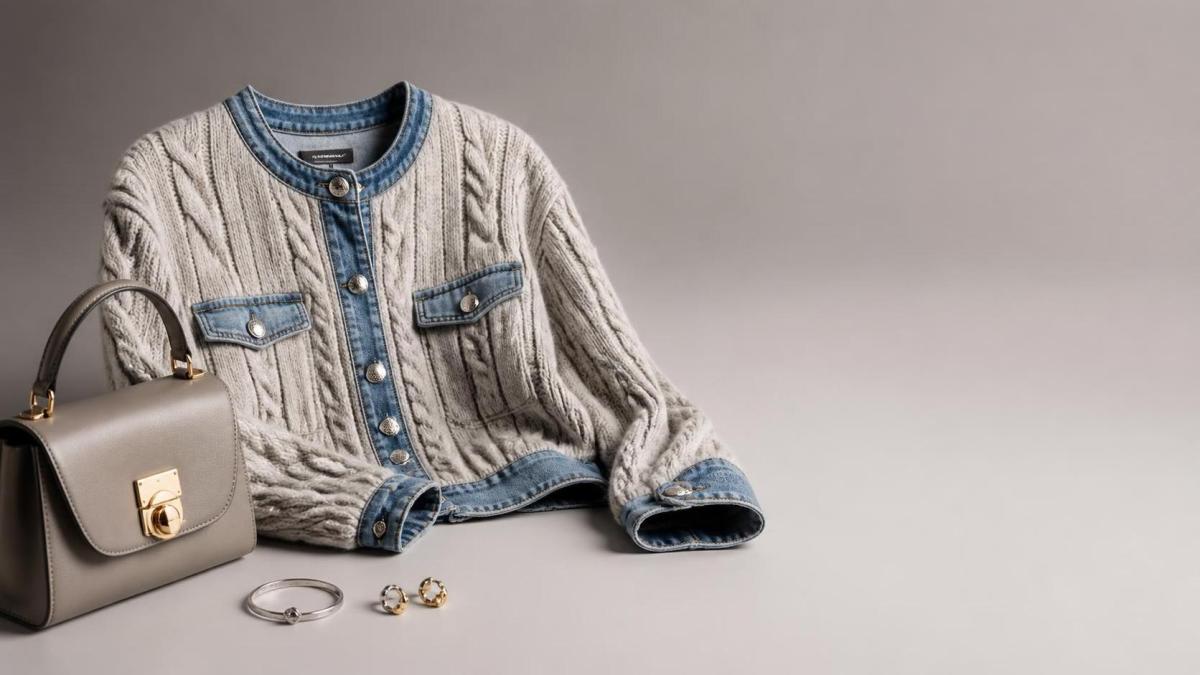
Take the styling logic behind ZT6187 miu* FW26. Its cable knit fabric and denim combination, cropped cut, muted oat gray tone, and polished round metal buttons point to a kind of understated luxury that many shoppers now prefer. It is not trying to win through obvious excess. Instead, it works because the material contrast, proportion, and finishing details create a refined, wearable mood for daily commutes or dating occasions. That is often how premium fashion earns repeat wear.
Timeless design does not mean boring design
There is a common misunderstanding that timeless pieces must be plain. In reality, the strongest premium accessories usually have personality, but in a controlled way. A tiny chest logo, a softened neutral tone, a preppy reference, or a subtle retro line can add identity without locking the piece into a single season.
This matters because luxury buyers are increasingly looking for emotional durability, not just physical durability. They want items that still feel right after six months, not just on the day of purchase. A piece that can be worn alone for a youthful, polished mood and then layered with a shirt or paired with a midi skirt has more wardrobe intelligence than something visually striking but hard to style twice.
That is why proportion has become such a big part of premium judgment. A good cropped cut should lengthen the silhouette rather than interrupt it. Long sleeves should feel versatile across seasons rather than overly heavy. Soft neutral colors, like muted oat gray, often read more expensive because they leave no room for poor finishing to hide.
What experienced buyers notice before they purchase
People who regularly buy premium fashion often develop a habit of checking five things very quickly.
They look at surface texture first. If the fabric already appears tired, fuzzy, or flat, it is unlikely to improve with wear.
Then they assess hardware and trims. Buttons, zippers, snaps, and decorative metal details should feel smooth, balanced, and intentional. Cheap-looking hardware can instantly collapse the luxury impression.
Next comes silhouette. A premium accessory-led garment should create shape without forcing it. If the cut only works on a mannequin-like pose, it is not a strong buy.
After that, they think about styling range. Can it move from work to dinner? Does it layer well? Can it work with both soft and structured pieces?
Finally, they ask whether the item feels overbranded. In today’s premium segment, many consumers associate quiet confidence with better taste. Branding still matters, but subtle branding often ages better.
Why supply chain depth influences the final luxury feel
From the outside, luxury appears to be a design story. From the inside, it is often a supply chain story. Premium accessories and garments require stable material sourcing, accurate pattern making, consistent trim selection, and production teams that understand when a small deviation changes the whole look.
Meiwuzhi’s setup offers a useful example of how that depth can support quality. Alongside its own manufacturing capabilities, it has built parallel development through Shenzhen Taochulai Network Co., Ltd. and Shenzhen Taoshangpin Network Co., Ltd. Its Tchu showroom in Nanshan, Shenzhen, is used to present the latest styles and in-stock items to clothing retailers and online wholesalers across China. Over 12 years on Alibaba, Taolaichu has recorded sales exceeding 350 million yuan, with more than 130 cooperative physical stores nationwide and over 45,000 online cooperative WeChat business partners and online store clients.
For consumers, numbers like these do not prove luxury by themselves. What they do suggest is something more grounded: repeated market exposure tends to force better pattern discipline, faster feedback on fit, and clearer understanding of what premium shoppers actually keep wearing. In fashion, distribution scale matters less than what a company learns from it.
The risks of buying “luxury-looking” instead of luxury
Many disappointing purchases happen because an item signals luxury visually but fails in use. The color may be elegant, but the fabric feels rough. The buttons shine, but the finish scratches quickly. The silhouette looks good in one photo, but the proportions fight with most wardrobes. In other words, the piece is selling an image, not a lasting experience.
This is especially common in products that lean too heavily on trend shorthand: oversized logos, exaggerated trims, or novelty details that date quickly. These elements are not automatically wrong. But if they are not supported by material quality and proportion control, they often create a short-lived sense of luxury rather than genuine value.
A better approach is to ask a few plain questions before buying. Does it feel comfortable against the skin? Can I imagine wearing it at least three different ways? Do the details still look refined up close? Will this color and shape still make sense next season? If the answer is mostly yes, the premium price may be justified.
How luxury women's accessories fit into everyday wardrobes now
Premium fashion buying has become less about collecting statement pieces and more about building a wardrobe with texture, polish, and flexibility. That shift is one reason luxury women's accessories now include more hybrid pieces that sit between garment and accessory logic. They finish an outfit, shape an impression, and add identity without requiring a full formal occasion.
A soft knit with a tailored edge, a subtle branded detail, and an easy layering function can now do the work that a louder accessory once did. The appeal is obvious: it looks elevated, feels personal, and works on an ordinary day. In that sense, premium buying has become more intelligent. Consumers are not giving up on luxury; they are asking it to be more useful.
That is also why pieces like ZT6187 miu* FW26 make sense in the current market conversation. Its appeal comes from wearability as much as appearance: ultra-soft touch, skin-friendly comfort, long sleeves for season-spanning use, and a shape that works whether worn on its own or layered. Premium buyers increasingly respond to that kind of quiet competence.
If you are trying to judge luxury more accurately, ignore the noise for a moment. Look at the fabric. Study the finishing. Think about how the piece will move through your week, not just how it looks in a campaign image. The best premium accessories do not beg to be noticed. They simply keep proving, wear after wear, that they were worth choosing.

What Is Women's Ready-to-Wear, and How Does It Differ From Made-to-Measure?
Explore women's ready-to-wear vs. made-to-measure: compare fit, quality, cost, and timing to find the right option for your wardrobe. Discover what to check before buying.
Full Package Garment Production: What's Included and Which Costs Are Extra?
Full package garment production: discover what’s included, which costs are extra, and how to compare supplier quotes to avoid hidden fees and protect your womenswear margins.
Fashion Accessories Production: From Approved Samples to Consistent Bulk Quality
Improve fashion accessories production with proven sample, material, and inspection controls. Discover practical ways to reduce defects and deliver consistent bulk quality.


{item.title}
{item.description}
Please give us a message
Contact Us