
Can Small Buyers Negotiate Designer Women's Clothing Prices?
Yes, wholesale prices for designer women's clothing can be negotiable on small orders, but a lower unit price is not automatic. A supplier may have room to adjust the quote when garments are already in stock, specifications are unchanged, or several styles can be shipped together. A small custom order requiring new patterns, specialized fabric, and individual packaging leaves less room because those costs must be spread across fewer pieces.
Negotiation also extends beyond the price printed beside each garment. Minimum quantities, size assortment, alterations, freight, payment terms, and the treatment of defects all affect the value of an offer. A useful comparison starts by asking what each quoted price actually includes.
Where Small Orders Have Negotiating Room
Stock availability often makes the biggest difference. Finished garments have already absorbed the work of pattern development, cutting, and production. When a supplier wants to move an existing assortment, there may be flexibility on price or quantity. That flexibility is limited by the sizes, colors, and condition of the stock available; a favorable quote on incomplete size runs is useful only if those sizes can be sold.
Made-to-order clothing works differently. Cutting a small run still involves preparing patterns, arranging materials, setting up production, and inspecting the finished garments. A request for a different neckline or lining can require more than a simple substitution, particularly if it changes the fit or construction. The supplier's minimum quantity may therefore reflect the work needed for a particular style or fabric, rather than an arbitrary order threshold.
Orders that sit between these categories deserve a separate discussion. A supplier might offer an existing design with a standard fabric and limited customization. That can reduce development work, although adding a private label, changing buttons, or altering the size range can still introduce extra charges or minimums.
These are starting points, not guaranteed concessions. A sought-after stock item with little remaining inventory may have a firmer price than a made-to-order style using readily available materials. Ask about the particular garment and quantity before assuming that the order category determines the outcome.
A Lower Minimum Is Not Always a Lower Price
Minimum order quantity can apply to the entire order, each style, each color, or even a specific size assortment. A quote that allows several designs in one shipment may still require a minimum number of pieces per color. Clarify those levels before comparing offers: two suppliers can quote the same total minimum while requiring very different commitments to individual garments.
Some suppliers accept a smaller quantity at a higher unit price. That arrangement can be worthwhile when it avoids unsold inventory, but the higher price should be compared with all other costs, including sampling and freight. Conversely, increasing an order to reach a discount makes sense only if the additional sizes and colors have a reasonable prospect of selling.
Mixed-size orders need particular attention. A low price for an assorted pack may include sizes in proportions that cannot be changed. Ask whether the quoted assortment is fixed and whether individual sizes can be reordered. A slightly higher price for a selectable size mix can produce a better result than a discounted pack with an unsuitable distribution.
For existing stock, ask whether different styles can count toward the same order threshold. Combining compatible items may meet a supplier's handling requirements without committing heavily to one design. Confirm that the quoted discount applies to the actual mix, not only to repeated units of a single style.
Compare the Garments Before Comparing the Quotes
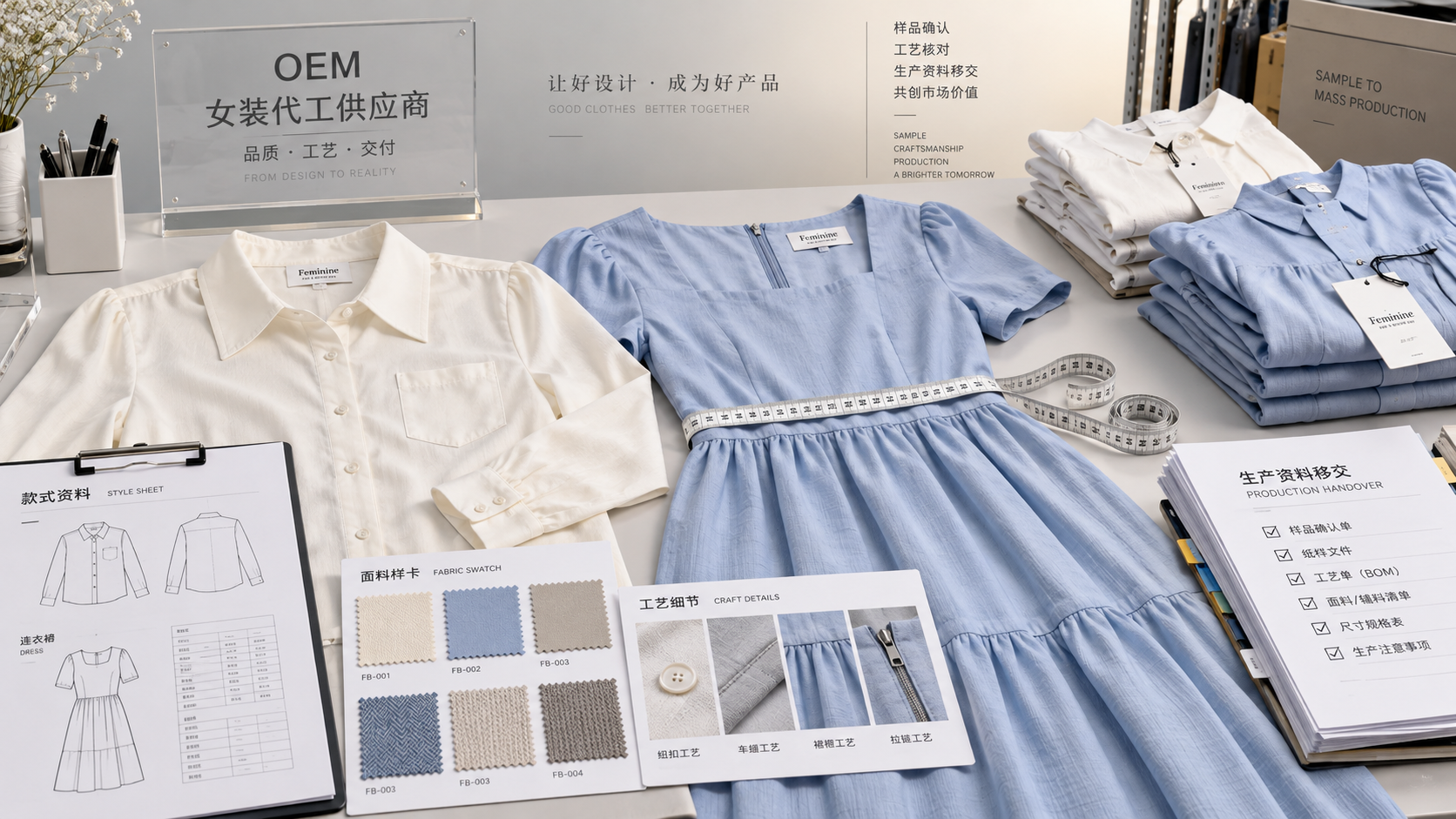
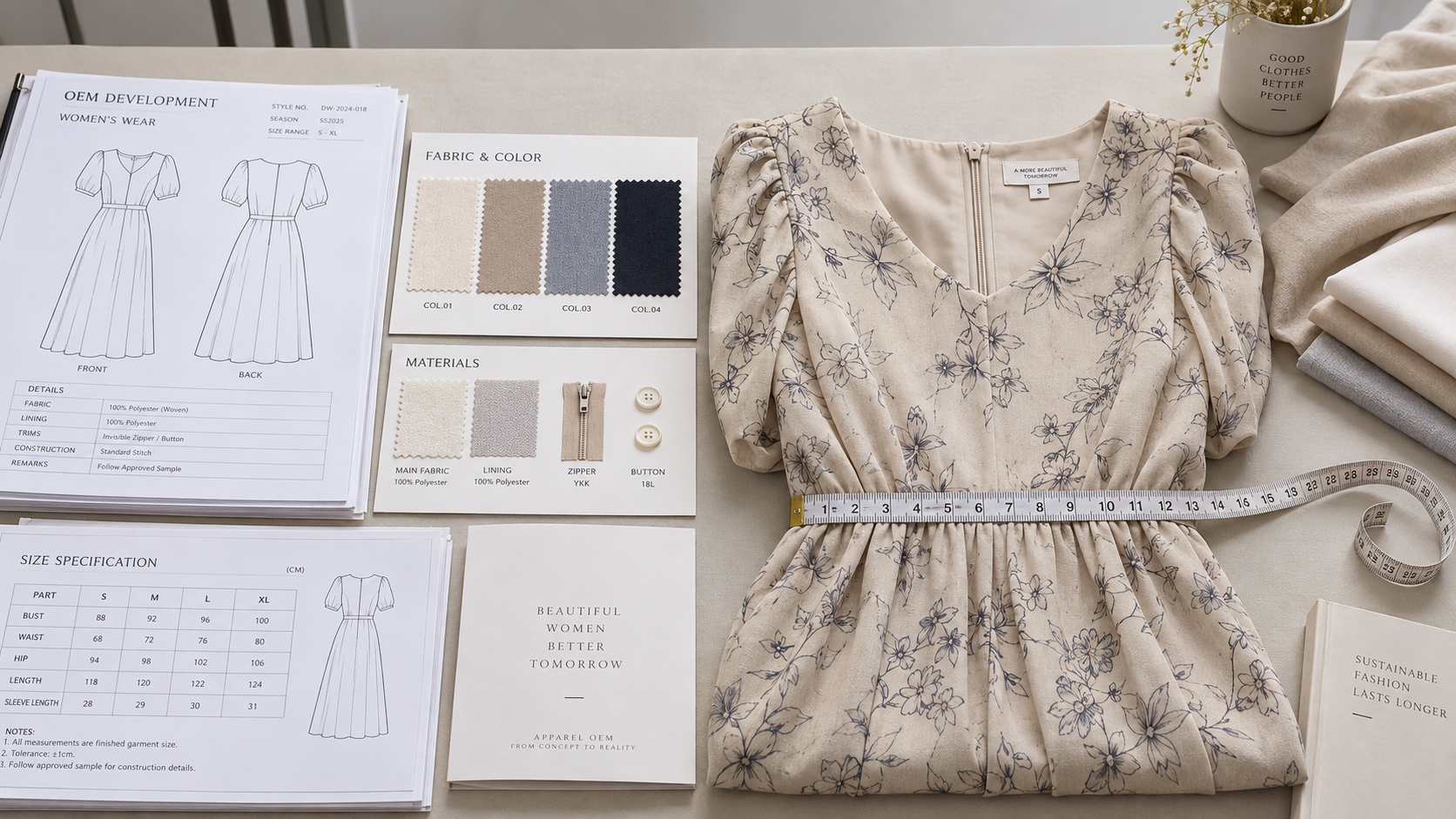
Two garments described as the same style may differ in fabric composition, lining, construction, and finishing. A lower quote becomes difficult to evaluate if the supplier has changed the material or omitted a feature. Request a written specification covering the points that affect appearance and wear: fabric composition and weight where available, lining, closures, embellishments, measurements, and finishing details.
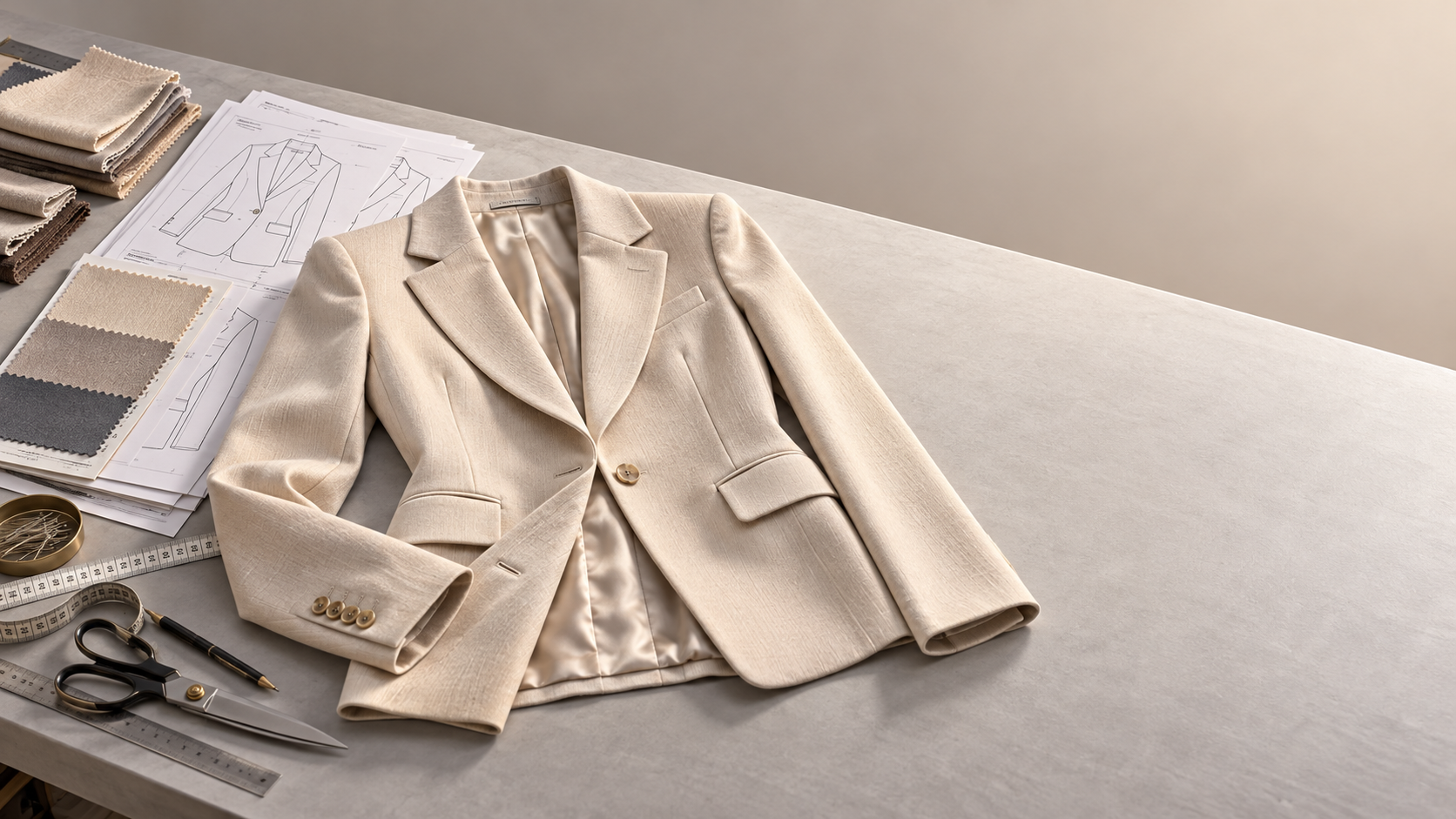
For a tailored jacket, for example, the inclusion of lining and the construction of the collar affect both appearance and production work. For a knitted dress, yarn composition, knit structure, and the stability of the fabric influence how the garment feels and holds its shape. These details do not establish a single correct price, but they make it possible to see whether competing quotes refer to comparable products.
Designer-style clothing also calls for clarity about the design's origin and labeling. An original design, an existing supplier design, and a garment made from a supplied reference are different arrangements. Confirm what design and labels will appear on the finished item, and do not assume that a reference image grants permission to reproduce another party's protected design.
Samples are useful when the garment is being made or modified, but a sample quote and a bulk quote should be read separately. Ask whether the sample uses the same fabric and trims proposed for production, whether its cost is credited against an order, and what happens if revisions are needed. A sample made from substitute material may demonstrate the silhouette while leaving color, texture, and drape unresolved.
Trade Changes in Scope for Clear Concessions
A request for a discount is easier to evaluate when it identifies something the supplier can change. Reducing the number of custom colors, using an existing fabric, or keeping standard buttons may simplify the order. Ask for the original and revised quotations side by side so that any saving is tied to a visible change in scope.
There are limits to this approach. Replacing a fabric or simplifying construction can alter the garment's positioning and sell-through. Agree on the acceptable specification first; then discuss where cost can be reduced without changing the features that matter. If a supplier offers a lower price by substituting materials, request the exact composition and a swatch or revised sample before approving production.
Some concessions do not involve changing the garment at all. A supplier might agree to combine shipments, waive a separate labeling charge, reserve stock for a short agreed period, or offer a more flexible size mix. Each concession should be stated in writing with any conditions attached. Free labeling, for example, has different value if labels must still be supplied separately or a setup fee remains payable.
Repeat orders can also be part of the discussion, but distinguish an intention from a commitment. A forecast may help explain the commercial opportunity; it does not guarantee future volume. If a lower price requires a cumulative quantity or a reorder by a particular date, document the threshold and what happens when it is not reached. Avoid accepting an obligation based on sales that have not yet occurred.
Calculate the Cost of the Order, Not Just the Unit Price
A quote should identify whether it covers garment production only or also includes labels, packaging, inspection, and delivery to an agreed location. Freight and destination charges can materially change the comparison, particularly on a small shipment. Clarify the delivery point and which party pays each transport charge; a low factory price does not establish the cost of receiving the goods.
Compare offers using the same quantity, size breakdown, packaging, and delivery assumptions. Include any sample or development charges that will not be credited, as well as payment processing or currency conversion costs where applicable. For international shipments, establish who is responsible for import-related charges and any clearance arrangements before treating a quote as a final landed cost.
Payment terms also have a price. A lower quote requiring full payment before production creates a different exposure from one with an agreed deposit and balance schedule. A discount for faster payment should be weighed against the ability to review the goods at the point specified in the agreement. Do not assume that a payment milestone includes an inspection opportunity unless both are expressly stated.
Put the Negotiated Terms Into the Order
Once a price is agreed, confirm the style references, quantities by size and color, fabric and trim specifications, sample approval, packaging, delivery point, and payment schedule in the purchase order or written confirmation. Include any negotiated exceptions, such as a reduced minimum or mixed-style discount. Verbal flexibility can disappear when the order reaches production unless the details are recorded.
Agree on how discrepancies will be handled before payment is complete. A practical arrangement identifies the inspection point, the time allowed to report defects or shortages, the evidence required, and whether the remedy is replacement, repair, credit, or refund. For stock garments, clarify whether minor imperfections or variations have already been disclosed in the quoted price.
Also ask what happens if an agreed fabric, size, or trim becomes unavailable. Substitution without approval can make a discounted order unsuitable for sale. A written requirement to approve changes gives both sides a clear decision point before the garment is finished.
The strongest small-order negotiation is specific: it connects a requested concession to an order the supplier can actually fulfill, while keeping the garment and commercial terms clear enough to compare. A firm price can still be a reasonable offer when the size mix, workmanship, delivery terms, and remedy for defects match the order.

What Happens if Delivered Garments Have Quality Defects?
What happens if bulk garment manufacturing has quality defects after delivery? Learn how to document issues, notify suppliers, and negotiate remedies.
Can Small Buyers Negotiate Designer Women's Clothing Prices?
Are designer women's clothing wholesale prices negotiable for small orders? Discover practical ways to negotiate pricing, minimums, shipping, and better terms.
How to Find a Reliable High-End Women's Apparel Wholesaler
Learn how to find a reliable high-end women's apparel wholesale supplier. Discover how to assess quality, verify factories, compare quotes, and avoid costly sourcing mistakes.

{item.title}
{item.description}
Please give us a message
Contact Us