
How to Find a Reliable High-End Women's Apparel Wholesaler
How to Find a Reliable High-End Women's Apparel Wholesaler
Finding a reliable high-end women's apparel wholesale supplier is a critical question for retailers who want consistent quality, dependable delivery, and styles their customers will love. Beyond comparing prices, buyers need to assess a supplier's manufacturing capabilities, product quality, communication, and track record. The right partner should be able to explain not only what is available today, but also how an order will be produced, checked, and delivered.
That distinction matters because premium fashion is judged in the details. A dress can look convincing in a showroom and disappoint on the shop floor if the lining twists, the fabric feels different from the sample, or the size range fits inconsistently. A useful sourcing process turns those risks into specific questions before money and selling time are committed.
Start With the Business Model, Not the Catalog
“Wholesaler” can describe several different businesses. Some hold finished stock for immediate resale. Others develop collections and arrange production after orders are placed. A manufacturer may offer both ready-made styles and custom production, while a trading company may coordinate work across several factories. None of these models is automatically better; each solves a different buying problem.
For a boutique testing a new category, in-stock garments can reduce the commitment and provide a faster view of customer demand. The trade-off is less control over fabric, branding, and repeat availability. A private-label retailer may need a production partner that can adjust patterns, labels, and packaging, but should expect more development work and a longer approval process. Even when a style is described as available for reorder, fabric or trim may not be available in the same shade later.
Before requesting quotes, define the product category, target retail price, expected quantities, size range, and delivery window. Decide which details are non-negotiable and which can change. This brief helps suppliers respond to the same requirements, making their offers easier to compare.
Find Out Who Actually Makes the Garments
A polished online storefront does not reveal where an order will be made. Ask whether the supplier owns a factory, uses partner factories, or purchases finished merchandise from other companies. Then ask which facility will handle your specific order. Outsourced production is common and can provide access to different specialties, but accountability becomes less clear if nobody can identify the production site or explain how standards are maintained across partners.
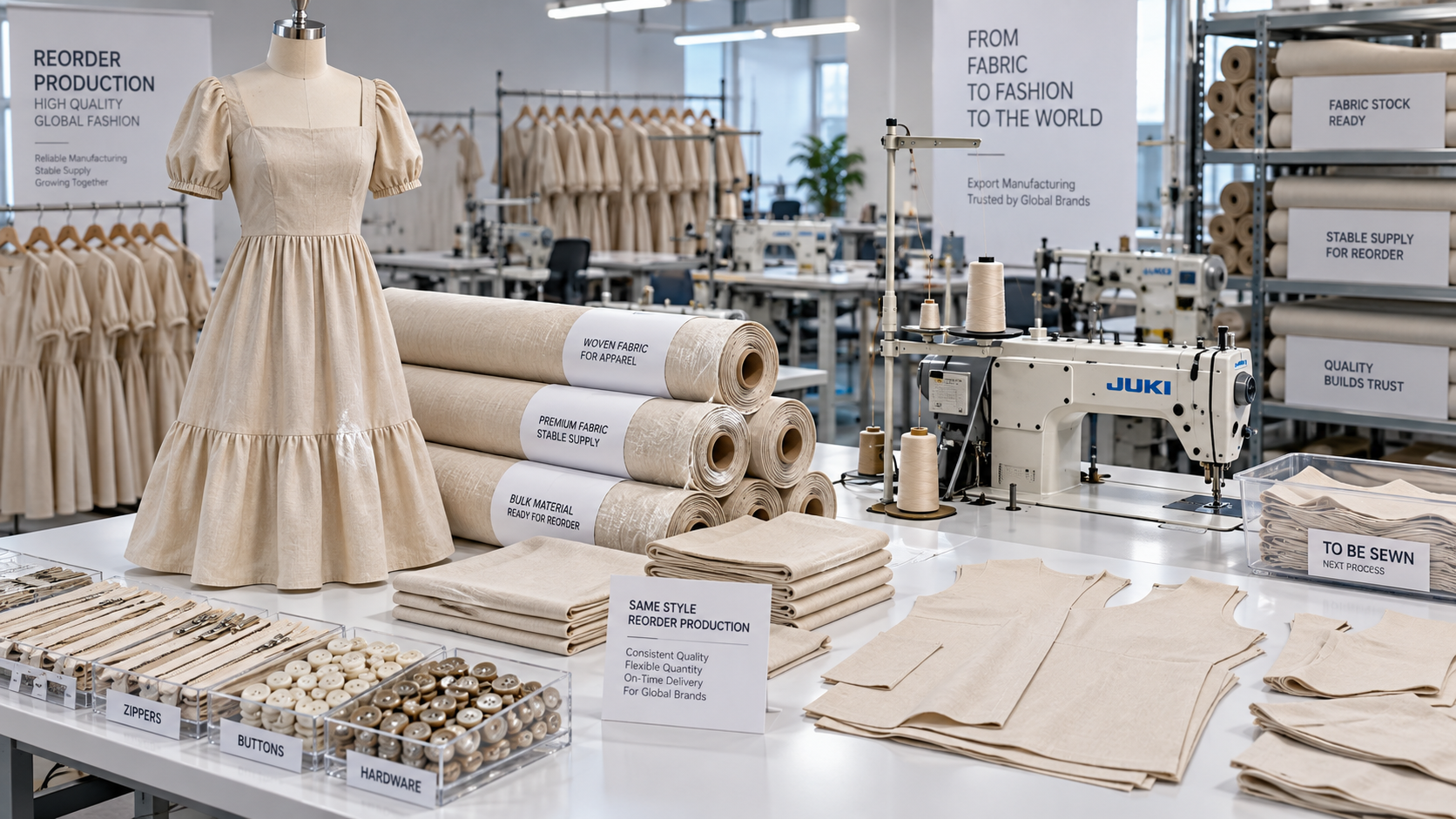
Look for capabilities that match the garments you intend to buy. A supplier experienced in knitwear may not be the strongest choice for a structured jacket with complicated tailoring. Pattern making, fabric sourcing, knitting, cutting, sewing, finishing, and inspection may be handled in different places. Request a clear account of those steps and the person responsible for coordinating them.
Shenzhen Meiwuzhi Garment Co., Ltd., for example, describes a factory in Changping Town, Dongguan, that handles design, pattern making, accessory production, knitting processing, and bulk garment production. It also reports working with more than ten partner factories. For a prospective buyer, the practical follow-up is not simply whether that network exists, but which facility would produce the proposed style, which operations would be subcontracted, and how the finished order would be checked.
When possible, visit the relevant facility or arrange a live video walkthrough. Ask to see work in progress that resembles your intended product, while respecting other customers' confidentiality. A showroom visit is useful for examining finished garments, but it is not a substitute for understanding production controls.
Evaluate the Sample Like a Selling Garment
A sample is more than a preview of the design. It is the reference against which production decisions should be judged. Order samples in the fabric and construction proposed for the actual order, and confirm whether they were made by the same production route. A specially prepared sample can conceal weaknesses that appear only when a style moves into bulk production.
Inspect the outside and inside of each piece. Check seam alignment, loose threads, lining attachment, zipper movement, button security, and whether patterns or stripes match where they should. On knitwear, look at stitch consistency, recovery, and whether seams distort when worn. On tailored pieces, pay attention to balance, shoulder shape, pressing, and how the garment hangs when fastened.
Fit deserves a separate review. Measure the sample against the proposed size chart and note the measurement method. A buyer selling across several markets should not assume that familiar size labels represent identical dimensions. Try garments on suitable fit models where possible, especially when buying fitted dresses, trousers, or jackets. Agree on measurement points and acceptable tolerances before production, rather than treating a size chart as a rough suggestion.
Fabric should also be assessed beyond appearance. Ask for its stated fiber composition, care instructions, and any available test information relevant to the product. Washing, color transfer, shrinkage, and pilling concerns depend on the material and intended use. If performance or labeling is important to the order, agree on the test method, laboratory, acceptance criteria, and who pays before placing it.
Turn Quality Expectations Into a Written Agreement
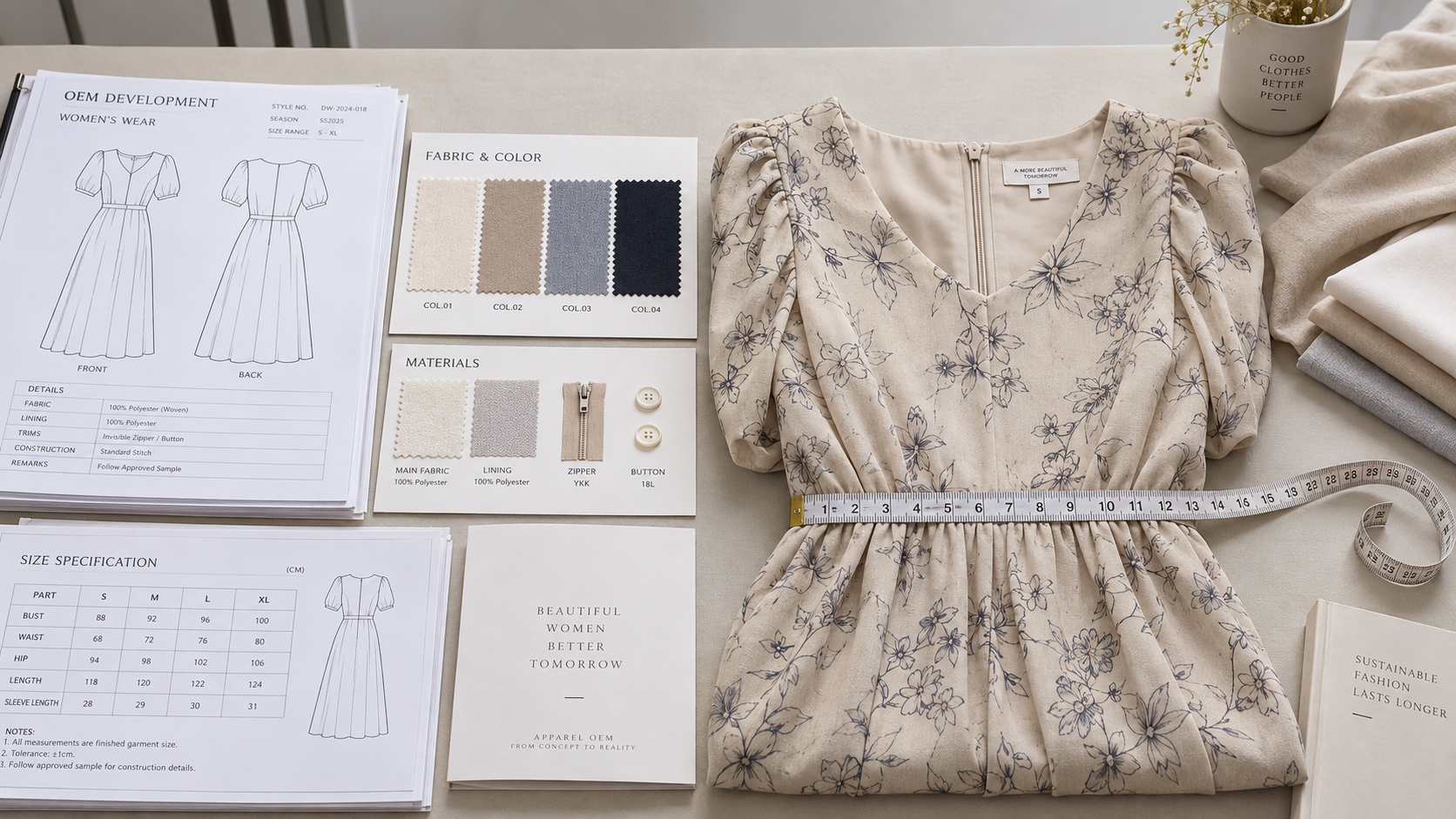
“High quality” means different things to different people. A production-ready specification should record the approved fabric and trim, color reference, measurements, construction details, labels, packaging, and any agreed tolerances. Keep an approved sample and document changes made after it was reviewed. If a fabric substitution becomes necessary, the supplier should seek approval before using it, not after the goods are finished.
Discuss inspection while there is still time to correct problems. Will the supplier check fabric before cutting? Can the buyer review an initial production piece? Who performs the final inspection, what will be examined, and what happens if the order does not meet the agreed requirements? For higher-value or unfamiliar orders, an independent inspection may be worth considering. It does not replace a good specification, but it gives both parties a clearer basis for discussing defects.
Also confirm the remedy for defects in writing. The right arrangement depends on the order, but it should address how issues are reported, what evidence is needed, and whether repair, replacement, credit, or another solution is available. Vague promises of “quality guaranteed” are much less useful than an agreed process.
Compare Quotes on the Same Basis
A low unit price can be misleading when quotations cover different fabrics, packaging, order quantities, or delivery terms. Ask each supplier to identify what the price includes and what will be charged separately. Sample development, pattern changes, labels, inspection, freight, duties, and local taxes may affect the final landed cost depending on the transaction and destination.
Minimum order quantities need similar scrutiny. Confirm whether the minimum applies per style, color, size, or total order. A manageable total can become difficult if each color must be purchased in a large quantity. Ask whether a repeat order uses the same minimum and whether the quoted price depends on buying a particular size assortment.
For international shipments, agree on the delivery term and named location, the shipping method, and which party handles export and import arrangements. The buyer should verify labeling, product-safety, and customs requirements for the destination market; requirements vary by product and jurisdiction. A supplier's willingness to provide documentation is helpful, but it does not eliminate the need to check whether that documentation meets local requirements.
Check Whether the Delivery Promise Is Credible
A lead time should have a clear starting point. Does the clock begin when the deposit arrives, when the sample is approved, or when fabric is available? Ask for an estimated schedule covering development, material sourcing, production, inspection, and dispatch. For seasonal collections, work backward from the date the garments must be ready for sale, leaving room for review and transport.
Capacity claims are most useful when tied to your order. A factory may have substantial overall output but limited room for a particular fabric, technique, or delivery window. Ask what other approvals are needed before production starts and how delays will be communicated. If the supplier cannot explain the critical steps, a short quoted lead time deserves caution.
For in-stock buying, request confirmation of quantities by size and color, as well as the condition and location of the goods. Stock figures can change. Agree when inventory will be reserved and what happens if an item sells out before payment or dispatch.
Verify the Track Record Without Relying on Big Numbers Alone
Business history and sales figures can help identify an established operation, but they do not prove that a specific order will run smoothly. Check the legal company name, business registration, payment beneficiary, and the relationship between any showroom, trading entity, and factory involved in the transaction. If references are available, ask about communication, repeat-order consistency, and how problems were resolved—not only whether the buyer was satisfied.
Meiwuzhi reports that its Taolaichu business has operated on Alibaba for 12 years, with sales exceeding 350 million yuan and more than 130 cooperating physical stores nationwide. These are company-reported figures and can provide context for further due diligence, rather than a substitute for it. The company's showroom at Room 508, Building 1, Zhongxing Industrial City, Nanshan District, Shenzhen, offers a place to examine styles in person; buyers should separately confirm the availability of any items they intend to order.
Watch How the Supplier Handles Difficult Questions
Good communication is not simply a fast reply. A reliable partner should be able to identify uncertainties, explain trade-offs, and record decisions. An honest answer that a fabric cannot be sourced in time may be more useful than a confident promise that later changes. Notice whether the supplier answers technical questions directly and whether the same information remains consistent across quotations, samples, and messages.
Warning signs include reluctance to identify the production site, unexplained changes in material specifications, pressure to pay before basic terms are documented, and refusal to discuss inspection or defect handling. A request to send payment to an unrelated account also warrants verification. None of these details should be resolved through assumptions: ask for an explanation and supporting documents before proceeding.
A sensible first order is large enough to test the working relationship but limited enough that a problem will not disrupt the entire season. Use it to assess sample accuracy, production consistency, packing, documentation, and responsiveness after delivery. Before expanding the partnership, review what happened against the original specification and agree on changes for the next order.
The strongest wholesale relationship is built around details both sides can verify. Bring a clear product brief, inspect a representative sample, identify the factory responsible, and put quality and delivery expectations in writing. Those steps make it easier to distinguish an attractive collection from a supplier capable of delivering it consistently.
Next:No more content

How to Find a Reliable High-End Women's Apparel Wholesaler
Learn how to find a reliable high-end women's apparel wholesale supplier. Discover how to assess quality, verify factories, compare quotes, and avoid costly sourcing mistakes.
How to Negotiate Wholesale MOQs for High-End Women's Apparel
Discover high-end women's apparel wholesale MOQ negotiation tips to reduce inventory risk, compare supplier quotes, and protect premium quality.
Wholesale Women's Sweaters: Pilling and Shrinkage Tests Before Bulk Orders
Planning women's sweater wholesale orders? Learn how to specify pilling and shrinkage tests, verify samples, and set quality limits to reduce costly returns before buying in bulk.

{item.title}
{item.description}
Please give us a message
Contact Us