
How to Negotiate Wholesale MOQs for High-End Women's Apparel
The most effective way to negotiate a lower minimum order quantity is to identify what is driving the supplier’s minimum, then offer a practical alternative. A factory may be able to reduce the quantity per color if the total order shares the same fabric, for example, while a fully custom print may remain subject to a separate fabric minimum.
These high-end women’s apparel wholesale MOQ negotiation tips focus on the trade-offs behind the number: product customization, material commitments, unit cost, lead time, and inventory risk. A smaller order is not automatically a better deal if it leaves you paying for unused fabric or accepting quality changes that undermine the collection.
Start by finding out what the MOQ applies to
“Minimum order quantity” can refer to several different things. Before comparing quotes, ask the supplier to explain each applicable minimum in writing. An order that appears manageable at first can grow substantially when the minimum applies separately to every style, color, or fabric.
- Per style: The minimum number of garments required for one design.
- Per color: The quantity required for each colorway, sometimes in addition to a style minimum.
- Per size: A minimum for individual sizes, or a requirement to follow a specified size assortment.
- Per fabric or material: A commitment imposed by the mill or material supplier, which may exceed the fabric needed for your garment order.
- Per order: A total quantity or order value that may allow different styles to be combined.
These limits are not always interchangeable. A manufacturer might accept a mixed-size order but require a minimum for each color because the fabric must be dyed separately. Another might allow several designs to share a fabric commitment but still charge separate pattern and production setup fees for each style.
Ask whether the quoted MOQ includes a size mix of your choosing, whether accessories and packaging have separate minimums, and who is responsible for any excess material. This gives you a basis for negotiation before you discuss a lower number.
Compare the main ways to order a smaller quantity
The right approach depends on how much control you need over the garment. The options below reduce different kinds of risk, but they do not offer the same level of exclusivity.
Available stock is often the simplest way to keep the initial commitment small, provided the sizes and quality match your customers’ expectations. The trade-off is that the same style may be offered elsewhere, and a successful item may not be available for a reorder.
At the other end of the spectrum, a custom garment offers more control but creates more points at which a minimum can arise. A distinctive print, custom hardware, and branded packaging may each involve a different supplier. Negotiating only with the garment factory will not necessarily remove those underlying commitments.
Negotiate around the cost drivers, not just the number
Low-volume production can be expensive for reasons that are separate from the number of garments sewn. Pattern development, cutting, machine setup, sample revisions, sourcing, and inspection all take work. Those costs are spread over fewer pieces in a small run.
Instead of asking only, “Can you lower your MOQ?”, ask what would make a smaller order feasible. The answer helps you decide which compromises are acceptable.
Use existing fabrics and trims
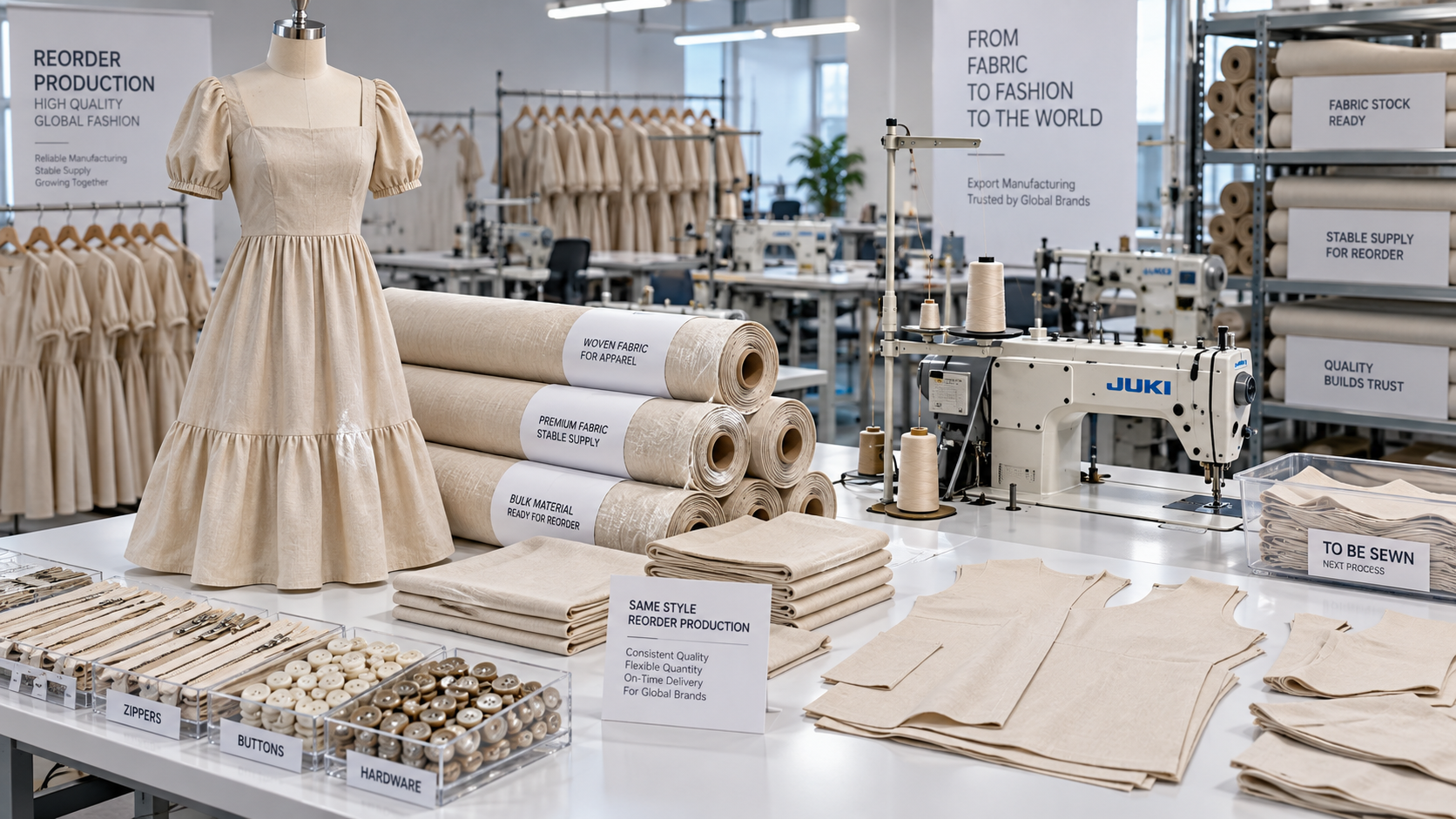
Stock fabric can avoid the commitment associated with a custom mill order. Standard zippers, buttons, linings, and interlinings may also reduce purchasing constraints. This approach is particularly useful for a first production run when the silhouette and fit matter more than an exclusive material.
For premium apparel, however, availability should not override suitability. Request the actual fabric and trim swatches, not just photographs or descriptions. Assess the hand feel, weight, opacity, stretch, and appearance alongside the intended design. A substitute that works for a structured jacket may be unsuitable for a fluid dress.
Also ask whether the selected material is available for a repeat order. A short run made from limited stock may be an excellent test, but it can become difficult to replenish precisely if the style sells well.
Reduce variation where customers will notice it least
A collection with several colors, fabrics, and decorative details may look like a single order to the buyer, but it can create multiple small production runs. Keeping one fabric across related styles, narrowing the color palette, or using a common lining can make the order easier for the supplier to schedule.
Be careful about reducing size choice merely to reach a lower minimum. A premium garment that does not fit the intended customer is still difficult to sell. Ask whether sizes can be mixed within each style and color, then build the assortment around your sales channels and customer base.
Discuss development costs separately
A supplier may be more willing to produce fewer pieces if pattern making, sampling, or setup is charged separately instead of being absorbed into the garment price. This can make the quote more transparent, especially for a new design.
Ask what the development fee covers, how many sample revisions are included, and whether the fee applies again to a reorder. Clarify who can use the patterns and whether they can be transferred. Paying a separate fee can be reasonable, but it should not be mistaken for a reduction in total cost.
Compare landed cost with inventory exposure
A larger order may bring a lower price per garment while increasing the amount of money tied up in stock. To compare offers, consider the full cost of getting saleable garments into your inventory, including sampling, production, packaging, freight, applicable import costs, inspection, and any material commitment.
Then look at how that cost is distributed across the assortment. A lower unit price is less useful if it requires buying colors or sizes you do not expect to sell. Conversely, a small order with a higher unit price can be a sensible choice when it protects cash for future reorders and avoids a large commitment to an untested style.
Request at least two quotes using the same specifications: one for the supplier’s standard MOQ and another for your proposed smaller quantity. Ask for setup charges and material costs to be listed separately. The comparison will show whether the smaller run is genuinely flexible or simply moves the commitment into a fabric purchase, nonrefundable fee, or other condition.
Use a trial order carefully
A trial order can help both parties evaluate fit, workmanship, communication, packaging, and delivery before committing to a larger run. It works best when the garment specifications are clear and the supplier agrees that the trial will follow the same construction and quality requirements as later orders.
Do not assume the trial price will apply to future production, or that the supplier will reserve capacity for a reorder. Discuss the likely reorder process, material availability, price review, and production lead time before placing the trial. A written forecast can help a supplier understand your intentions, but it should be distinguished from a binding purchase commitment.
Some suppliers may offer a reduced initial quantity in exchange for an agreed follow-up order or a commitment to buy remaining fabric. That can be workable when demand is predictable. For an untested style, it may simply defer the inventory risk rather than reduce it.
Protect the details that make the garment premium
When negotiating price and quantity, keep the quality specification visible. High-end womenswear depends on more than the fabric label: fit, seam finish, lining, pressing, hardware, and consistency across sizes all affect how the garment feels and wears.
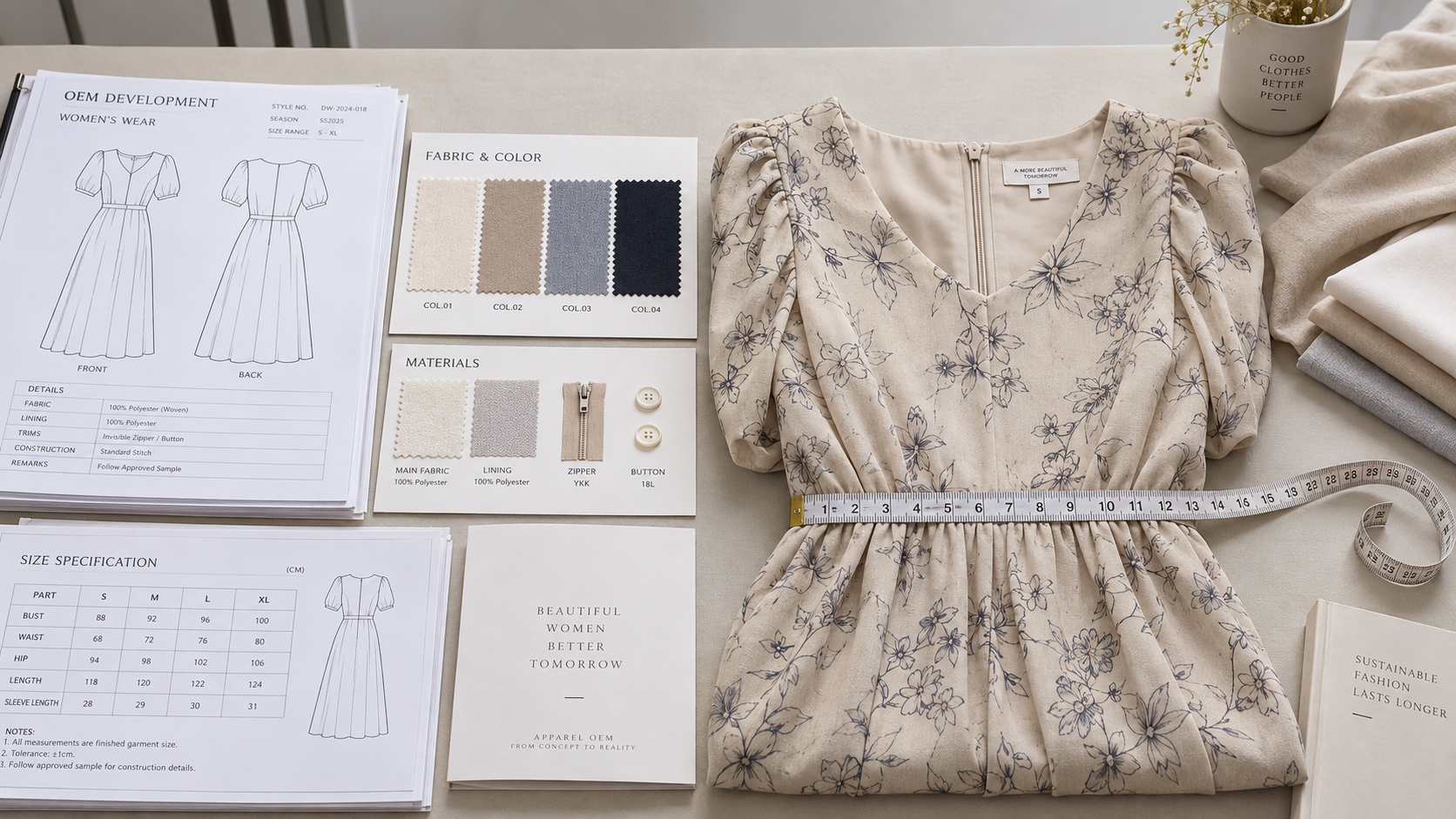
Approve a sample that reflects the agreed materials and construction, and record any changes before bulk production. Your specification should cover measurements and tolerances, fabric and trim references, labeling, packaging, and any workmanship requirements that affect the finished appearance. If the supplier proposes a substitution to meet a lower MOQ, assess it as a product change, not merely a purchasing adjustment.
Agree on how production will be inspected and how defects, measurement deviations, shortages, or late delivery will be handled. A low minimum is of limited value if the order arrives with problems that prevent the garments from being sold at the intended price.
Make a proposal the supplier can evaluate
A useful negotiation starts with a concise brief rather than an isolated quantity request. Include the style or reference sample, target customer, preferred fabric, size range, color options, quantity by style, target delivery date, and any requirements that cannot change. Identify where you have flexibility, such as using available fabric or standard hardware.
Then ask the supplier to quote realistic alternatives. For example, request a price for your preferred design, a version using available materials, and a smaller trial run with development charges shown separately. This gives both sides room to solve the problem without quietly changing the product.
Be direct about your reorder intentions without promising volumes you cannot support. Suppliers can assess a credible forecast more effectively when they understand your sales channel and decision timeline. Avoid accepting a binding future order simply to secure a lower first MOQ unless you are comfortable carrying that commitment.
What to confirm before placing the order
Once you have a workable offer, put the commercial and product terms together in the purchase agreement or order confirmation. At a minimum, the documents should make clear:
- The quantity by style, color, and size, including any permitted overproduction or shortages.
- The approved sample, specifications, materials, and process for approving substitutions.
- Unit prices, development fees, payment schedule, and responsibility for unused materials.
- The production timeline, delivery terms, and what happens if changes affect the schedule.
- Inspection arrangements and the process for resolving nonconforming goods.
- Ownership or permitted use of patterns, artwork, labels, and other developed assets.
- Whether a reorder is optional or binding, and how its price and timing will be determined.
For buyers comparing factory production with available stock, a supplier that offers both can provide a useful point of comparison. Shenzhen Meiwuzhi Garment Co., Ltd., for example, describes garment production capabilities and a showroom displaying styles and in-stock items. Ask about the specific item’s availability, customization options, and order terms before deciding which route fits the collection.
The strongest outcome is not necessarily the smallest MOQ. It is an order whose quantity, quality, total cost, and reorder conditions match what you can reasonably sell and fund. Start with the requirements you cannot compromise, then negotiate the materials, assortment, and production arrangement around them.

How to Find a Reliable High-End Women's Apparel Wholesaler
Learn how to find a reliable high-end women's apparel wholesale supplier. Discover how to assess quality, verify factories, compare quotes, and avoid costly sourcing mistakes.
How to Negotiate Wholesale MOQs for High-End Women's Apparel
Discover high-end women's apparel wholesale MOQ negotiation tips to reduce inventory risk, compare supplier quotes, and protect premium quality.
Wholesale Women's Sweaters: Pilling and Shrinkage Tests Before Bulk Orders
Planning women's sweater wholesale orders? Learn how to specify pilling and shrinkage tests, verify samples, and set quality limits to reduce costly returns before buying in bulk.

{item.title}
{item.description}
Please give us a message
Contact Us