
Clothing Design Services: What to Include in a Brief to Avoid Revisions
Clothing Design Services: What to Include in a Brief to Avoid Revisions
Repeated sample revisions can derail a garment launch, stretch budgets, and leave project managers coordinating conflicting feedback. When sourcing clothing design services, a clear brief helps align creative direction with production requirements before development begins. For high-end womenswear, that means defining the customer, silhouette, fabric, fit, construction, budget, and approval milestones—not just sharing reference images.
A useful brief does not eliminate development. Some decisions require a physical garment, and fitting remains necessary. Its purpose is to prevent avoidable rework: the wrong fabric interpretation, an undefined fit expectation, or a late discovery that the approved design cannot meet the intended cost. The distinction matters when setting schedules and agreeing on revision charges.
Define the assignment before describing the garment
“Design a premium womenswear collection” leaves too many decisions open. Start with the commercial context: who will wear the garments, where they will wear them, which season they serve, and how they will be sold. Occasionwear sold through boutiques may need different fit, finishing, and presentation decisions from everyday pieces sold primarily online.
Describe customer needs in practical terms. Does the wearer need comfortable seated movement, coverage under strong lighting, room for layering, or a closure she can operate without assistance? These requirements give designers more useful direction than demographic labels alone.
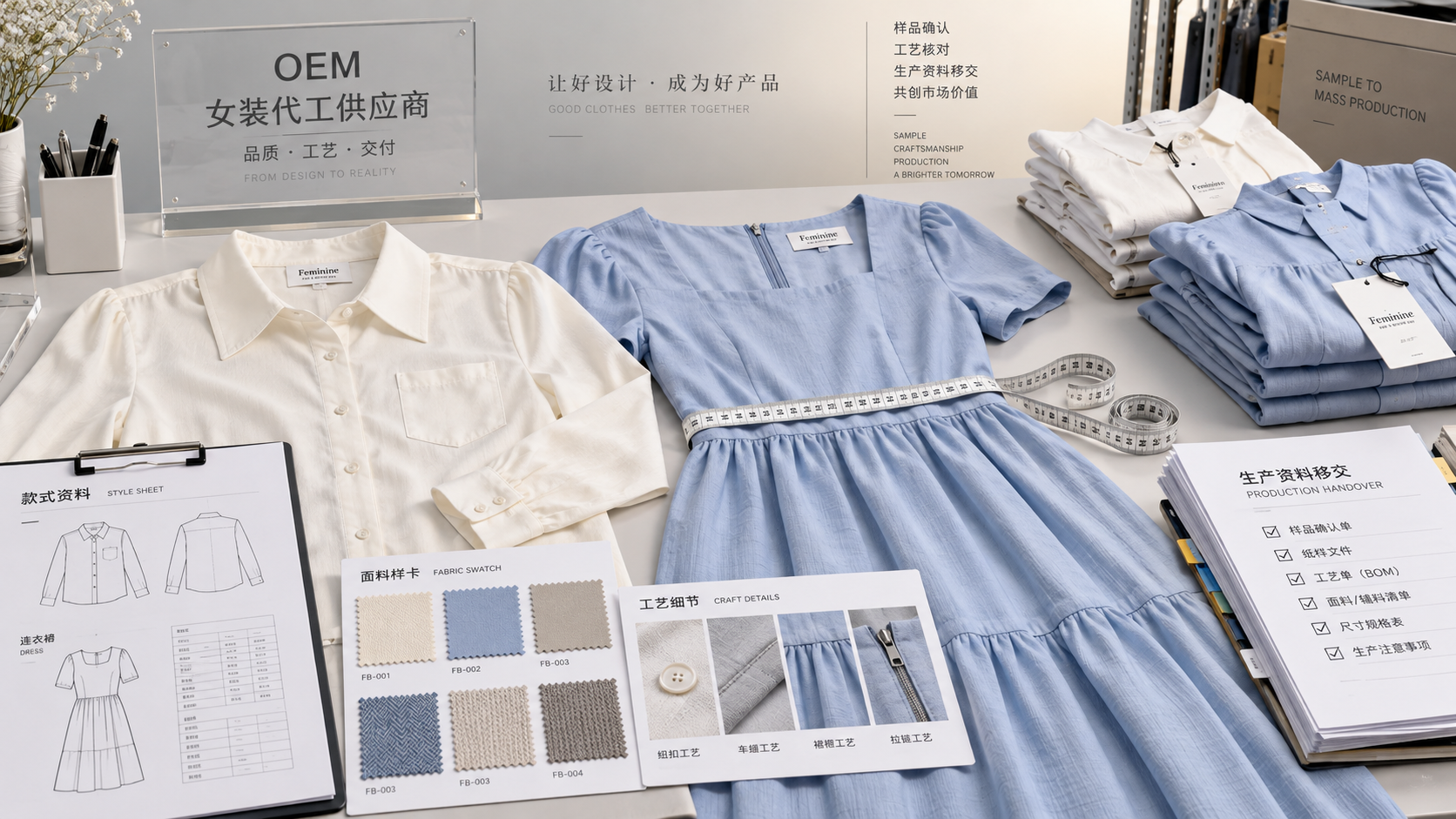
Then define the scope of the clothing design services. Concept sketches, technical flats, fabric sourcing, pattern development, grading, sample coordination, and production support are separate tasks. State which are included, who supplies missing inputs, and what files or physical items must be delivered. Also agree on file formats, usage rights, and access to editable patterns rather than assuming these transfer automatically.
Turn visual inspiration into decisions the team can use
Reference images are helpful when annotated. Without explanation, a designer may copy the sleeve volume when you intended only the neckline, or choose a structured fabric when you liked the photograph’s color.
For each reference, identify the relevant feature and what should not carry over. Separate silhouette, proportion, surface texture, color, and styling. References should communicate direction, not serve as instructions to reproduce another brand’s design.
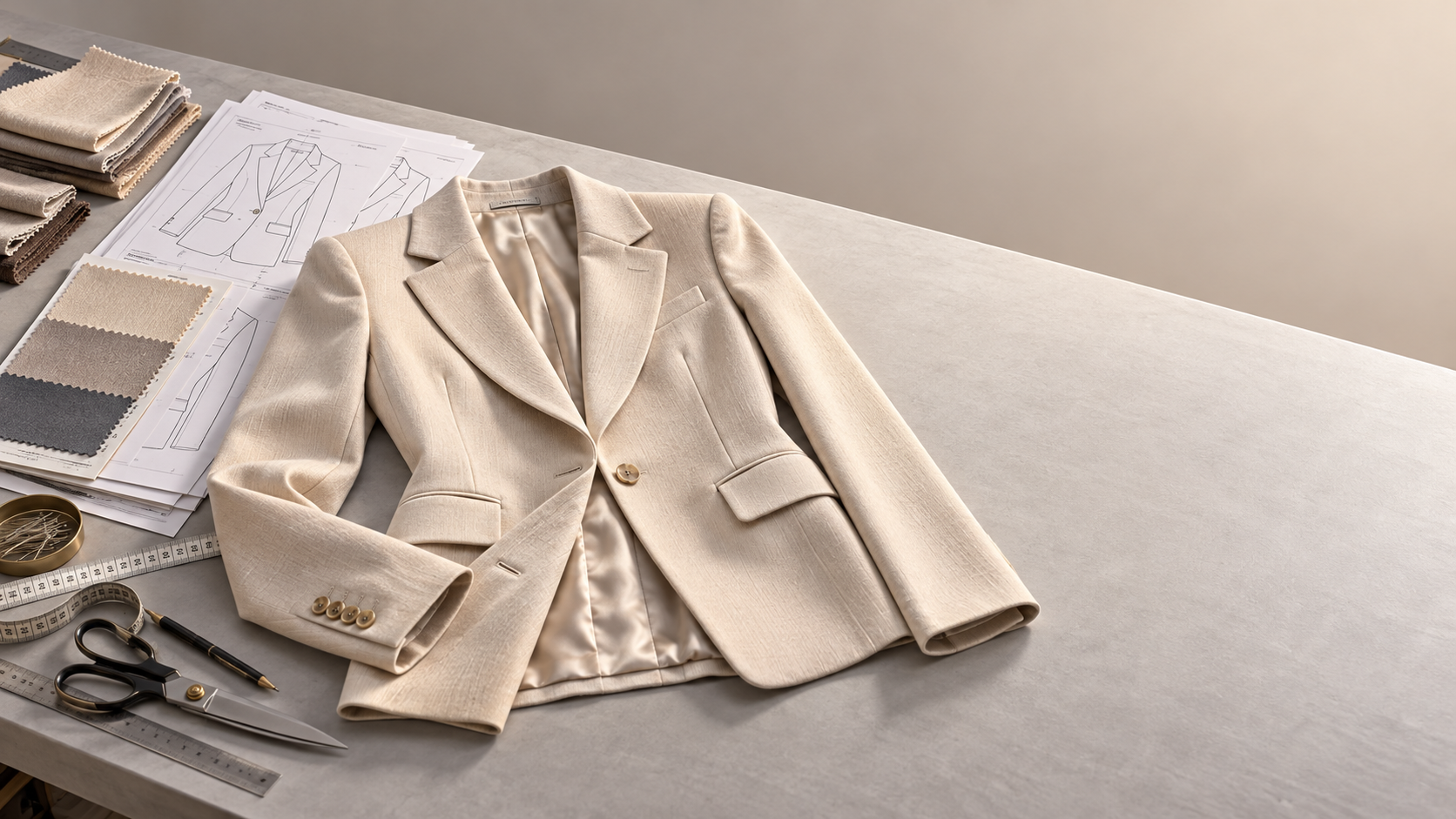
A hypothetical direction such as “a softly tailored jacket with a defined shoulder, relaxed waist, and clean front; avoid oversized sleeves and visible topstitching” creates a clearer starting point than “modern luxury.” Pair this description with front and back views, plus detail views where a closure or seam placement is important.
Mark requirements as fixed, preferred, or open to proposals. If the neckline is essential but the pocket construction is flexible, say so. This helps the team propose alternatives when a design detail conflicts with fabric behavior, cost, or manufacturing capability.
Specify fabric behavior, not only fiber content
Fabric choices affect drape, fit, seam appearance, and production methods. Two fabrics with similar fiber compositions can behave differently because of their construction, weight, finish, or stretch. A fiber label alone is not a sufficient sourcing instruction.
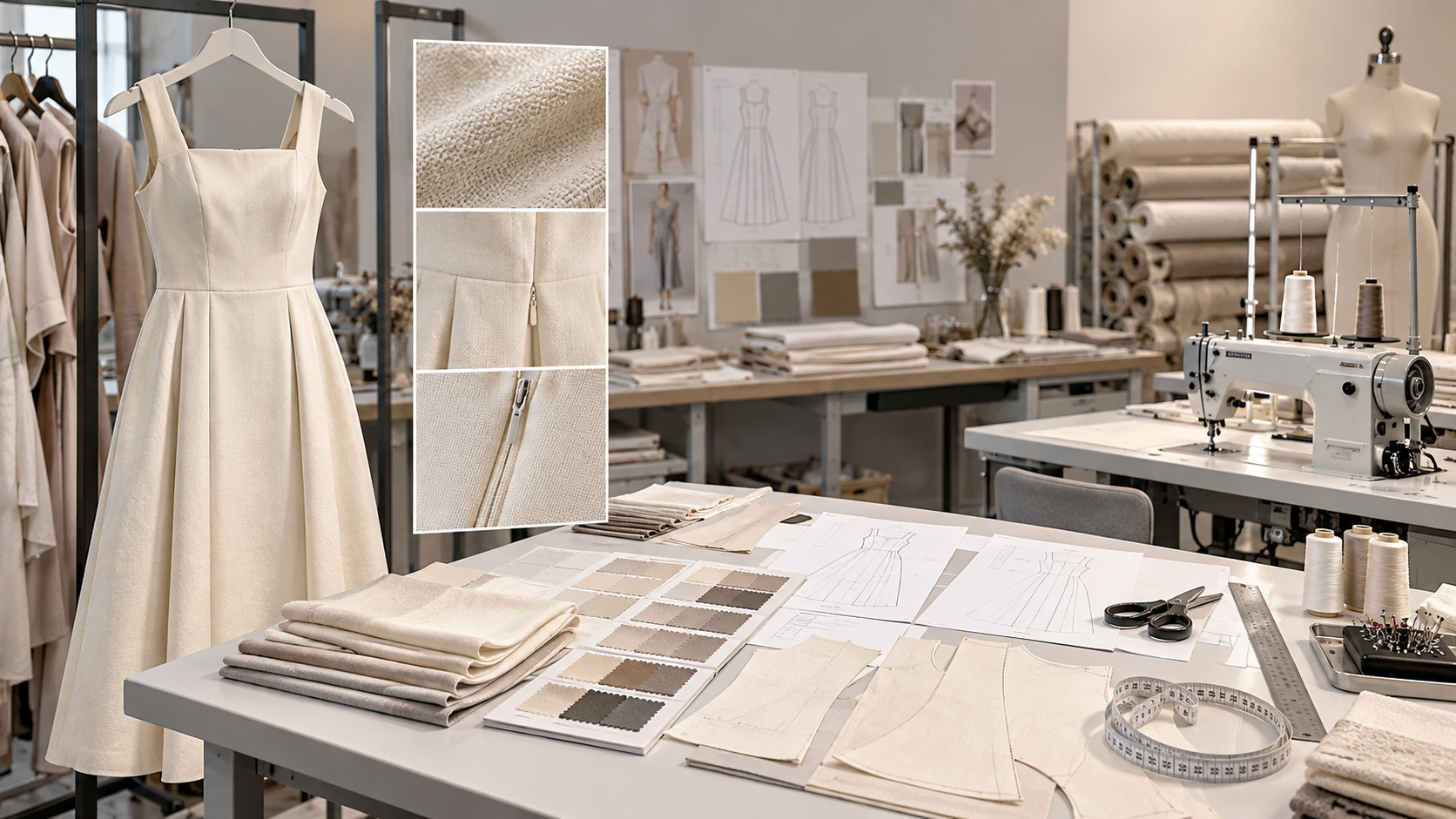
Where available, record composition, woven or knitted construction, weight in grams per square meter, usable width, stretch direction, recovery expectations, and surface finish. Include a physical swatch reference and identify whether it is mandatory or only a guide. For stretch materials, agree on the measurement method rather than relying on an unexplained percentage.
Describe performance in relation to use. A light-colored dress may need an opacity assessment and lining decision. A close-fitting knitted garment may require recovery checks. Washable pieces need an agreed approach to dimensional change, appearance, and care instructions. Testing requirements and acceptance limits should be confirmed against the product, destination market, and applicable standards.
Color approval also needs a defined reference and process. Screen images are useful for discussion but unreliable as final color standards. State who approves lab dips or other color submissions, under what agreed viewing conditions, and whether bulk fabric approval is a separate milestone. Do not allow fabric substitutions without reviewing their effect on fit and construction.
Make fit measurable—and test how the garment moves
“True to size” is not a fit specification. Name the target size system, base sample size, intended body measurements, and preferred fit reference. If an established fit block exists, confirm whether it will be supplied and whether the development team can use it.
Distinguish body measurements from finished garment measurements. The difference includes wearing and design ease, which should reflect the silhouette and material. A fitted woven dress and a stretch knit dress cannot be evaluated through the same ease assumptions.
- Measurement method: Define each point of measure, including reference points and whether the garment is measured flat or around its circumference.
- Acceptance tolerances: Agree on suitable limits for critical measurements instead of applying one tolerance to every dimension.
- Fit evaluation: Identify the fit model or mannequin and the movements to check, such as sitting, reaching, and walking.
- Size development: Confirm grading responsibility and which sizes require physical validation before bulk approval.
Fit comments should identify the problem before prescribing a correction. “Restricted movement across the upper back when reaching forward” is more useful than an unsupported instruction to add width everywhere. The pattern maker can investigate whether the cause lies in back width, armhole shape, sleeve construction, or several interacting factors.
Resolve construction details that change appearance or cost
In high-end womenswear, internal construction can determine whether the exterior looks right. Lining, interfacing, seam finishes, hem treatment, and closure support should not remain unspecified simply because they are less visible in a sketch.
Record the required appearance and performance where the exact method is still open. For example, request a smooth neckline without visible stitching, then ask the technical team to recommend a suitable construction. This preserves useful manufacturing input without leaving the expected result ambiguous.
The same applies to trims. Define zipper type and placement, button dimensions, hardware finish, label location, and any accessory attachment requirements. Where trims touch skin or add weight to delicate fabric, review comfort and support during sampling.
An integrated supplier can help connect these decisions. Shenzhen Meiwuzhi Garment Co., Ltd., which focuses on high-end womenswear, lists design, pattern making, accessory production, knitting processing, and bulk garment production among its own factory’s activities in Changping, Dongguan. For a project using this kind of service structure, request a joint technical review before sampling so design intent and production constraints are considered together.
Put budget and timing beside the design requirements
A target retail price does not tell the supplier what manufacturing cost is workable. State the target garment cost and its basis: currency, quantity assumptions, packaging, and which charges are included or excluded. Keep development fees, samples, testing, and bulk production costs visible rather than combining them into an unclear allowance.
Provide expected quantities by style, color, and size where possible. These affect material purchasing and production planning. Ask the team to flag conflicts between the design, minimum order requirements, and budget before developing a sample that cannot proceed commercially.
Build the schedule backward from the required delivery date, allowing for material sourcing, sample dispatch, fitting, decisions, and production. Specify whether a deadline means sample completion, dispatch, receipt, or approval. Confirm lead times against actual material availability and factory capacity rather than assuming every style follows the same calendar.
Control approvals so feedback does not become redesign
A detailed brief can still fail if several stakeholders send incompatible comments. Assign one person to consolidate feedback and name the decision-maker for design, fit, materials, and commercial changes. Each sample round should have a defined purpose and approval criteria.
A prototype may assess proportion and construction feasibility; a fit sample may focus on balance and movement; a pre-production sample should reflect the agreed production specification, with any exceptions documented. Sample terminology varies between suppliers, so agree on what each submission actually represents.
Use one revision log linked to the style number, sample identifier, dated photographs, and current specification version. Record the issue, required action, responsible person, and approval status. Distinguish correction of a missed requirement from a new preference: changing an approved silhouette is not the same as correcting a measurement outside tolerance. Agree in advance how each affects fees and timing.
Before development begins, ask the designer and production representative to explain the garment back to you. Which decisions are fixed? What remains unverified? What could prevent the target cost or delivery date from being met? Resolve those gaps—or assign an owner and decision deadline—before authorizing the next stage. That conversation is often more useful than adding another page of unprioritized references.

Women's Fashion Wholesale: ODM or Own-Brand Sourcing?
Is women's fashion wholesale better through ODM or own brand sourcing? Compare costs, lead times, brand control, and risks to choose the right strategy for your business.
What Happens if Delivered Garments Have Quality Defects?
What happens if bulk garment manufacturing has quality defects after delivery? Learn how to document issues, notify suppliers, and negotiate remedies.
Can Small Buyers Negotiate Designer Women's Clothing Prices?
Are designer women's clothing wholesale prices negotiable for small orders? Discover practical ways to negotiate pricing, minimums, shipping, and better terms.

{item.title}
{item.description}
Please give us a message
Contact Us