
Women's Fashion Accessories Trends Shaping Retail Buying This Season
As retail demand shifts faster than ever, women's fashion accessories are becoming a key driver of seasonal buying decisions for distributors, agents, and wholesalers. From trend-led styling pieces to high-turnover essentials, understanding what sells now can help buyers improve inventory planning, meet market demand, and increase profit margins in the competitive women’s fashion retail landscape.
For channel buyers, the real question this season is not simply which accessories are fashionable. It is which categories can move quickly without creating markdown pressure, which trends can scale across different city tiers, and which product mixes are resilient when consumer sentiment is uneven. In women’s fashion, accessories often react faster than apparel to changing aesthetics, but they also carry less size complexity and lower unit risk. That makes them one of the clearest signals in retail buying right now.
Why accessories are carrying more weight in seasonal buying
In many retail markets, women are still spending, but spending more selectively. That does not always favor full-look wardrobe refreshes. It often favors smaller-ticket items that update an outfit with less commitment. For distributors and wholesalers, this matters because accessories sit at the intersection of impulse purchase, styling utility, and margin flexibility.
Compared with core apparel, accessories can help retailers solve three practical problems at once. They increase average basket value, they refresh visual merchandising without a major inventory reset, and they give shoppers an easy entry point into a trend. A retailer struggling to sell a full seasonal clothing story may still sell into the same mood through belts, bags, scarves, jewelry, hair accessories, or lightweight layering pieces.
This is one reason women’s fashion accessories are no longer just add-ons in seasonal planning. In many accounts, they are becoming a demand-testing tool. Retailers use them to gauge appetite for color, texture, logo visibility, retro references, and occasion shifts before deepening apparel commitments.
The strongest trend this season: wearable polish over high-concept fashion
A noticeable shift in current buying is that novelty alone is not enough. Retailers are showing stronger interest in accessories that communicate “finished styling” rather than runway experimentation. This includes structured bags in muted tones, refined hair accessories, slim belts, understated metal accents, and layering pieces that support a polished but relaxed look.
The underlying consumer mood is important here. Shoppers in many markets want products that feel current without looking disposable. That creates demand for accessories that are trend-aware but easy to integrate into daily wardrobes. For distributors, this usually means avoiding overexposure to highly seasonal statement items unless there is strong local evidence of demand.
Retailers are also leaning into accessories that work across multiple outfit types: office-casual, travel, weekend city wear, and social occasions that no longer require fully formal dressing. Products that can cross these use cases tend to earn more shelf time and lower return risk.
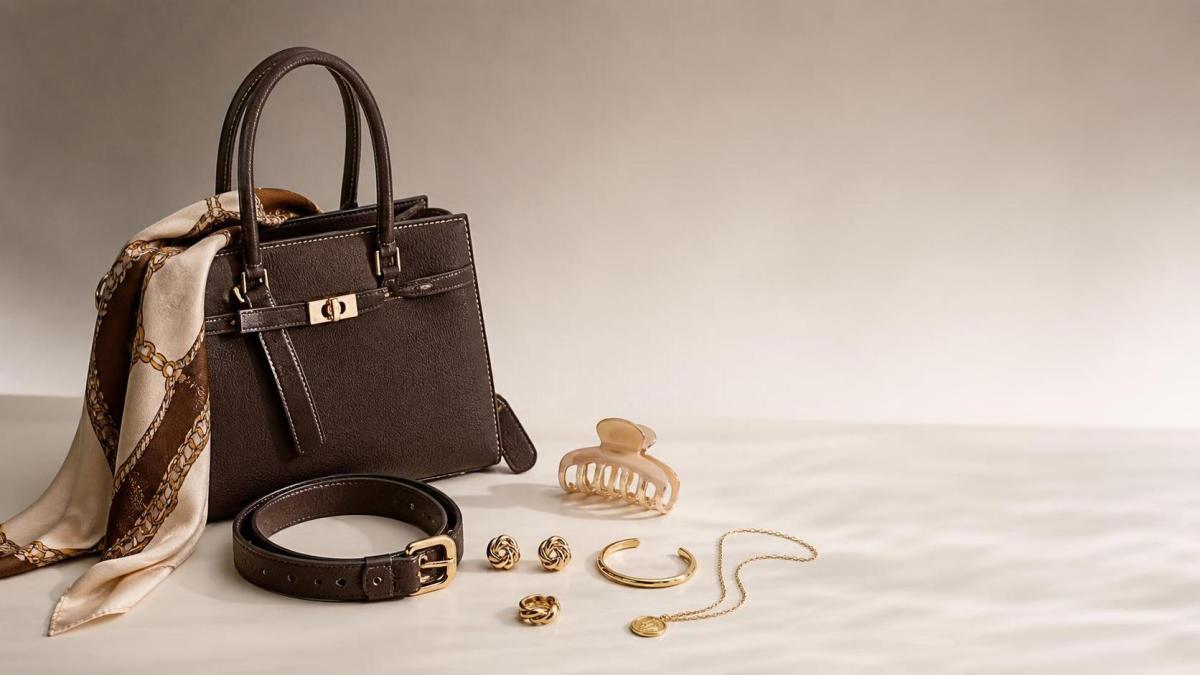
Color and material direction: quieter palettes, stronger texture stories
Color direction this season is less about loud contrast and more about tonal depth. Dark brown, soft neutrals, muted metallics, dusty pastels, and rich low-saturation shades are seeing stronger acceptance than sharp seasonal brights in many commercial channels. This does not mean color is disappearing; it means color is being filtered through wearability.
Material stories are also influencing purchase decisions. Soft-touch faux leather, textured knits, lightweight woven fabrics, brushed finishes, and hardware details that suggest craftsmanship are all helping products justify price points. In practical buying terms, texture is doing some of the work that logos and prints used to do.
This matters for accessory programs because tactile value is easier to communicate in-store and on social commerce feeds. A bag, scarf, knit cap, or coordinated light outerwear accessory piece with a visible material story has a better chance of standing out in a crowded assortment than a purely basic item with no sensory appeal.
What distributors should watch: the rise of coordinated styling pieces
One of the more commercially relevant changes this season is the growing overlap between accessories and light fashion sets. Buyers are seeing stronger demand for products that help create a complete mood rather than a single isolated item. This includes coordinated caps and knitwear, scarf-and-bag pairings, belt-led waist styling, and relaxed outerwear pieces that retailers use as accessory-adjacent purchases to finish a look.
That broader styling logic is one reason some wholesale buyers are also paying attention to products outside conventional accessory categories. A lightweight coordinated set, for example, can function as a styling anchor around which smaller accessories are sold. A piece such as ZW6067 miu*26SS reflects this direction: a dark brown zip-up lapel jacket with matching drawstring shorts in a breathable fabric, built around a relaxed silhouette and understated branding. It is not a traditional accessory, but it fits the same commercial trend toward versatile, mood-driven dressing that encourages add-on sales.
For channel partners, this is a useful reminder: accessory buying should not be isolated from outfit architecture. The better your assortments align with the styling logic retailers are using, the stronger your replenishment potential.
Small accessories are winning, but only when they solve a real styling need
Hair clips, headbands, minimalist jewelry, socks, and compact bags are still active categories, but not every small-ticket item is equally safe. The winners tend to fall into one of three groups.
The first group is utility-led fashion: pieces that are used often and still feel presentable enough for social sharing. The second is seasonal texture: products that instantly make an outfit feel updated through material, not just shape. The third is low-risk trend adoption: products that let shoppers try a new look without paying apparel-level prices.
For distributors, the temptation is often to overbuy low-cost accessories because the ticket looks safe. In reality, low unit cost does not protect against weak turnover if the product lacks a clear use case. Commercially successful accessories usually answer a visible styling problem: how to soften tailoring, how to upgrade basics, how to add femininity to casualwear, or how to make neutral dressing feel intentional.
Regional variation matters more than trend reports suggest
Many buying errors happen when national trend narratives are applied too broadly. A look that performs well in first-tier cities or on influencer-driven channels may not scale in the same way across regional retail networks. For agents and wholesalers serving mixed customer bases, depth should follow local proof, not just trend visibility.
In warmer markets, lighter materials and trans-seasonal styling pieces typically carry longer selling windows. In markets with stronger gifting behavior, jewelry and decorative accessories may outperform practical categories. In value-sensitive regions, products that look refined but remain versatile usually have a better sell-through profile than highly identifiable fashion statements.
This is where long-running multi-city sales networks often gain an advantage. Businesses with broad retailer feedback loops can spot whether a trend is genuinely commercial or simply overrepresented in content platforms. That distinction is increasingly important because online exposure can create false confidence in demand.
Inventory decisions: depth in proven shapes, width in trend accents
For this season, one of the sounder buying approaches is to separate accessories into “turnover basics” and “trend multipliers.” Basics deserve deeper inventory when they have stable replenishment history and broad styling relevance. Trend multipliers should remain shallower but faster, especially in categories with social-media-driven volatility.
This balance is critical because accessories can create the illusion of safety. They are easier to buy than sized apparel, but that can lead to assortment sprawl. Too many low-volume SKUs create operational drag, inconsistent merchandising, and fragmented reordering patterns.
A disciplined plan usually looks like this: keep continuity in proven neutrals and giftable silhouettes, test seasonal color and texture in smaller quantities, and review sell-through not only by SKU but by styling function. Buyers who classify products by role in the wardrobe often make better replenishment decisions than those who classify only by product type.
Margin opportunity is real, but so is quality risk
Accessories can support stronger margins than many apparel categories, yet they also create hidden quality problems when sourcing discipline is weak. Finish quality, color fastness, hardware durability, stitching consistency, and packaging standards all affect resale performance. A visually appealing item that fails after limited use can damage retailer trust faster than a basic garment defect because consumers often treat accessories as visible finishing pieces.
For distributors and agents, this makes supplier screening more important than trend spotting alone. Capacity flexibility, material consistency, small-batch responsiveness, and finishing control matter just as much as style development. If a supplier can chase trends but cannot maintain repeatable quality, the commercial risk rises quickly once orders scale.
Where quality expectations are moving upward, understated design is actually less forgiving. Minimalist products leave fewer distractions; buyers and end customers notice poor stitching, weak trims, or imbalanced proportions more easily. In other words, quiet luxury aesthetics demand better execution, not lower standards.
What buyers may be underestimating this season
One blind spot is the speed at which “basic” accessories can become trend-sensitive. A belt, tote, knit scarf, or hair accessory may look evergreen, but proportion, finish, and tone can date quickly. Buyers relying only on last season’s bestsellers may miss subtle shifts that change conversion rates.
Another blind spot is the importance of cross-category merchandising support. Accessories sell better when retailers can show the intended outfit logic. A coordinated set such as ZW6067 miu*26SS, with its relaxed collegiate feel and ability to be styled as a full look or separated into versatile components, illustrates why adjacent fashion items can help accessories perform better. Retailers are increasingly buying stories, not isolated products.
The third blind spot is overreliance on visual trend appeal without checking replenishment practicality. If an item performs well but cannot be restocked consistently in the same finish or shade, the short-term win may not translate into a stable channel opportunity.
How the season is likely to develop
Barring a sharp change in consumer demand, the season appears set to reward accessory programs that combine restraint with versatility. The strongest performers are likely to be products that feel elevated, easy to style, and commercially adaptable across online and offline retail. This favors categories built around tonal sophistication, tactile materials, gifting potential, and everyday usability.
For distributors, agents, and wholesalers, the opportunity is not in chasing every micro-trend. It is in reading which trends can survive real retail conditions: mixed customer budgets, fragmented regional demand, and the need for repeat purchase confidence. Women’s fashion accessories remain one of the most responsive parts of the fashion market, but the winners this season will be those who buy with a merchandising lens, not just a trend lens.
That is the practical takeaway from the current market. Accessories are still fast-moving, but they are no longer just impulse-driven. They are becoming a strategic category for retailers trying to increase flexibility, improve styling value, and protect margin in an uncertain selling environment. Buyers who understand that shift will be in a better position to choose assortments that move beyond fashion noise and into dependable retail performance.

What Is Women's Ready-to-Wear, and How Does It Differ From Made-to-Measure?
Explore women's ready-to-wear vs. made-to-measure: compare fit, quality, cost, and timing to find the right option for your wardrobe. Discover what to check before buying.
Full Package Garment Production: What's Included and Which Costs Are Extra?
Full package garment production: discover what’s included, which costs are extra, and how to compare supplier quotes to avoid hidden fees and protect your womenswear margins.
Fashion Accessories Production: From Approved Samples to Consistent Bulk Quality
Improve fashion accessories production with proven sample, material, and inspection controls. Discover practical ways to reduce defects and deliver consistent bulk quality.


{item.title}
{item.description}
Please give us a message
Contact Us