
How to Choose Women's Sweaters by Fabric Weight, Fit, and Seasonal Demand
Choosing women’s sweaters for retail or wholesale is not just about trend direction. For procurement teams, the right assortment comes from matching fabric weight, fit, and seasonal demand to the actual selling context. A sweater that looks strong in sampling can still underperform if the yarn weight is wrong for the region, the fit misses the target customer, or the launch timing does not align with buying cycles. This guide explains how to evaluate women’s sweaters with a practical sourcing mindset.
What Procurement Teams Are Really Deciding When Buying Women’s Sweaters
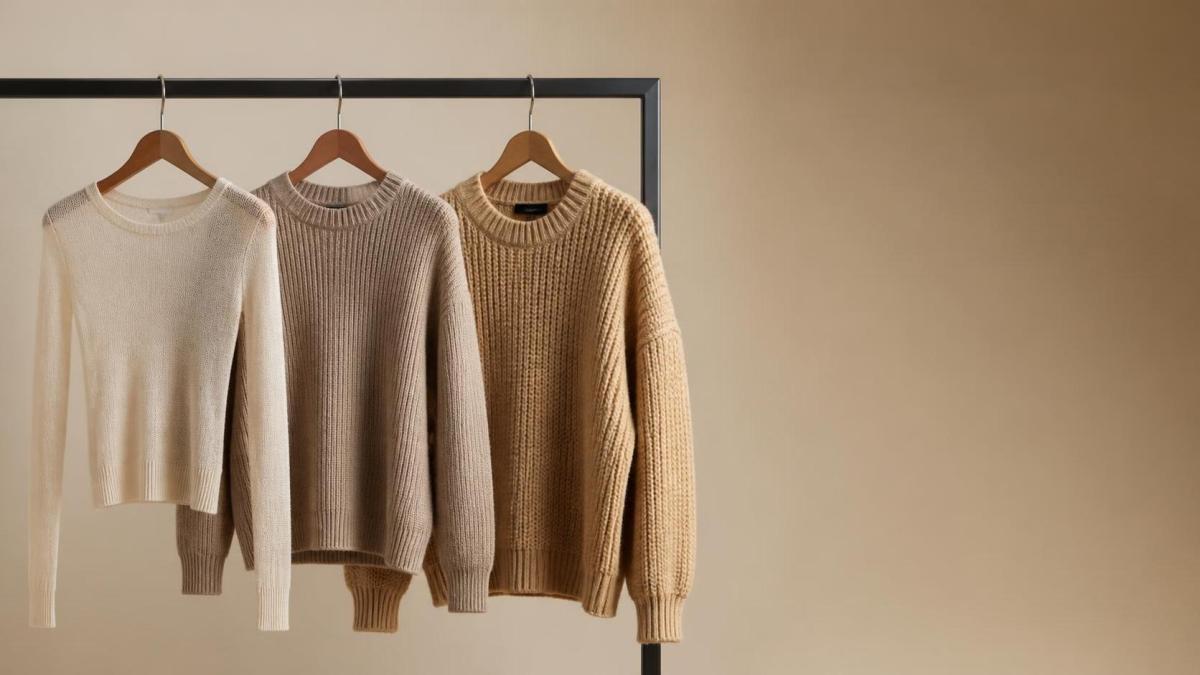
When buyers search for guidance on women’s sweaters, the core intent is usually commercial rather than purely stylistic. They want to know which products will sell, how to reduce inventory risk, and how to build a knitwear range that fits different climate zones and customer profiles.
For procurement professionals, the first question is rarely “What is fashionable?” It is more often “What combination of fabric weight, fit, and season will convert fastest in my channel?” That is the lens that should shape every sourcing decision.
In wholesale and multi-store retail, sweaters must perform across more than one scenario. A style may need to work for live selling, online listing, in-store display, and regional redistribution. That makes material behavior and silhouette consistency just as important as color and design.
Strong buyers also understand that seasonal knitwear is not bought in one block. Early spring, transitional autumn, winter layering, and festive demand all require different product structures. The best women’s sweaters are selected as part of a calendar, not as isolated items.
Why Fabric Weight Is the First Filter for Sweater Selection
Fabric weight is one of the clearest predictors of seasonal relevance. In practical terms, it affects how warm the sweater feels, how it drapes, how easy it is to layer, and whether the customer believes it suits the current weather.
Lightweight women’s sweaters usually work best for early spring, air-conditioned summer retail, and early autumn transitions. They are easier to sell in southern markets or to customers who want breathable layering pieces rather than heavy winter protection.
Midweight sweaters are often the most commercially flexible. They balance comfort, structure, and visual value, making them suitable for a broad retail window. For many buyers, this category is the safest volume segment because it can serve multiple temperature bands.
Heavyweight sweaters offer stronger cold-weather positioning and often create a clearer sense of value in-store. However, they also carry higher risk if launched too early, distributed to warm regions, or paired with a customer base that prioritizes light styling over insulation.
Procurement teams should ask suppliers for more than composition labels. A sweater listed as wool blend, cotton blend, or viscose blend can still behave very differently depending on yarn count, stitch density, surface finish, and construction method.
It is useful to evaluate weight through wear scenarios instead of abstract categories. Ask whether the sweater is meant for indoor layering, outerwear replacement, daily commuting, or deep winter use. That framing makes the weight decision more accurate and easier to align with inventory planning.
How Material Performance Affects Sell-Through, Returns, and Reputation
Buyers often focus on visual appeal during sampling, but material performance has a direct effect on repeat orders and return rates. For women’s sweaters, common pain points include pilling, deformation, static, itchiness, shrinkage, and poor recovery after hanging or folding.
A sweater can look attractive in the showroom and still fail in real use if the yarn lacks resilience. Procurement teams should test hand feel, elasticity, thickness consistency, and shape retention after light stretching. This is especially important for fitted or cropped silhouettes.
Fiber content should be matched to the intended retail promise. If the customer expects softness and easy care, cotton blends and certain regenerated fibers may be more commercially practical than highly delicate luxury yarns that require extra maintenance.
If the line is positioned as premium, touch and finish become even more important. Customers paying for higher-end women’s sweaters expect a cleaner surface, more stable ribbing, and better drape. These details help justify price and reduce hesitation at point of sale.
Professional sourcing teams also compare how a material performs across transport and storage conditions. Sweaters that wrinkle badly, lose shape in packaging, or show size inconsistency after bulk handling can create hidden costs long after the order is placed.
Which Fits Are Most Commercially Reliable for Different Sales Channels
Fit has a major influence on conversion because it determines who can wear the product confidently. In women’s sweaters, even a good fabric can underperform if the silhouette is too narrow, too cropped, too boxy, or too trend-specific for the intended market.
Relaxed fits usually offer the broadest commercial reach. They are easier across body types, support layering, and photograph well for e-commerce. For buyers serving mixed regions or multiple store formats, relaxed sweaters often provide lower fit-related return risk.
Regular fits remain important because they serve customers who want everyday practicality. These styles often perform well in replenishment programs, especially when paired with reliable yarns and neutral colors. They are less likely to feel dated after one short season.
Oversized fits can generate strong demand when trend timing is right, but buyers should be selective. Oversized women’s sweaters need enough structure to avoid looking shapeless. They also require careful grading, because poor proportion becomes obvious in bulk production.
Fitted sweaters are useful for layering stories, officewear edits, and more polished retail concepts. However, they place greater pressure on size accuracy, stretch recovery, and customer confidence. In channels with limited try-on opportunities, the return rate may be higher.
For wholesale buyers, it is smart to map fit to channel type. Online-focused sellers may prioritize silhouettes that are easy to describe and forgiving to wear. Physical retailers may accept more shape variety if customers can touch the knit and try it on directly.
How to Match Women’s Sweaters to Seasonal Demand Without Overbuying
Seasonal demand is not simply winter versus summer. In most markets, knitwear demand moves in phases. Early spring requires lighter women’s sweaters with soft layering value, while late autumn and winter call for warmth, visual texture, and stronger perceived substance.
Buyers should divide their assortment into at least three seasonal roles: transitional, core seasonal, and cold-weather peak. Transitional sweaters support earlier launches and broader geography. Core seasonal styles carry volume. Peak seasonal options create margin and category authority.
Regional climate matters as much as the calendar. A product plan for South China, for example, should not mirror a plan for northern cities with longer winters. Procurement teams serving multiple regions need a tiered buying structure instead of one uniform sweater program.
Timing also affects markdown pressure. If heavy sweaters arrive after the first temperature drop, customers may already have bought elsewhere. If lightweight styles are launched too late, the selling window shortens. The right women’s sweaters should enter stock slightly before demand becomes obvious.
Retailers with online and offline channels should also consider content timing. Sweaters with photogenic texture, clear silhouette, and easy styling value are especially useful during pre-season launch periods, when customer decisions are still driven by presentation rather than urgent weather need.
What Buyers Should Ask Suppliers Before Confirming a Sweater Order
Good procurement decisions depend on disciplined supplier questions. Before confirming women’s sweaters, buyers should ask about yarn source, composition tolerance, shrinkage expectations, pilling performance, colorfastness, production lead time, and consistency across repeat batches.
It is also important to request fit comments, not just measurement tables. A supplier should be able to explain whether the style is intentionally loose, standard, or close-fitting, and how it behaves after steaming, hanging, and packing.
Sampling should cover more than appearance approval. Buyers should compare touch, drape, sleeve length balance, collar recovery, hem stability, and overall proportion. In knitwear, small changes in rib tension or stitch density can significantly alter final presentation.
Teams managing broader fashion assortments sometimes compare knitwear with adjacent categories to sharpen product selection logic. For example, the market discipline used to evaluate a fashion item such as 26 Spring/Summer Early Spring! S18389 also highlights a useful principle: attractive styling alone does not guarantee sell-through unless season, comfort, and customer use case are aligned.
For long-term supplier relationships, consistency matters more than one successful style. Procurement teams should prioritize factories that can support design development, pattern adjustment, accessory coordination, knitting control, and stable bulk production across seasons.
How a Smarter Assortment Mix Reduces Risk and Improves Margin
The strongest sweater assortment is usually not built around one hero item. It is built around a structured mix. Buyers should combine safe volume styles, trend-responsive silhouettes, and selective premium pieces to balance turnover, image, and margin.
A practical ratio often includes dependable core women’s sweaters in wearable fits, a smaller group of seasonal shape updates, and a controlled number of fashion-led items. This approach protects cash flow while still keeping the assortment visually current.
Color strategy should support this structure. Core fits typically work best in black, grey, beige, cream, navy, and muted seasonal tones. Trend styles can carry more expressive color, but the buy depth should remain disciplined unless there is strong local demand evidence.
Price architecture is another key factor. If every sweater sits in the same price band, customers lose a sense of choice. A layered assortment with entry, core, and premium options helps retailers capture different budgets without weakening the category’s perceived value.
For wholesalers, a well-structured assortment also makes it easier to serve different retailer types. Some stores need everyday movement, while others need visual differentiation. Women’s sweaters selected with this in mind support better reordering and more stable account relationships.
How Experienced Garment Partners Support Better Buying Decisions
Reliable sourcing becomes easier when the manufacturing side understands both product and market rhythm. Shenzhen Meiwuzhi Garment Co., Ltd. focuses on high-end women’s apparel production and sales, supported by its own factory in Changping, Dongguan and cooperation with multiple factories across Dongguan, Zhongshan, Suzhou in Guangdong, and Suzhou in Jiangsu.
Its vertically coordinated capabilities cover design, pattern making, accessory production, knitting processing, and bulk garment production. For procurement teams, that kind of structure can reduce communication gaps between concept development, fit adjustment, and mass production delivery.
The company also operates showroom and parallel network businesses, with the Tchu showroom in Nanshan, Shenzhen used to present the latest styles and in-stock items to clothing retailers and online wholesalers. This kind of operational model is useful for buyers who need both trend visibility and replenishment efficiency.
After 12 years of operation on Alibaba, with cumulative sales exceeding 350 million yuan, more than 130 cooperative physical stores nationwide, and over 45,000 online partners, the company’s track record suggests broad market exposure. For sweater buyers, that matters because supplier experience across channels often improves product judgment.
In practical sourcing terms, a partner with strong market feedback loops is better positioned to refine women’s sweaters by fit, timing, and regional appeal. That helps procurement teams make decisions based not only on design preference, but on real selling patterns.
Conclusion: Choose Women’s Sweaters as a Business Decision, Not Just a Style Decision
For procurement teams, the best women’s sweaters are the ones that align product reality with market demand. Fabric weight determines seasonal usability, fit shapes conversion and return risk, and timing decides whether inventory moves at full price or under markdown pressure.
The most effective buying approach is to evaluate sweaters through commercial use cases: who will wear them, when they will be sold, where they will be distributed, and how they will perform after repeated handling. That is what turns a visually appealing sample into a reliable business product.
If buyers keep fabric performance, silhouette practicality, and seasonal demand in balance, they can build a knitwear assortment that is easier to sell, easier to replenish, and stronger across both retail and wholesale channels. In the women’s sweaters category, disciplined selection is what creates lasting results.

What Is Women's Ready-to-Wear, and How Does It Differ From Made-to-Measure?
Explore women's ready-to-wear vs. made-to-measure: compare fit, quality, cost, and timing to find the right option for your wardrobe. Discover what to check before buying.
Full Package Garment Production: What's Included and Which Costs Are Extra?
Full package garment production: discover what’s included, which costs are extra, and how to compare supplier quotes to avoid hidden fees and protect your womenswear margins.
Fashion Accessories Production: From Approved Samples to Consistent Bulk Quality
Improve fashion accessories production with proven sample, material, and inspection controls. Discover practical ways to reduce defects and deliver consistent bulk quality.


{item.title}
{item.description}
Please give us a message
Contact Us