
How to Use Samples to Start Garment Production With a New Supplier
A sample can look convincing on a hanger yet reveal problems when worn, washed, or reproduced in another size. With a new garment supplier, those gaps matter: approving a design too early can leave you with bulk fabric, trims, and production commitments before you know whether the supplier can deliver the intended result.
The practical approach is to use samples as controlled decision points. Provide a clear specification, assess an early prototype for construction and fit, revise it, and approve a pre-production sample made with the intended bulk materials and methods. Compare each version against written requirements—not just the previous sample—and agree on what approval does and does not authorize.
Choose the right sample for the decision
A single sample rarely answers every production question. An early prototype may prove that the supplier understands the design, while a later sample should show whether the agreed materials and construction can be reproduced. Knowing the distinction helps prevent an attractive but incomplete sample from becoming the basis for a bulk order.
Suppliers do not always use these names in the same way. Before ordering, describe the purpose of each sample and ask exactly which fabric, trims, pattern, and production process will be used. A “final sample” made from available stock material may be useful for fit, but it should not be treated as proof of the final fabric’s appearance or behavior.
Turn the design into instructions a supplier can follow
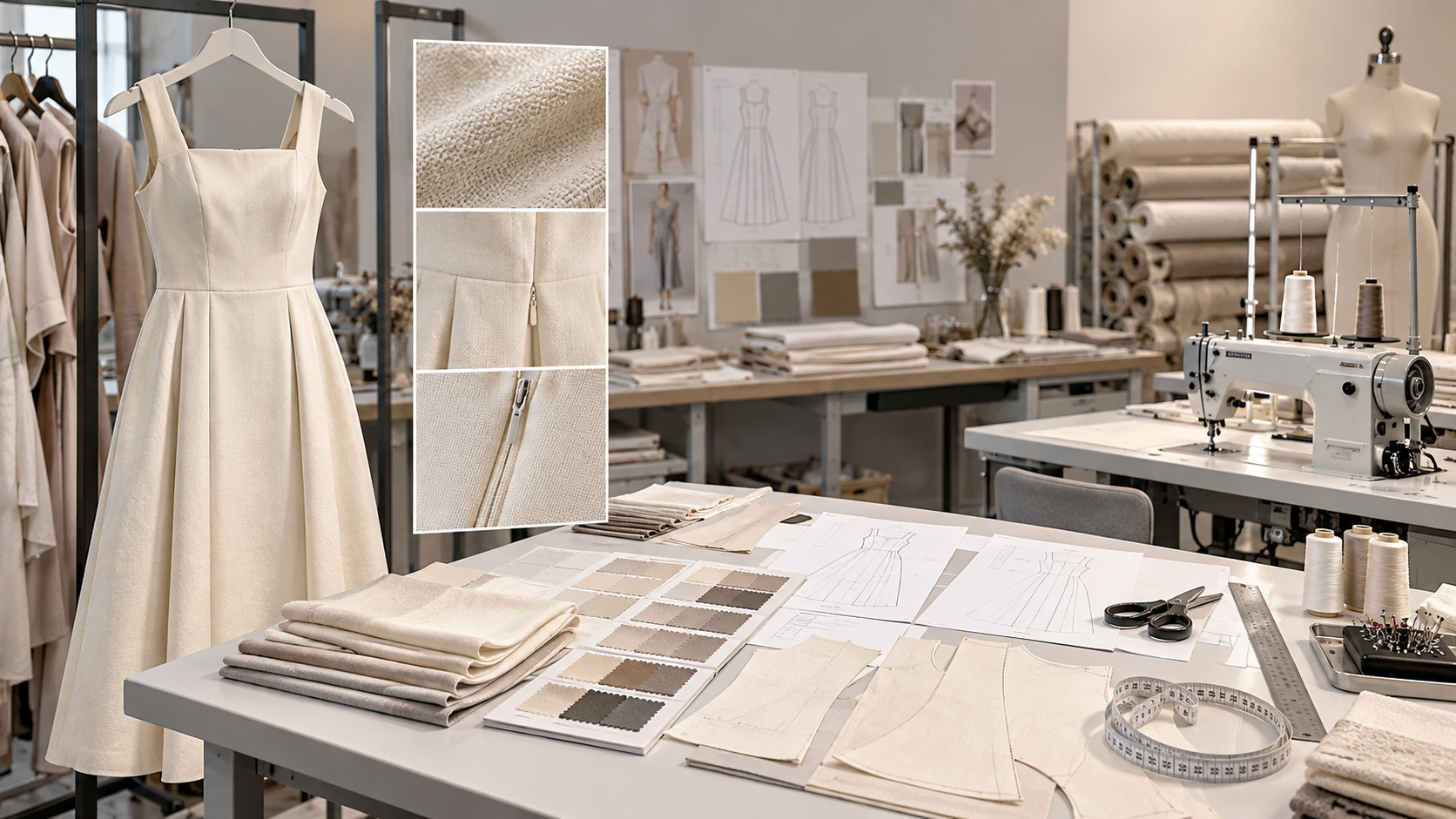
To do sample-based garment production with a new supplier, start with a tech pack or an equivalent written specification. A reference garment can help communicate drape and construction, but it should not replace measurements and written instructions. Two factories can interpret the same photograph differently, particularly around hidden details such as lining, seam allowances, and closures.
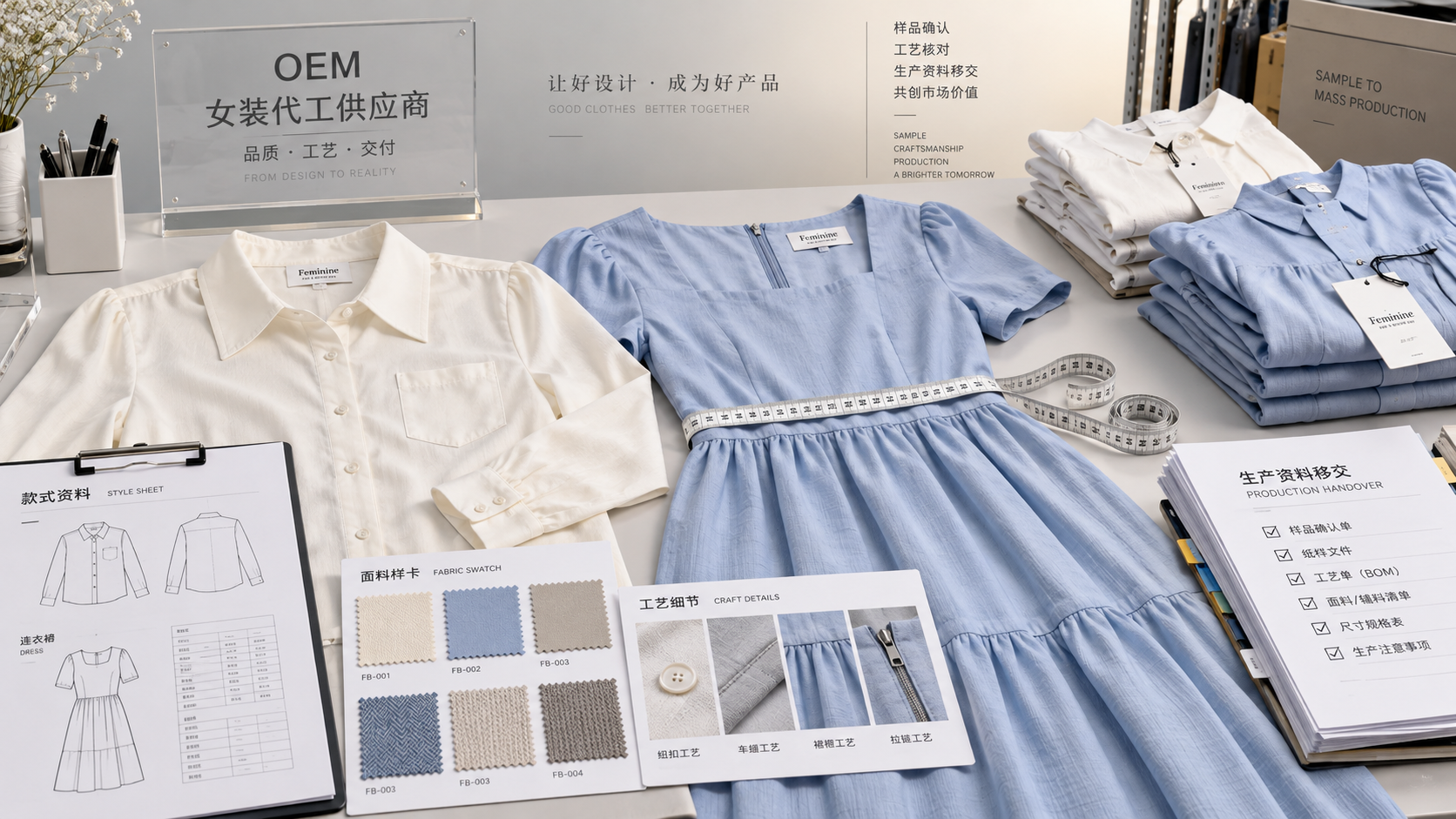
Include a front and back sketch, a measurement chart for the sample size, fabric composition and construction where known, trim details, color references, artwork placement, labels, and finishing requirements. Mark important construction points: for example, whether a dress is lined, where a zipper begins and ends, or how a waistband should sit. State the measurement method and acceptable tolerances so both parties are checking the same points.
Also distinguish between fixed requirements and items open to supplier recommendations. You may require a particular silhouette but welcome suggestions for a more suitable interfacing. Ask the supplier to flag missing information, proposed substitutions, and any construction details that appear difficult to reproduce before sampling begins.
Set sample terms before work starts
Confirm the sample fee, shipping responsibility, expected timing, number of pieces, and whether revisions are charged separately. Ask who supplies the fabric and trims, whether they can be sourced again for bulk, and what happens if an item becomes unavailable. A substitute may be acceptable for an early prototype, but record it clearly so it is not mistaken for the approved bulk input.
Agree on who owns or may use the pattern and whether it will be supplied to you. Discuss confidentiality where appropriate. These points are easier to resolve before the supplier has invested time in development than after an order is ready to move.
Review the first sample for interpretation, not just appearance
When the prototype arrives, compare it with the current tech pack before deciding whether it “looks right.” Check the garment flat, then on an appropriate fit model or form. Record measurements using the agreed method, and inspect the front, back, and side balance. A sleeve may measure correctly but still restrict movement; a skirt may match the waist measurement while pulling across the hip.
Look closely at the details that affect production:
- Shape and fit: Check key points of measure, seam placement, ease, neckline position, and how the garment behaves when sitting or moving.
- Construction: Look for twisted seams, puckering, uneven topstitching, mismatched panels, and closures that catch or distort the fabric.
- Materials: Compare weight, stretch, transparency, hand feel, and drape with the intended fabric. Note whether any component is a substitute.
- Finish: Inspect pressing, loose threads, lining attachment, button security, and the placement of labels and trims.
Do not judge final performance from a substitute material. A prototype in a lighter knit, for instance, may reveal the basic silhouette but tell you little about how the intended heavier fabric will hang. Separate design problems from material-related uncertainty in your feedback.
Make revisions traceable
Send consolidated comments rather than a series of disconnected messages. Identify the sample version and date, then list each issue with its location, observed result, required change, and priority. Annotated photos are useful for showing a problem, but accompany them with measurements or written instructions where precision matters.
For example, “raise the neckline” leaves room for interpretation. A clearer instruction identifies the measurement point and specifies the target measurement or the amount of change. When a change affects another feature—such as shortening a bodice altering the position of a waist seam—ask the supplier to explain the pattern adjustment and check the related measurements on the next sample.
Update the tech pack after decisions are agreed. Keep the superseded version for reference, but label the current version clearly. Otherwise, a supplier may correct the sample from an email while the production team later follows an older measurement chart.
When is another sample necessary?
Request a revised sample when the issue cannot be verified reliably on paper: a changed fit, a new fabric, a modified closure, or a construction adjustment that affects appearance or movement. Minor changes may be documented without a complete remake if both parties can verify them another way, but avoid granting unconditional approval while an essential feature remains untested.
Repeated errors deserve a different response from an ordinary first-round correction. Ask whether the supplier understood the instruction, whether the pattern was updated, and whether the same sample maker or production team will handle the bulk order. If the explanation is unclear or the supplier repeatedly substitutes materials without agreement, pause before placing production commitments.
Compare suppliers on evidence, not sample appearance alone
A polished prototype is useful, but it is only one part of supplier evaluation. One supplier may produce a beautiful sample using a specialist sample room, while another provides a less polished first version but communicates clearly about limitations and corrects errors accurately. Neither observation alone proves how bulk garments will turn out.
For a fair comparison, give suppliers the same specification, reference materials, and sample-size requirements. Review their work against the same measurements and construction criteria. Compare their responses to questions, the clarity of their costing, the changes they propose, and their ability to explain which materials and processes will be used for production.
Ask whether the production facility is the same as the sampling facility and how the approved pattern and instructions will be transferred. If production is outsourced, establish who is responsible for communicating revisions and resolving defects. A supplier’s willingness to identify uncertainty can be more useful than an early promise that every detail is easy.
Approve the pre-production sample with the bulk order in mind
The pre-production sample should reflect the approved pattern, intended fabric and trims, labels, colors, and construction as closely as possible. Confirm any remaining differences in writing. Check the garment against the latest tech pack rather than assuming that corrections from earlier rounds have all been carried forward.
For fabric-dependent garments, discuss suitable checks before approval. Stretch recovery, color transfer, shrinkage, and appearance after washing can affect fit and presentation. Agree on the test method and acceptance criteria with the supplier; a casual home wash or visual inspection alone may not answer every performance question. Where formal testing is required by your own specification or market, establish who will arrange it and which materials or finished garments will be tested.
Approval should be explicit. Identify the sample version, approved specifications, and any outstanding conditions. Keep an approved physical reference, often called a sealed or golden sample, and agree whether the supplier will retain a matching reference. Record that subsequent changes to fabric, trims, construction, or measurements require review rather than assuming the supplier will treat every change as significant.
Bridge the gap between one sample and bulk production
An approved sample is a reference, not a guarantee that every size and every garment will match it. Before bulk cutting, confirm the size range, grading rules, tolerances, final fabric and trim availability, and any required size-set samples. A size set can expose grading issues that a single sample size cannot, such as armholes becoming restrictive or proportions changing noticeably at the ends of the range.
Set out production and inspection arrangements in the purchase agreement: the approved specification version, quantities by size and color, delivery terms, inspection points, and how discrepancies will be handled. If a production sample is requested, agree when it will be taken and whether production may continue while it is reviewed. A sample selected after most garments are finished offers less opportunity to correct a recurring problem.
Before shipment, compare production garments with the approved reference and written tolerances, including construction, measurements, materials, labeling, and packing. Decide in advance how many pieces will be inspected and how defects will be classified. When a discrepancy appears, document its extent and agree on correction or another resolution before accepting the affected goods.
If the supplier cannot reproduce an approved detail, resist treating a late substitution as a minor administrative change. Ask for a new sample or material swatch where appropriate, assess its effect on fit and appearance, and update the specification only after the change is accepted. That decision protects the distinction between a sample that was approved and a different product that happens to be ready for production.

Women's Fashion Wholesale: ODM or Own-Brand Sourcing?
Is women's fashion wholesale better through ODM or own brand sourcing? Compare costs, lead times, brand control, and risks to choose the right strategy for your business.
What Happens if Delivered Garments Have Quality Defects?
What happens if bulk garment manufacturing has quality defects after delivery? Learn how to document issues, notify suppliers, and negotiate remedies.
Can Small Buyers Negotiate Designer Women's Clothing Prices?
Are designer women's clothing wholesale prices negotiable for small orders? Discover practical ways to negotiate pricing, minimums, shipping, and better terms.

{item.title}
{item.description}
Please give us a message
Contact Us