
What Fabrics Are Commonly Used in Women’s Clothing OEM Production?
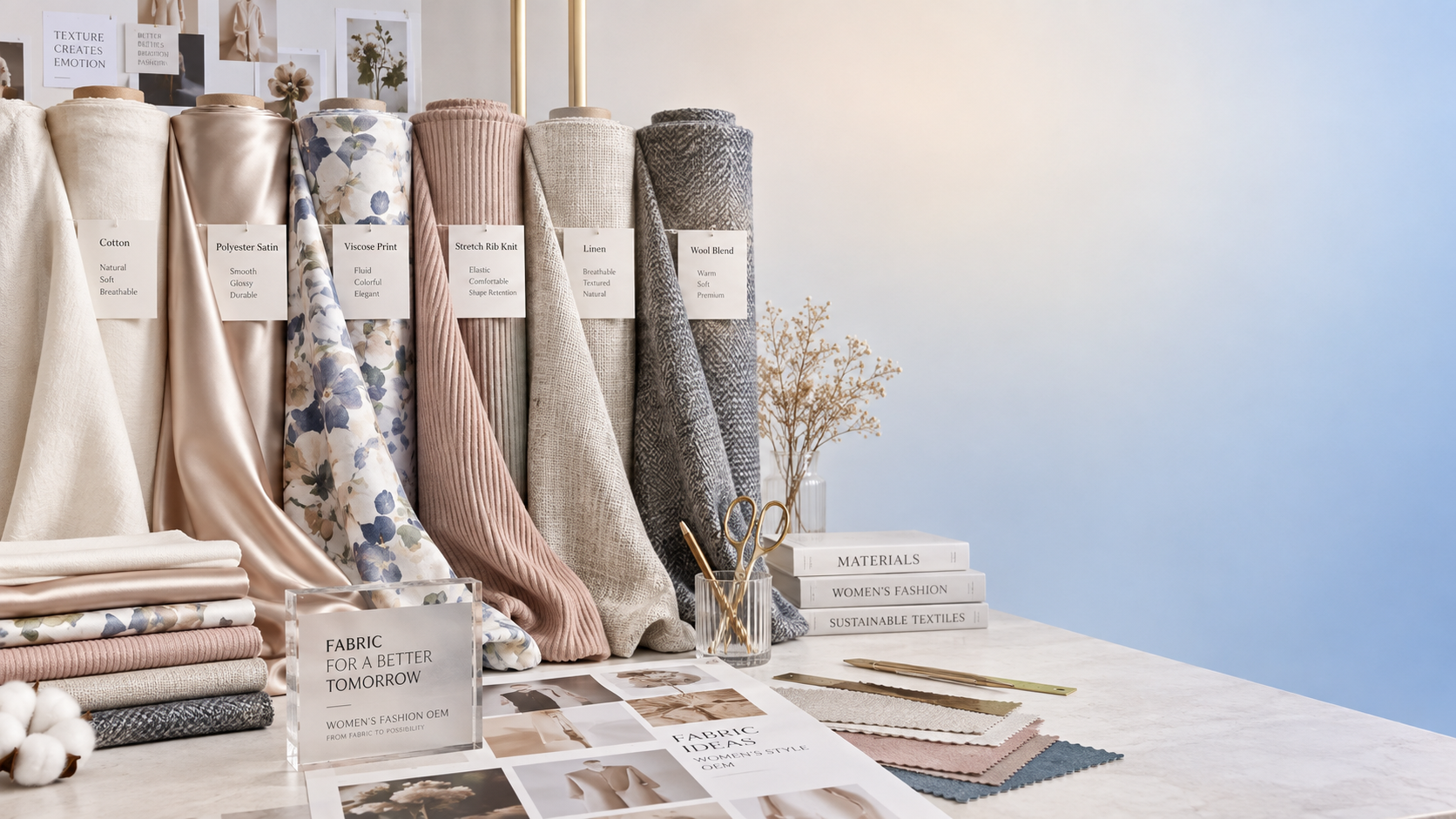
The fabrics most commonly used in women’s clothing OEM production are cotton, polyester, rayon or viscose, nylon, spandex, silk, wool blends, linen, and a wide range of knitted fabrics. In practice, however, fabric selection is not simply a choice between “natural” and “synthetic.” The right material depends on the garment category, intended fit, selling season, care expectations, target price range, and the factory processes needed to make the design consistently at scale.
A soft fabric may feel appealing on a swatch but lose shape after sewing. A premium-looking satin may create high return rates if it wrinkles easily or shows water marks. A stretchy knit can improve comfort, but the wrong weight or recovery can lead to twisting, bagging, or uneven hems. That is why fabric development should begin with how the finished garment needs to perform, not only with its surface appearance.
Which fabrics are used most often in women’s apparel OEM manufacturing?
Most women’s collections rely on a mix of woven fabrics for structured pieces and knit fabrics for stretch, softness, and casual comfort. Blended materials are particularly common because a single fiber rarely provides every property a garment needs.
Cotton: dependable, but not automatically simple
Cotton remains one of the most widely used fabrics in women’s clothing OEM production because it works across many product categories. Jersey cotton is common for T-shirts and casual dresses. Poplin and broadcloth are used for shirts and crisp summer pieces. Twill may be selected for trousers, utility skirts, and lightweight jackets. Cotton denim supports jeans, skirts, dresses, and structured casualwear.
Its appeal comes from comfort and breathability, especially in warm-weather collections. Yet “100% cotton” is not a complete quality description. Fiber length, yarn quality, fabric weight, weave or knit structure, dyeing, pre-shrinking, and finishing all affect the final result. A lightweight cotton poplin and a heavy cotton twill may contain the same fiber but behave very differently in cutting, sewing, and wearing.
Cotton is a good choice when the collection needs a natural hand feel and approachable everyday comfort. It may be less suitable for a design that requires sharp wrinkle resistance, very fluid drape, or highly stable dimensions after repeated laundering. Cotton-polyester or cotton-elastane blends are often used when the design needs more durability, stretch, or easier care.
Polyester is more varied than its reputation suggests
Polyester is frequently used in women’s fashion because it can be developed into many different surfaces: chiffon, crepe, satin, georgette, scuba-style knits, brushed fabrics, woven suiting, and performance-oriented materials. It holds color well, works effectively with many print techniques, and generally resists wrinkling better than cotton or linen.
For dresses and blouses, polyester crepe is often selected when a brand wants drape without the care sensitivity of silk. Polyester chiffon creates transparency and movement, but it usually needs lining, careful seam finishing, or layered construction. Satin can create a polished appearance for occasionwear and fashion tops, although the quality of the yarn, weave density, and finishing strongly influence whether it looks refined or inexpensive.
The common mistake is treating all polyester as interchangeable. A polyester fabric can be breathable enough for a loose summer dress if its construction is light and open, while another polyester fabric can feel warm and restrictive because it is tightly woven or heavily coated. Hand feel should be assessed alongside weight, air flow, drape, opacity, and intended silhouette.
Viscose and rayon for drape-led designs
Viscose, often called rayon in some markets, is valued for its soft touch and fluid movement. It is commonly used for feminine blouses, printed midi dresses, skirts, and relaxed trousers. Compared with many polyester fabrics, viscose often offers a more natural-looking drape and can feel cooler against the skin.
It also needs more production discipline. Viscose may shift during cutting, stretch under its own weight, or change dimensions after washing if the fabric has not been properly stabilized. A bias-cut viscose dress, for example, requires different handling from a straight-cut cotton shirt. The pattern, seam allowance, hanging time, and final measurement checks all matter.
Viscose blends can reduce some of these concerns. Viscose-polyester blends may improve stability and simplify care, while viscose-linen blends offer a textured summer look with a softer hand than pure linen. The blend should support the design rather than exist only as a cost decision.
Stretch fabrics: choose recovery, not just elasticity
Elastane, also known as spandex, is usually blended with cotton, polyester, nylon, viscose, or denim rather than used alone. It helps fitted garments move with the body and is common in leggings, rib tops, slim trousers, shaping dresses, stretch denim, and active-inspired styles.
For fitted women’s garments, stretch percentage alone does not tell the full story. Recovery is equally important. A fabric may stretch easily when pulled but fail to return to its original shape after sitting, bending, or repeated washing. This can leave knees, elbows, waistbands, and hips looking loose. Testing a sample after wear simulation and laundering is more informative than judging stretch by hand.
Fabric direction matters as well. Some materials stretch mainly across the width, while others provide two-way or four-way stretch. A garment pattern designed for a stable woven fabric cannot simply be transferred to a highly elastic knit without revising ease, measurements, and construction details.
Knitted fabrics are central to modern women’s collections
Knits are categorized by construction rather than fiber alone. A knit may be made from cotton, polyester, viscose, wool, nylon, or blends of several fibers. Common options include single jersey, rib knit, interlock, ponte, French terry, sweater knit, and textured jacquard knit.
Single jersey is widely used for T-shirts, casual tops, and soft dresses. Rib knit has visible vertical ribs and more natural stretch, making it suitable for fitted tanks, cardigans, cuffs, and body-skimming dresses. Interlock is denser and more stable, often chosen for elevated basics. Ponte has a compact, structured feel that works for tailored knit dresses, trousers, and skirts.
Knits require attention to weight, stretch direction, shrinkage, pilling, and edge behavior. Some knits curl at cut edges; others grow longer when hung. A factory should confirm the fabric’s relaxation behavior before finalizing garment measurements. For pieces that need a clean, premium finish, details such as neck tape, fusible support, hem construction, and seam type can matter as much as the base fabric.
Silk, wool, and linen suit specific product positions
Natural premium fibers can add distinct value, but they should be selected with realistic expectations about care and production. Silk is chosen for its lustre, softness, and elegant drape. It is appropriate for premium blouses, slip dresses, scarves, and occasionwear, especially where the material itself is part of the product appeal. Silk may be less practical for styles expected to withstand frequent machine washing or heavy friction.
Wool is used in coats, tailored garments, skirts, and knitwear because it offers warmth and resilience. Wool blends can make sense where a design needs better shape retention, lower weight, or a different price position. The appropriate blend depends on whether the garment is intended for tailoring, outerwear, or knitwear. A coat fabric and a fine-gauge sweater yarn should not be evaluated by the same criteria.
Linen is popular for warm-weather apparel because of its breathable, dry hand feel. Its wrinkles are part of its visual character, but that character does not fit every design. A relaxed linen shirt can look intentional when creased; a sharply tailored linen dress may need blending, lining, or a different fabric choice to maintain its intended presentation.
Sustainable fabric choices need a practical production view
Recycled polyester, organic cotton, regenerated cellulosic fibers, and lower-impact blends are increasingly considered during material planning. These options can be useful when they align with the collection’s material direction and when the required fabric quality is available for the design.
The practical question is not whether one fiber label is universally better than another. It is whether the fabric delivers the necessary performance, can be sourced consistently, and supports the product’s expected lifecycle. A garment that loses shape quickly, pills excessively, or becomes difficult to care for is unlikely to be a strong long-term choice simply because its fiber content sounds preferable.
When a collection needs specific material claims, those claims should match the actual fabric documentation and remain consistent across hangtags, product pages, and care instructions. Material selection, communication, and quality control need to be aligned from the start.
How should fabric be selected before OEM sampling?
Start with the finished garment rather than a fabric name. Define the intended silhouette: structured, fluid, body-skimming, oversized, crisp, or soft. Then consider where and when it will be worn, whether it requires stretch, how opaque it needs to be, and what care routine is realistic for the product.
- Match weight to silhouette. A fabric that is too light may reveal seams, cling to the body, or lack shape. One that is too heavy can make gathers bulky and reduce movement.
- Check drape on a full sample. A small swatch cannot show how a fabric behaves in a long skirt, wide sleeve, gathered waist, or bias-cut panel.
- Assess opacity under normal light. Light colors, white fabrics, and lightweight knits often need a lining, double layer, or revised construction.
- Confirm shrinkage and color behavior. Wash testing should happen before bulk production, especially for cotton, viscose, linen, dark colors, and contrast designs.
- Review trims with the fabric. Zippers, buttons, interfacing, elastic, lining, and embroidery backing can change how the garment hangs and feels.
- Consider repeat availability. A limited stock fabric can create problems for replenishment styles or color extensions.
For OEM development, the fabric should be approved together with the pattern and construction. A technically good fabric can still fail when paired with the wrong seam finish, needle choice, lining, or fusible interlining. The best sample is not necessarily the one with the softest hand feel; it is the one that still meets fit, appearance, comfort, and care expectations after production handling.
Common fabric selection mistakes
One frequent mistake is choosing a fabric because it resembles a reference garment visually, without checking its composition and construction. Two black crepes may look similar in a showroom but differ in stretch, thickness, drape, pilling tendency, and sewing behavior. The reference should guide the desired result, while the selected material must be tested for the actual pattern.
Another issue is approving color from a small cutting. Color can appear different once the garment has pleats, gathers, lining, sheen, or mixed textures. Satin and brushed fabrics are especially sensitive to direction and lighting. For multi-color collections, approval should also consider whether trims and lining create unwanted contrast.
Cost-driven substitutions can be equally damaging when they change the garment’s function. Replacing a stable woven fabric with a stretchier alternative may alter fit across sizes. Changing a lined chiffon to an unlined one may affect opacity and perceived quality. Substitutions should be evaluated as design changes, not treated as minor purchasing decisions.
Questions often asked during fabric development
Is 100% cotton always better for women’s clothing?
No. Pure cotton is often comfortable and breathable, but it may wrinkle, shrink, or lack the recovery needed for fitted garments. A cotton blend can be a better choice when the style needs stretch, easier care, greater durability, or more stable shape.
What is the best fabric for women’s dresses?
There is no single best option. Cotton poplin works well for crisp casual dresses, viscose for fluid printed dresses, polyester crepe for easy-care drape, satin for a polished finish, and knit fabrics for fitted comfort. The dress construction and intended use should determine the choice.
Should a fashion brand use woven or knit fabric?
Wovens are generally better for defined structure, tailored lines, and crisp details. Knits are better when stretch, softness, and movement are central to the garment. Some collections use both: woven fabric for the main body and knit panels, rib trims, or elastic components where flexibility is needed.
Why does the approved fabric sample behave differently in bulk production?
Differences can result from a changed fabric lot, unfinished shrinkage control, inconsistent dyeing, altered finishing, or handling differences during cutting and sewing. Clear fabric specifications, approved reference swatches, and pre-production checks help keep bulk output closer to the intended sample.
Fabric choice is one of the earliest decisions in women’s apparel development, but it continues to affect every later stage: pattern adjustment, sample fit, sewing quality, care labeling, packaging, and customer satisfaction. Selecting by performance and construction, rather than by fiber name or surface appearance alone, gives an OEM project a more reliable foundation.
Previous:No more content
Next:No more content

What Fabrics Are Commonly Used in Women’s Clothing OEM Production?
What fabrics are commonly used in women's clothing OEM production? Explore cotton, polyester, viscose, knits, and blends for better fit, quality, and value.

Why women's knitwear orders get delayed
Learn why women's knitwear orders are delayed by yarn shortages, sampling revisions, and Chinese New Year congestion. Use seven production checkpoints, early yarn reservations, dual sourcing, and progress checks to protect delivery timelines.
What makes high-end women's fashion bags resistant to seasonal material degradation?
Discover how high-end women's fashion bags resist seasonal degradation—material science, vertical integration & real-world validation revealed.


{item.title}
{item.description}
Please give us a message
Contact Us