
What makes high-end women's fashion bags resistant to seasonal material degradation?
What Makes High-End Women’s Fashion Bags Resist Seasonal Material Degradation?
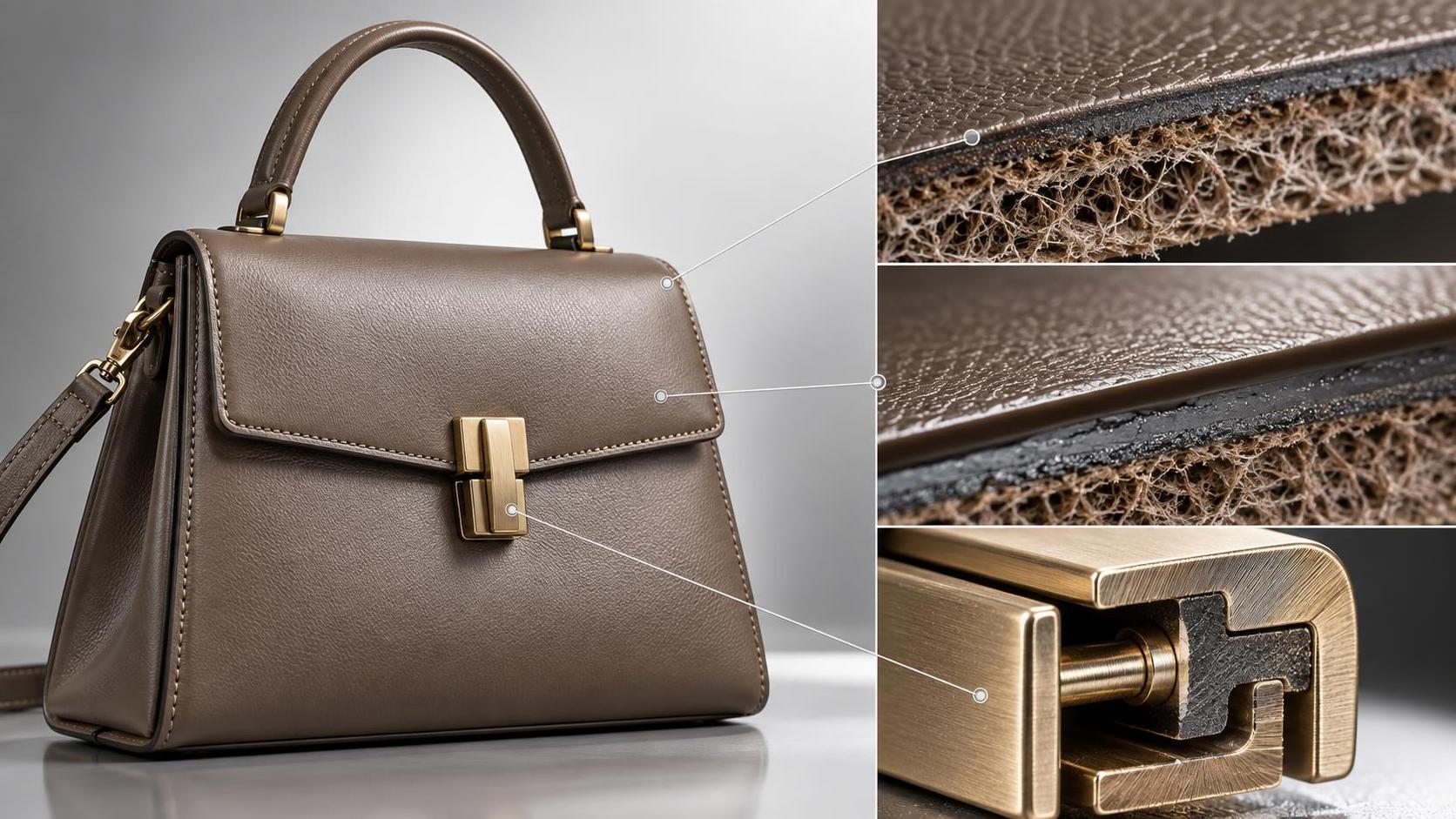
It’s not the logo, the stitching density, or even the price tag that determines whether a high-end women’s fashion bag holds up across monsoon humidity, winter frost, or summer UV exposure. It’s what happens before the first stitch—before the leather is cut, before the hardware is plated, before the lining is bonded. For quality assurance and safety management professionals sourcing accessories at scale, seasonal material degradation isn’t an abstract risk. It’s a failure mode with measurable triggers: hydrolysis in polyurethane coatings, chromium migration in tanned leathers, galvanic corrosion between zippers and chain straps, or delamination under thermal cycling. And it rarely announces itself with fanfare—just subtle cracking along stress folds, dulling of metallic finishes after three months in Guangdong’s 85% RH summers, or stiffening of shoulder straps after repeated exposure to Shanghai’s damp winters.
The Real Culprits Behind Premature Failure
Most technical failures trace back to one of three interdependent layers: substrate stability, interface integrity, and environmental adaptation. A premium-grade cowhide may pass tensile strength tests in lab conditions—but if its tanning process uses low-pH chrome salts without post-treatment neutralization, residual acidity accelerates fiber breakdown when exposed to ambient moisture over time. Similarly, a “UV-resistant” coating on synthetic leather often fails not because of UV dosage, but because the underlying polymer matrix lacks thermal expansion compatibility with the topcoat. When ambient temperature swings from 5°C to 35°C within 48 hours—a common scenario in inland Chinese distribution hubs—the mismatch induces micro-cracking invisible to visual inspection but detectable via cross-section microscopy.
Hardware presents another silent vulnerability. Zinc-alloy zippers plated with standard nickel may meet RoHS requirements, but under high-humidity storage (e.g., bonded warehouses in Zhongshan or Suzhou), unsealed plating pores allow moisture ingress, leading to white rust formation within six months—even before retail shelf placement. That’s why end-to-end control matters: not just specifying “nickel-free” plating, but verifying plating thickness (minimum 12μm), sealant type (e.g., acrylic-based vs. epoxy), and adhesion testing per ISO 2360.
How Vertical Integration Enables Technical Accountability
Shenzhen Meiwuzhi Garment Co., Ltd. operates across two functional tiers that directly impact material resilience: its owned factory in Changping Town, Dongguan—which handles design, pattern making, accessory production, knitting processing, and bulk garment manufacturing—and its network of over ten partner factories across Dongguan, Zhongshan, and Suzhou. This structure allows for synchronized parameter control: leather suppliers are vetted not only on grain consistency but also on pH stability post-tanning; hardware vendors must submit salt-spray test reports (ASTM B117, 96-hour minimum) alongside dimensional tolerance logs; and all finishing agents—whether water-based acrylics or solvent-based polyurethanes—are batch-tested for VOC content and film flexibility before application.
Crucially, Meiwuzhi does not outsource final assembly to third-party contractors without shared QC protocols. Its own facility manages the full sequence—from cutting and edge-painting to heat-setting linings and ultrasonic welding of internal compartments—meaning thermal profiles, dwell times, and pressure settings are logged and auditable. When a batch of structured satchels showed early seam slippage during accelerated aging trials, root cause analysis traced back to inconsistent curing temperature in the adhesive station—not the fabric weave or thread tensile strength. That level of traceability only exists where process ownership aligns with material accountability.
Three Non-Negotiable Checks Before Bulk Production
For QA and safety managers evaluating suppliers, these aren’t theoretical benchmarks—they’re operational checkpoints:
- Substrate aging validation: Request ASTM D573 or ISO 1431-1 reports—not just “passed” labels, but actual delta-L*, delta-b* values after 72-hour heat aging at 70°C. Values exceeding ΔE > 3.0 indicate significant chromatic shift likely to appear in-market.
- Interface adhesion verification: Ask for peel strength data (ISO 8510-2) between lining fabric and shell material, tested both dry and after 24-hour immersion in distilled water at 23°C. A drop >30% signals potential delamination risk in humid climates.
- Hardware corrosion resistance documentation: Confirm plating thickness via XRF measurement—not vendor-provided spec sheets—and verify salt-spray results include post-test visual grading per ISO 9227 (e.g., “no red rust after 96h, ≤5% white rust on non-critical surfaces”).
These parameters matter most when scaling across geographies. A bag validated in Shenzhen’s subtropical climate may behave differently in Xi’an’s continental dryness or Harbin’s sub-zero freeze-thaw cycles. That’s why Meiwuzhi’s Taolaichu showroom in Nanshan District doesn’t just display styles—it hosts seasonal validation sessions where retailers and QA teams review physical samples subjected to real-world storage simulations: 30-day exposure in controlled chambers mimicking Guangzhou’s July humidity (80% RH, 32°C) or Chengdu’s October fog (95% RH, 18°C).
Why “High-End” Isn’t Just About Aesthetics—It’s About Predictability
The term high-end women’s fashion carries weight beyond craftsmanship or branding. In practice, it means predictable performance across variable conditions—not just in the first month, but across the full product lifecycle. That predictability emerges from decisions made long before retail launch: selecting vegetable-tanned leathers with stable collagen cross-linking instead of faster, less durable mineral tanning; specifying brass-based alloys for clasps instead of zinc-die-cast alternatives prone to creep deformation; or using solvent-free lamination adhesives that maintain bond integrity below 10°C.
Meiwuzhi’s 12-year presence on Alibaba—and over 350 million RMB in verified sales—reflects sustained alignment between technical execution and market feedback. Its network of 130+ physical stores and 45,000+ WeChat business partners doesn’t just validate demand—it surfaces field-level degradation patterns: fading on navy patent leather in coastal Qingdao stores, stiffness in vegan-leather crossbodies stored in unheated Dalian warehouses, or tarnishing on gold-tone chains in high-VOC retail environments in Chongqing. These aren’t complaints—they’re data points feeding back into material selection and finish specification.
If you’re responsible for approving materials, auditing suppliers, or defining technical specifications for women’s fashion accessories, start by asking: Does the supplier control the full chain from raw material input to finished good aging? Can they produce batch-specific test reports—not generic certifications? And do their validation protocols reflect your actual distribution geography, not just lab standards? Because seasonal material degradation isn’t solved with marketing claims. It’s mitigated with traceable processes, documented thresholds, and field-informed thresholds.
Previous:No more content
Next:No more content

What Fabrics Are Commonly Used in Women’s Clothing OEM Production?
What fabrics are commonly used in women's clothing OEM production? Explore cotton, polyester, viscose, knits, and blends for better fit, quality, and value.

Why women's knitwear orders get delayed
Learn why women's knitwear orders are delayed by yarn shortages, sampling revisions, and Chinese New Year congestion. Use seven production checkpoints, early yarn reservations, dual sourcing, and progress checks to protect delivery timelines.
What makes high-end women's fashion bags resistant to seasonal material degradation?
Discover how high-end women's fashion bags resist seasonal degradation—material science, vertical integration & real-world validation revealed.



{item.title}
{item.description}
Please give us a message
Contact Us