
Do women's clothing OEM factories provide design development support for new collections?
Do women's clothing OEM factories provide design development support for new collections?
The short answer is: it depends—not on the label “OEM,” but on the factory’s actual structure, capacity, and operational philosophy. Many international buyers still assume that OEM means “you bring the tech pack, we sew it.” That’s true for some suppliers—especially those operating as pure contract manufacturers with no in-house creative infrastructure. But increasingly, especially among mid-to-high-tier women’s apparel partners in the Greater Bay Area, the line between OEM and ODM has blurred—not by marketing spin, but by how work actually flows on the ground.
At Shenzhen Meiwuzhi Garment Co., Ltd., for example, “OEM” doesn’t mean passive execution. It means a responsive, integrated development loop: a brand brings a concept or mood board; our in-house team translates it into technical sketches, fits, fabric pairings, and accessory coordination—all before cutting the first sample. That capability isn’t bolted on. It’s built into the factory’s DNA: design, pattern making, knitting processing, accessory production, and bulk manufacturing all happen under one coordinated system—with direct oversight across facilities in Dongguan, Zhongshan, and Suzhou.
Why design support matters more than ever—for both brands and factories
Ten years ago, many small-to-midsize fashion labels outsourced design to freelancers or agencies, then handed finalized specs to factories. Today, speed-to-market, material innovation, and fit consistency demand tighter feedback loops. A garment that looks right on screen may drape poorly on real bodies—or behave unpredictably after washing. Without shared context between design intent and production reality, even a technically perfect spec can yield unsellable samples.
That’s where having design embedded—not just adjacent—makes a tangible difference. At Meiwuzhi, designers don’t hand off files and disappear. They sit alongside pattern makers during fit sessions, adjust seam allowances based on live model feedback, and source trims that match both aesthetic direction and functional requirements (e.g., a lightweight metal zipper that won’t distort delicate knits). This isn’t “design assistance” as a value-add service—it’s how the development cycle functions when you’re launching 3–5 seasonal women’s collections per year for retail partners across Shanghai, Chengdu, Guangzhou, and online WeChat channels.
What “design development support” actually covers—and where it stops
It’s worth clarifying what falls within scope—and what doesn’t—because expectations misalignment remains one of the most common friction points in early-stage collaborations.
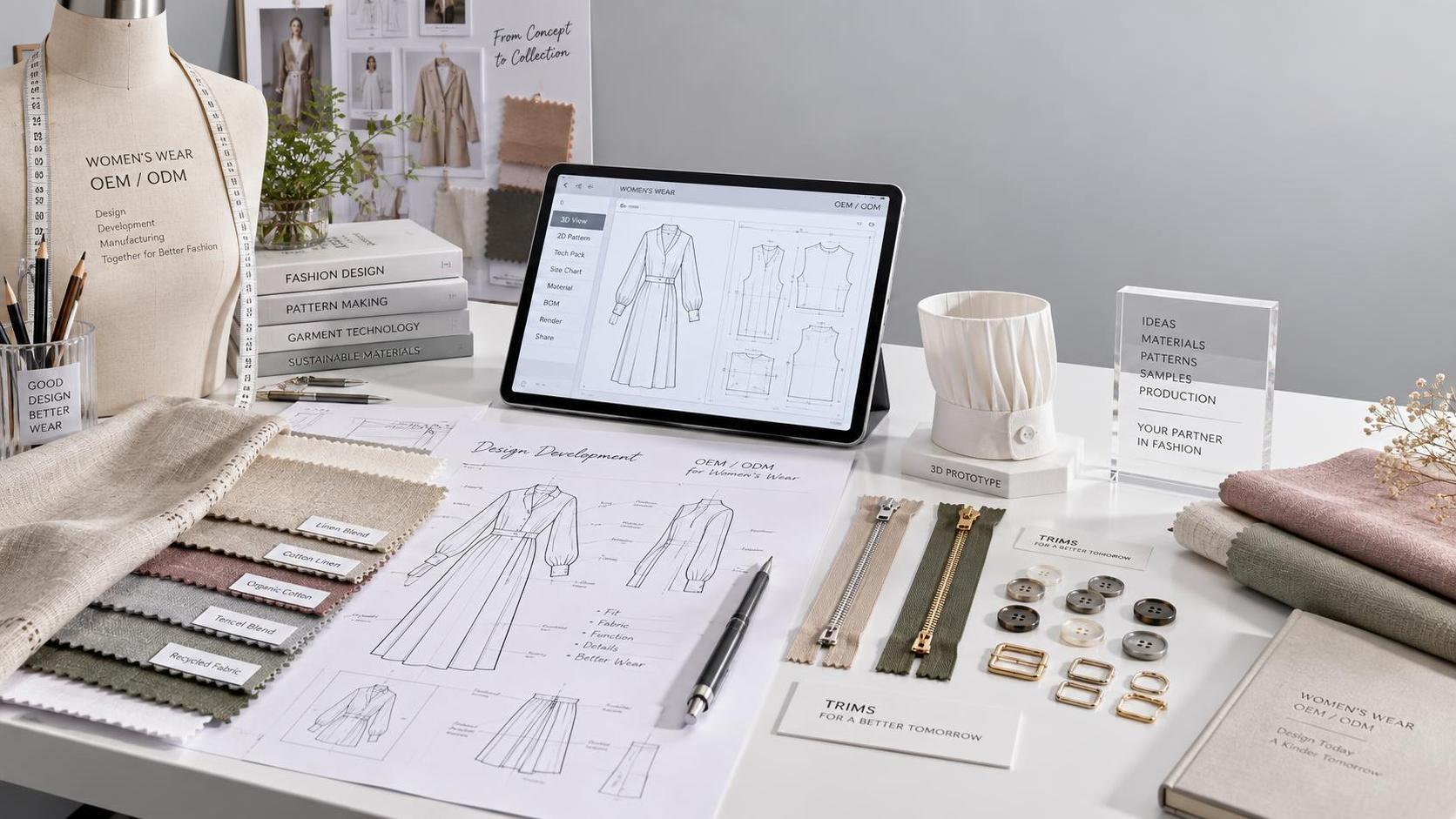
Design development here includes:
- Trend-informed concept refinement (e.g., translating “quiet luxury” into silhouette proportions, fabric weight ranges, and finish details)
- Technical sketching and flat drawing with construction notes
- Fabric sourcing guidance—including local mill access, dye-lot coordination, and swatch library curation
- Pattern drafting, grading, and fit validation across size sets
- Accessory specification and integration (buttons, zippers, linings, elastic, labels)
- Sample prototyping with iterative fit feedback, including 2–3 rounds of revisions
What it does not include: full brand identity creation, logo design, or wholesale visual merchandising assets. Nor does it extend to commercial forecasting, inventory planning, or e-commerce photo production—though Meiwuzhi’s affiliated companies (Shenzhen Taolaichu Network and Shenzhen Taoshangpin Network) do support those layers separately for domestic clients.
The showroom isn’t just for display—it’s a development checkpoint
Room 508, Building 1, Zhongxing Industrial City in Shenzhen isn’t a static showroom. It’s where newly developed styles—some still in pre-production sampling phase—get reviewed by buyers from over 130 physical stores and 45,000+ online partners. That proximity matters. When a buyer in Nanjing spots a detail that needs adjustment—a cuff width, a hem curve, a pocket placement—they can request a change while the sample is still on the bench, not after shipment.
This kind of responsiveness only works because design, sampling, and production aren’t siloed across separate entities. The same team that drafted the pattern also oversees the first bulk run. There’s no handoff delay, no version-control drift, no “we followed the spec exactly” deflection when the result misses the mark.
Not all OEM factories operate this way—and that’s okay
There’s no universal standard. Some factories specialize in high-volume basics with minimal variation—where design input is intentionally limited to keep unit costs low. Others serve fast-fashion clients with tight windows and rely on external design studios for speed, then focus solely on execution. Neither model is inferior; they’re optimized for different priorities.
What sets Meiwuzhi apart isn’t that it *offers* design support—it’s that its entire operational rhythm assumes design is continuous, not discrete. Over 12 years on Alibaba, with cumulative sales exceeding ¥350 million, that rhythm has been stress-tested across thousands of SKUs, dozens of fabric categories, and fit expectations ranging from petite to plus-size, from office-ready tailoring to lounge-focused knits.
So—what should you ask before assuming design support is included?
If your next collection hinges on nuanced development—not just accurate replication—here are three practical questions to raise early:
- Who owns the pattern library? Is it updated and version-controlled internally—or stored externally and re-imported per order?
- Can your designer attend at least one fit session in person or via live video? Not just for approval, but to observe how adjustments translate across sizes and fabrics.
- How are trim and accessory decisions made? Are there in-house sourcing contacts, or does the factory rely entirely on your vendor list—even for small components like branded tags or custom hangers?
These aren’t theoretical checks. They reflect real bottlenecks we’ve seen derail timelines: patterns lost in email chains, fit corrections delayed by two weeks due to overseas shipping of samples, trims arriving late because no one owned the sourcing follow-up.
Do women's clothing OEM factories offer design support for new collections? Yes—if their workflow treats design as part of the production continuum, not a preceding step to be checked off. For brands launching women’s apparel with intention—not just volume—that distinction changes everything.
Previous:No more content
Next:No more content

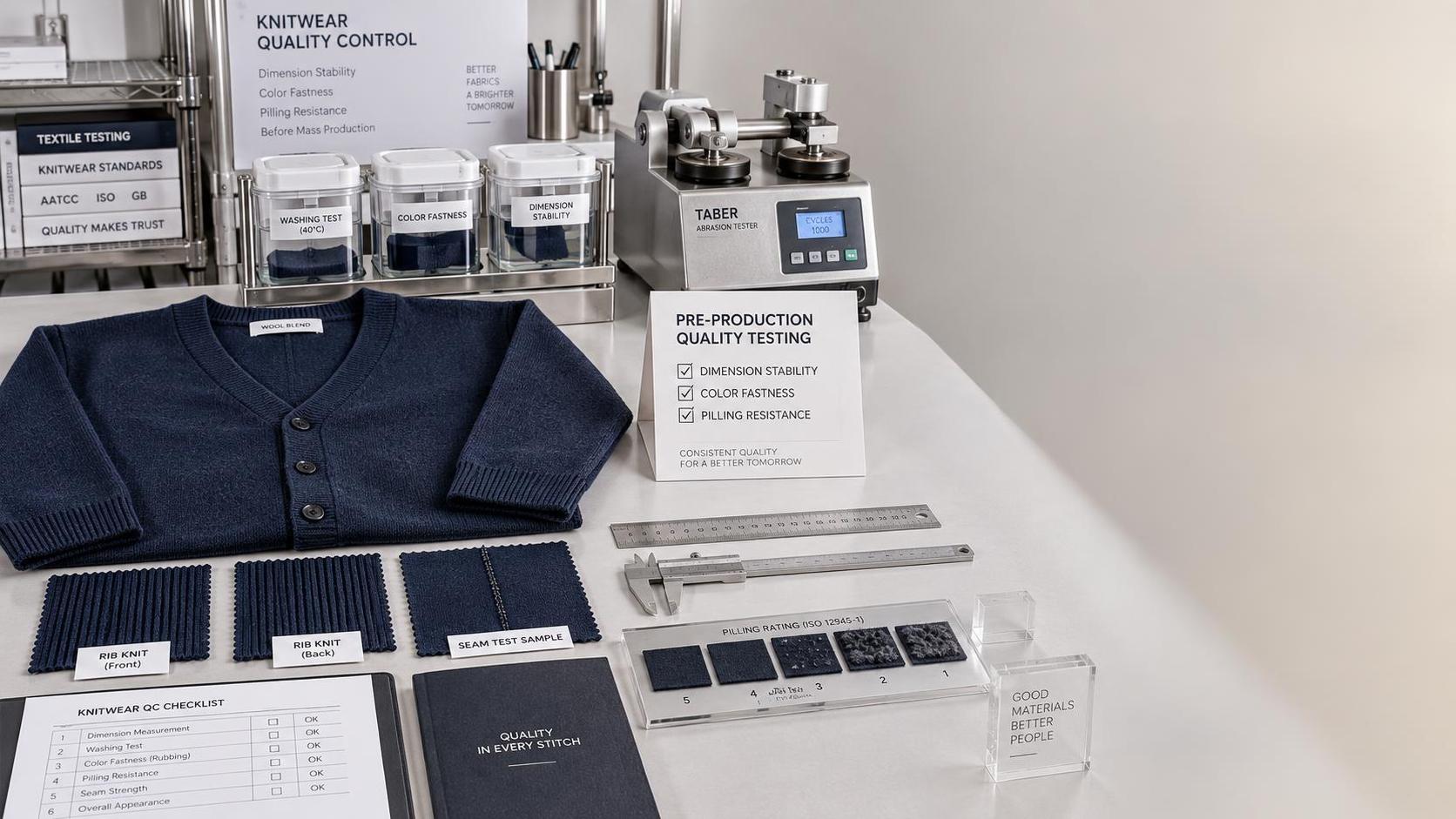
Private Label Knitwear Quality Control: Tests to Set Before Production Starts
Private label knitwear quality control guide: set pre-production tests for fiber content, shrinkage, colorfastness, pilling, seams, and compliance.
Do women's clothing OEM factories provide design development support for new collections?
Do women's clothing OEM factories offer design support for new collections? Discover how top-tier partners like Meiwuzhi integrate design into production—speeding up development, improving fit, and reducing revisions.
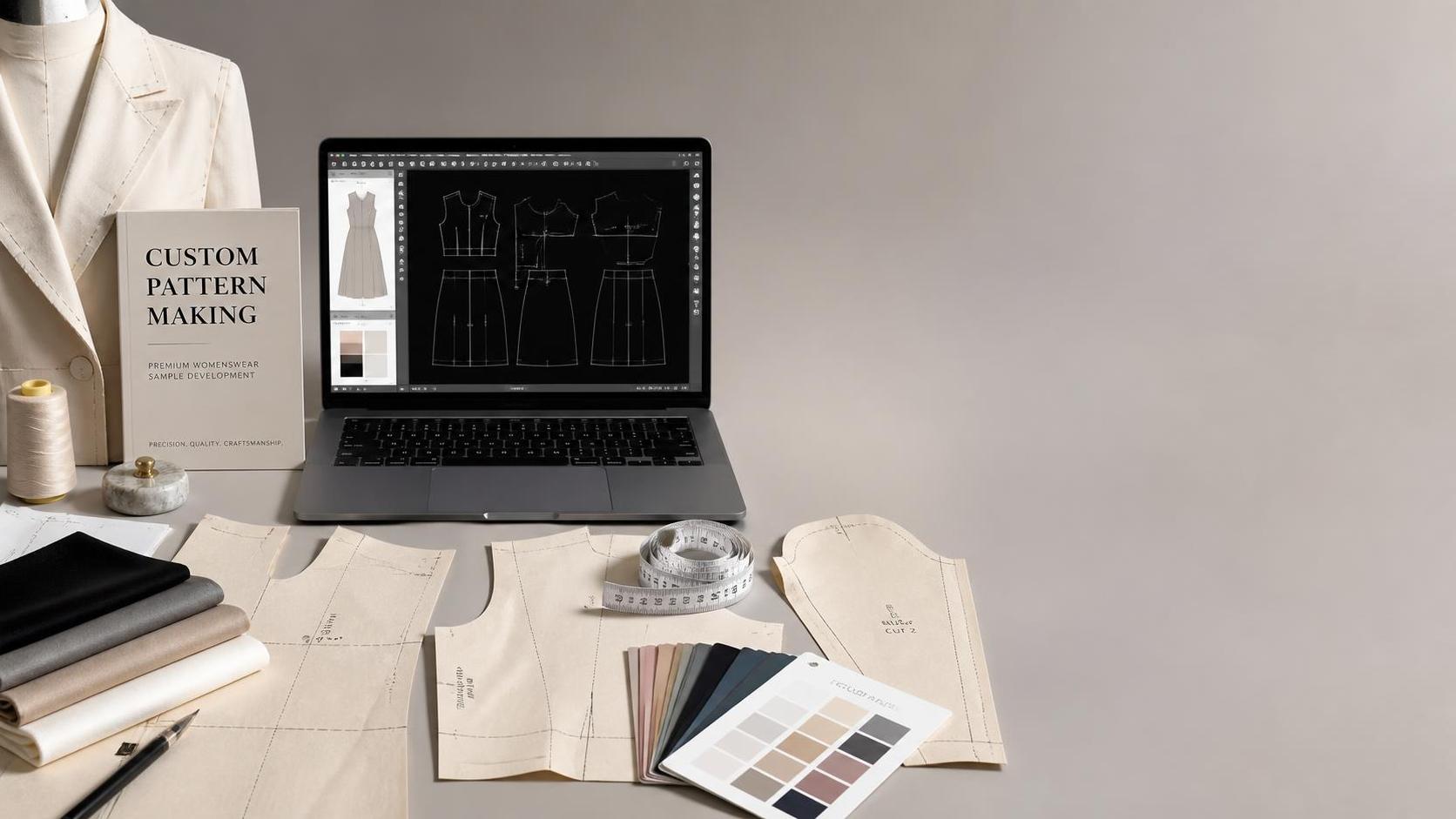
Do High-End Women’s Apparel Factories Accept Custom Pattern Making
Do high-end women's apparel factories accept custom pattern making? Yes—when fabric, fit, and sampling align. Learn what premium factories require and how to improve development success.

{item.title}
{item.description}
Please give us a message
Contact Us