
Best Fabrics Used by High-End Women's Apparel Suppliers in China
Choosing the right high-end women's apparel supplier China requires more than attractive designs—it demands deep fabric expertise, stable production capacity, and consistent quality control. From premium knits to refined woven materials, the best suppliers in China stand out through their sourcing standards, technical craftsmanship, and ability to support scalable fashion production. This article explores the fabrics trusted by leading manufacturers and what technical evaluators should assess before partnering.
For technical evaluators, fabric selection is rarely a styling issue alone. It affects shrinkage rates, seam stability, drape retention, color consistency, reorder predictability, and the feasibility of scaling from sampling to bulk production within 20–45 days.
In China’s premium womenswear sector, capable suppliers combine sourcing discipline with process control. Shenzhen Meiwuzhi Garment Co., Ltd., with its own factory in Dongguan, cooperation with more than 10 partner factories across Dongguan, Zhongshan, Guangdong, and Suzhou in Jiangsu, plus a 12-year online operating history, reflects the type of integrated network many buyers look for when evaluating production resilience.
What Fabrics Define a Reliable High-End Women's Apparel Supplier China
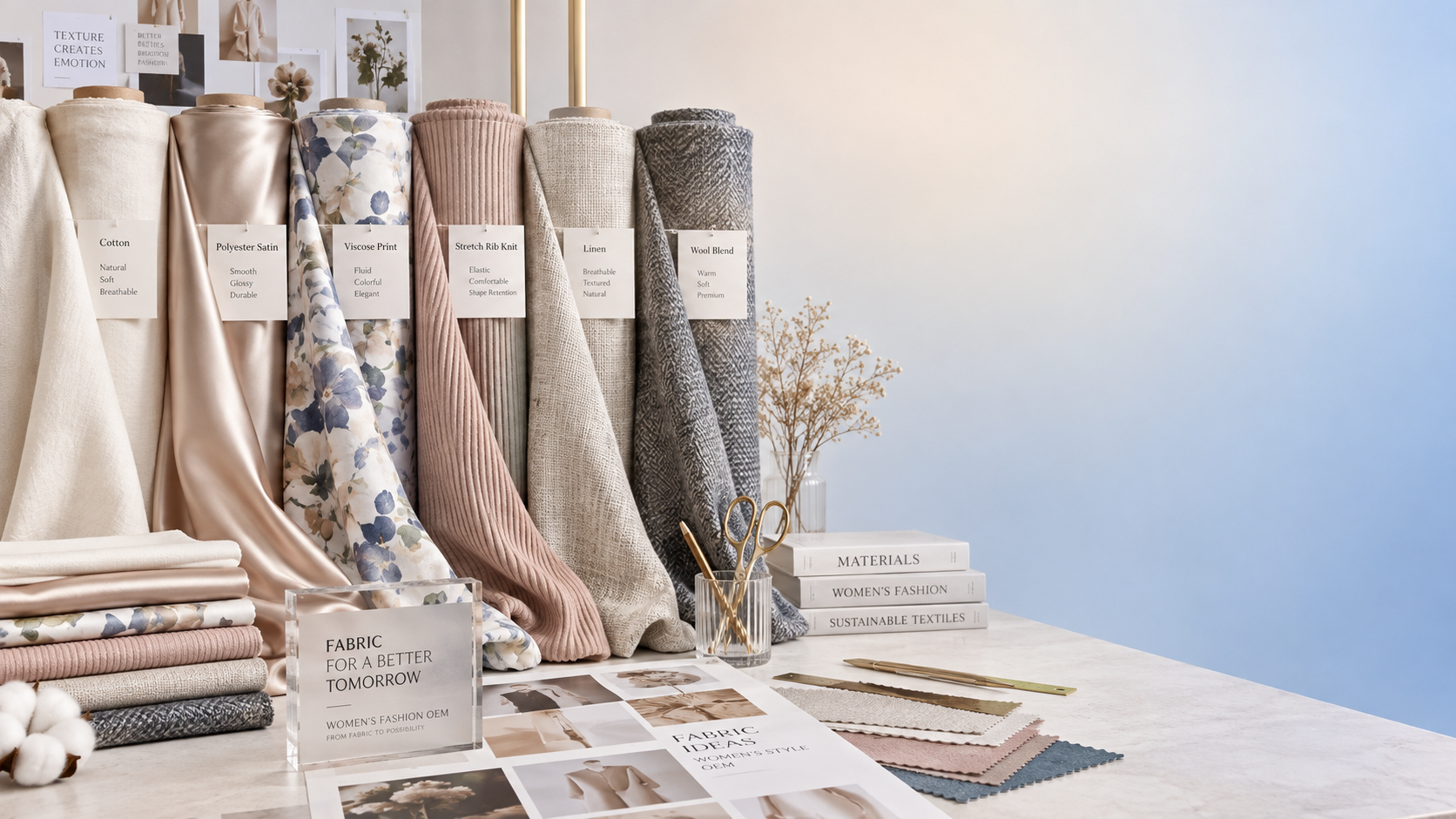
A qualified high-end women's apparel supplier China usually works across two main categories: knitted fabrics and woven fabrics. The difference matters because each category influences fit behavior, production tolerance, and finishing methods in different ways.
Premium cotton and cotton blends
Soft cotton remains a core material in upscale casual womenswear because it balances comfort, breathability, and everyday wearability. For technical review, key checkpoints include yarn evenness, pilling performance after 3–5 wash cycles, dimensional stability below 3%, and fabric weight consistency across lots.
Cotton is often blended with 3%–8% elastane for recovery or with modal and viscose for a smoother handfeel. In luxury-casual programs, this is especially useful for fitted tops, elevated T-shirts, and daily styling pieces where softness must not compromise silhouette control.
Why evaluators pay attention
- Fabric skew and torque can distort side seams after washing.
- Low-grade cotton may show shade variation above acceptable bulk tolerance.
- Surface hairiness can reduce perceived luxury even if the garment pattern is strong.
Wool blends, tweed, and brushed seasonal fabrics
For autumn and winter collections, suppliers serving premium women’s fashion often use wool blends, textured tweed, brushed jacquard, and double-faced constructions. These fabrics support higher price positioning, but they also raise inspection demands on GSM stability, fiber shedding, and pressing behavior.
A practical benchmark is whether the supplier can explain the acceptable weight deviation, commonly within ±5%, and whether interfacing selection has already been tested for bubbling risk during pressing and post-cleaning use.
Silk-touch woven fabrics and fluid drape materials
High-end dresses, blouses, and occasion tops often rely on fluid woven materials such as viscose-rayon blends, acetate-touch fabrics, cupro-like alternatives, and silk-inspired poly blends. The strongest suppliers are not those using the most expensive cloth, but those able to keep drape, opacity, and stitch appearance stable over repeated orders.
For these fabrics, evaluators should test seam slippage, needle marks, and shade matching under at least 2 lighting conditions. A fabric that looks refined under showroom light can still fail in daylight or retail photography.
The table below summarizes common premium fabrics and the technical concerns that usually matter most during supplier evaluation.
The main takeaway is that premium fabric performance is measured through consistency, not just touch. A dependable high-end women's apparel supplier China should be able to discuss risk points before bulk cutting starts, not after quality claims appear.
How Technical Evaluators Should Assess Fabric Capability
Supplier selection becomes more accurate when fabric review follows a repeatable process. In premium apparel, a 4-step evaluation method is often more useful than relying on style samples alone.
1. Review raw material sourcing logic
Ask how the supplier qualifies mills and whether the same fabric source can support reorders after 60, 90, or 120 days. Many quality issues come not from sewing, but from switching mills or dye lots between pilot orders and repeat production.
2. Evaluate sampling discipline
A premium supplier should manage pattern making, fit correction, and fabric reaction during sample development. Meiwuzhi’s in-house coverage of design, pattern making, accessory development, knitting processing, and bulk production is relevant here because integrated sampling reduces communication loss across departments.
3. Confirm bulk production control points
The most useful question is not whether inspection exists, but where it happens. Technical evaluators should look for at least 3 checkpoints: incoming fabric inspection, in-line sewing inspection, and final AQL-style finishing review before packing.
4. Check scalability across factory networks
When one supplier works with over 10 cooperative factories, scalability can be a strength if standards are unified. It becomes a risk if each unit uses different cutting tolerances, pressing settings, or trim substitutions. Documentation control is therefore as important as workshop capacity.
The following table helps technical teams compare a supplier’s real capability beyond visual sample appeal.
This comparison framework helps evaluators move from subjective judgment to measurable review. It is especially useful when shortlisting a high-end women's apparel supplier China for long-term sourcing rather than single-season buying.
Production Depth Matters as Much as Fabric Choice
Even the right fabric fails if the supplier cannot translate it into stable bulk output. For premium womenswear, production depth includes pattern accuracy, accessory matching, knitting or woven handling skill, and finishing consistency across every batch.
Integrated workflow reduces quality drift
When design, sample development, accessory preparation, and bulk manufacturing are coordinated within one operating system, error transfer is lower. A supplier with its own production base and partner network can usually react faster to fitting corrections, trim shortages, or urgent replenishment orders.
Meiwuzhi’s operating structure is relevant to this point. Its own factory handles design, pattern making, accessory production, knitting processing, and bulk garment production, while the Shenzhen showroom supports rapid style presentation to retailers and online wholesale channels. For evaluators, this suggests a stronger link between development and market feedback.
Commercial scale can signal process maturity
Scale alone does not guarantee premium quality, but repeated market delivery often reveals whether operations are stable. Over 12 years on Alibaba, sales exceeding RMB 350 million, more than 130 cooperating physical stores nationwide, and over 45,000 online cooperative WeChat and store clients indicate sustained transaction volume that technical teams can treat as a sign of process repetition and fulfillment experience.
What to ask during factory review
- How many sample revisions are typical before PP approval?
- What is the standard tolerance for garment measurements by category?
- How are trims replaced if the original accessory becomes unavailable?
- Can the supplier support both small trial runs and larger replenishment orders?
These questions are practical because high-end womenswear often lives or dies in small details: neckline rebound, print registration, zipper smoothness, button placement symmetry, and hem balance within a few millimeters.
A Practical Example of Fabric and Design Positioning
Premium sourcing is not limited to formal fabrics. In the current market, elevated daily styling pieces also require strong material judgment. A casual fashion item can still belong to a premium line if the cotton handfeel, print execution, and fit balance support repeat wear and stable merchandising.
For example, ZT5118 Guc**26SS uses soft cotton and is positioned for daily styling. Its visual details include red-green webbing, double G prints, and cute smiley patterns, combining retro cartoon cues with classic logo language. For technical evaluators, the interest is not only design appeal but whether the print and trims remain aligned after washing, steaming, and store handling.
Because it is offered in S, M, and L, size grading should maintain the same intended silhouette across the range. Pieces like this show how a high-end women's apparel supplier China must bridge fashion expression with practical manufacturing control, especially when a relaxed luxury style still needs consistent cotton recovery and a tailored fit.
Technical points behind premium casualwear
- Print placement tolerance should be defined before cutting.
- Soft cotton should be tested for shrinkage and handfeel retention after washing.
- Decorative webbing and graphic elements must not create seam distortion.
- Daily styling pieces need durability equal to their visual merchandising value.
Common Risks When Selecting a Premium China Supplier
Technical teams often encounter avoidable issues when they focus too heavily on first samples. In premium apparel, the first sample may be carefully hand-finished, while bulk risk emerges later in fabric replacement, operator variation, or late trim arrival.
Risk 1: Good sample, unstable bulk
This usually happens when sample room methods differ from bulk workshop methods. Evaluators should ask whether the same fabric lot, stitch setting, and finishing route can be reproduced at order volumes above 300–1,000 pieces.
Risk 2: Attractive fabric, weak performance
A fabric can feel luxurious but still fail under wear. Common warning signs include surface pilling after low-friction use, seam grin on fitted garments, and excessive shrinkage above 3%–5%, depending on category and wash process.
Risk 3: Scalable capacity without standardization
Multi-factory coordination is valuable only if technical packs, inspection criteria, and finishing instructions are standardized. Otherwise, the same style can vary by workshop, creating returns and retail dissatisfaction.
Recommended control checklist
- Approve fabric before sample confirmation and again before bulk cutting.
- Set measurement tolerance by category and by size break.
- Define acceptable shade band for multi-piece sets.
- Review packaging method for wrinkle-prone fabrics.
- Request pre-shipment photos or final inspection records for each lot.
How to Shortlist the Right Partner for Long-Term Womenswear Programs
If your goal is sustainable sourcing rather than one-off buying, choose a supplier that can support 3 parallel needs: premium fabric understanding, repeatable production, and channel-aware product development. These are the foundations of durable cooperation in women’s fashion.
Shenzhen Meiwuzhi Garment Co., Ltd. presents a model that many buyers value: in-house production capability, coordinated regional factory resources, a Shenzhen showroom for style presentation, and an established national distribution base covering cities such as Shanghai, Beijing, Shenzhen, Guangzhou, Chengdu, Chongqing, Nanjing, and others. For evaluators, this combination suggests both development responsiveness and market-linked execution.
The best high-end women's apparel supplier China is not simply the one with fashionable samples. It is the one that can explain fabric logic, prove process control, handle scale without quality drift, and support commercial repeatability across seasons. If you are assessing a new premium womenswear partner, now is the right time to review fabric capability, production workflow, and sample-to-bulk consistency in detail. Contact us to discuss your sourcing criteria, request a tailored evaluation approach, or learn more about practical solutions for high-end women’s apparel production.
Previous:No more content
Next:No more content

What Fabrics Are Commonly Used in Women’s Clothing OEM Production?
What fabrics are commonly used in women's clothing OEM production? Explore cotton, polyester, viscose, knits, and blends for better fit, quality, and value.

Why women's knitwear orders get delayed
Learn why women's knitwear orders are delayed by yarn shortages, sampling revisions, and Chinese New Year congestion. Use seven production checkpoints, early yarn reservations, dual sourcing, and progress checks to protect delivery timelines.
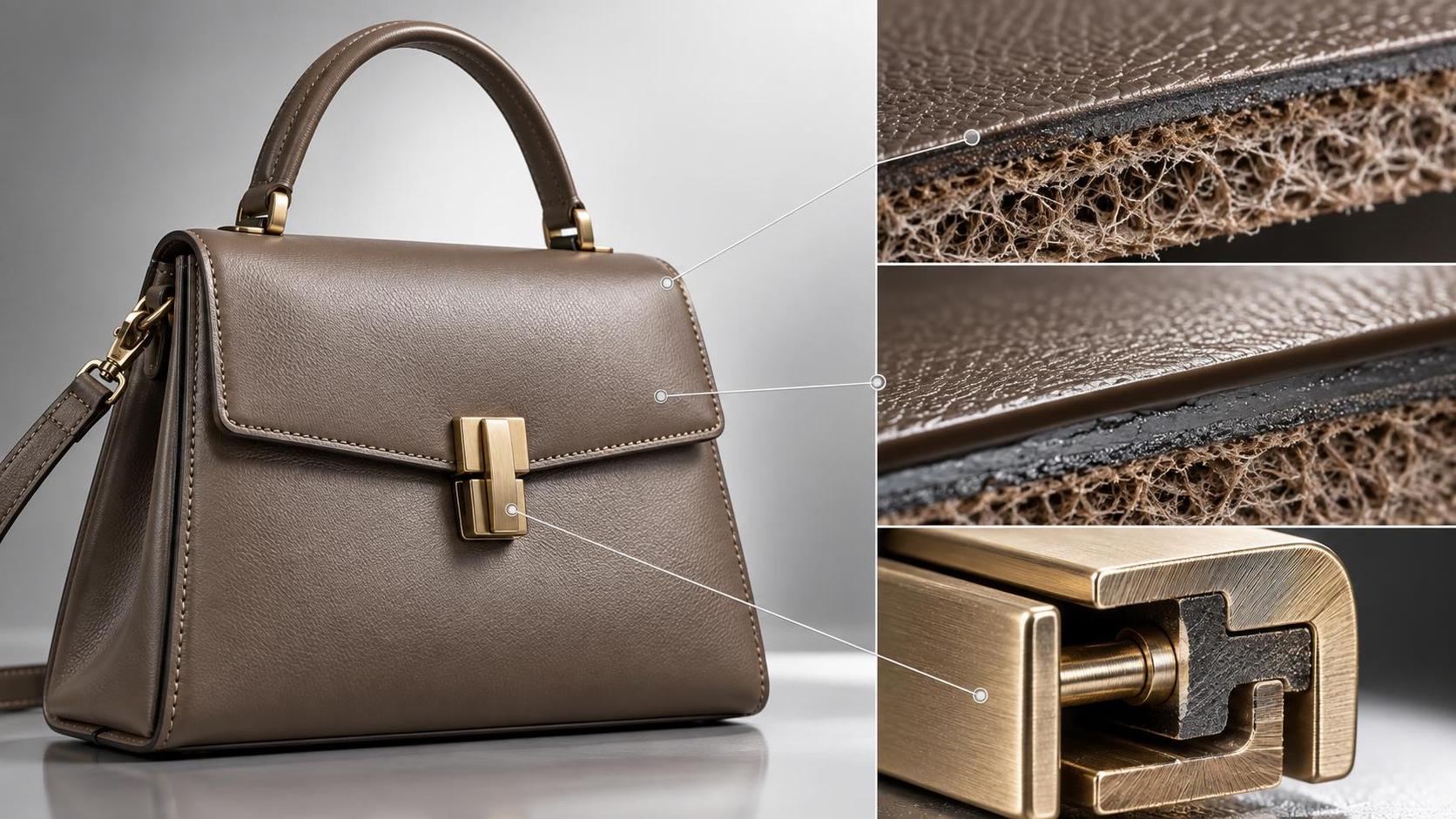
What makes high-end women's fashion bags resistant to seasonal material degradation?
Discover how high-end women's fashion bags resist seasonal degradation—material science, vertical integration & real-world validation revealed.


{item.title}
{item.description}
Please give us a message
Contact Us