
How to ensure color consistency across women's clothing OEM production batches
Sep 15, 2026
Color consistency across women’s clothing OEM production batches isn’t a matter of aesthetics alone—it’s a supply chain integrity issue. For brands sourcing from multi-factory networks—especially those operating across Guangdong and Jiangsu provinces—shade variation between bulk runs triggers cascading consequences: rejected shipments, delayed launches, costly re-dyeing, and erosion of brand perception among retail partners and end consumers. Unlike single-facility production where process control is centralized, distributed OEM systems introduce variability at every stage: dye house selection, fabric lot sourcing, machine calibration, ambient lighting during inspection, and even the timing of lab-dip approvals relative to bulk production. The challenge isn’t theoretical; it’s operational, rooted in how color data moves—or fails to move—between design intent, supplier execution, and final QC.
The first critical failure point lies in treating color as a visual impression rather than a measurable, traceable parameter. Many brands still rely on physical swatches approved under uncontrolled lighting (e.g., office fluorescents or daylight through warehouse windows), then expect identical results from factories using different spectrophotometers, different white references, or no instrument at all. Without standardized measurement protocols—specifically, CIE D65 lighting, 10° observer angle, and SCI (specular component included) mode—lab dips and bulk fabrics are evaluated against incompatible baselines. A shade that passes visual inspection in Dongguan may fail spectrophotometric evaluation in Suzhou—not because the dye is off, but because the reference standard wasn’t locked in digitally at the outset.
Standardized digital color mapping eliminates this ambiguity. At its core, this means converting each approved lab dip into a spectral reflectance curve—not just an sRGB or Pantone code—and embedding that curve into a shared digital spec sheet accessible to all involved parties: the brand’s color team, the fabric mill, the dye house, and the garment factory. This curve becomes the immutable benchmark. When bulk fabric arrives, it’s measured against the same curve under identical conditions—not compared to a faded physical swatch pinned to a bulletin board. Crucially, this requires agreement on instrument calibration: spectrophotometers drift over time and temperature. Factories must perform daily calibration checks using certified ceramic tiles (e.g., X-Rite BCRA II tiles), with logs traceable to batch records. Without this discipline, even identical instruments yield divergent readings.
Lab-dip approval is often misused as a one-time gate, not a dynamic checkpoint. In practice, the most reliable OEM partners treat it as a three-stage verification: initial dip (fabric-only, pre-cutting), pre-production dip (on cut-and-sewn mock-up, verifying seam exposure and tension effects), and post-wash dip (after full garment washing, accounting for shrinkage and dye migration). Skipping any stage invites surprises—especially with knits or blended fabrics where stitch density alters light absorption, or with reactive dyes prone to alkaline hydrolysis during washing. Meiwuzhi’s integrated network enforces this sequence across its Dongguan, Zhongshan, and Suzhou partner factories—not as policy, but as non-negotiable input for bulk planning. If the post-wash dip deviates beyond ΔE 0.8 (CIELAB 2000), the batch is halted before cutting begins. That threshold isn’t arbitrary: it reflects the minimum perceptible difference under retail lighting for mid-to-high-end women’s apparel, validated across 130+ physical store environments.
Dye lot coordination across multiple factories remains the most underestimated risk. Brands assume “same fabric, same dye formula” guarantees consistency. It doesn’t. Fabric lots from the same mill vary in fiber maturity, yarn twist, and finish application—even within the same PO. Dye houses respond differently to those micro-variations. The solution isn’t banning multi-factory production; it’s enforcing cross-lot dye matching. Before bulk dyeing begins, the dye house must receive *both* the target spectral curve *and* the actual fabric lot sample from the mill—not just a generic swatch. They then run a mini-batch test on that exact lot, measure the result, and adjust the recipe until ΔE ≤ 0.5 against the target. This adds 2–3 days to lead time but reduces bulk rejection rates by over 70% in Meiwuzhi’s internal tracking across 2022–2023 orders. Crucially, this process requires direct communication between the dye house and the mill—not routed through the garment factory or brand intermediary—because technical adjustments hinge on substrate-specific variables only those two parties understand.
Lighting conditions during final inspection are not a detail—they’re a decision point. Most factories inspect garments under cool white fluorescent tubes (6500K), while retailers stock under warm LED (3000K) or mixed retail lighting. A garment passing QC under 6500K may appear washed-out or yellowed on a shop floor. The fix is dual-condition evaluation: every bulk shipment undergoes side-by-side assessment under both D65 (daylight simulation) and F2 (cool white fluorescent), with documented pass/fail status for each. This reveals metamerism—the phenomenon where two colors match under one light source but diverge under another—before goods leave the factory. When metamerism is detected, the root cause is almost always inconsistent optical brightener application during finishing, not dye error. Addressing it requires revisiting the mill’s finishing bath parameters, not re-dyeing.
Finally, accountability must be embedded in documentation—not assumed. Each bulk shipment should carry a color compliance report signed by the factory QC manager, listing: the spectral curve ID used; instrument model and last calibration date; measurement conditions (D65/10°/SCI); ΔE values for five random points per garment style; and lighting condition pass/fail status. This isn’t bureaucratic overhead. It’s the only way to isolate whether a color deviation originated at the mill, dye house, or sewing line—and therefore, who bears corrective action. Without it, disputes over responsibility stall resolution, delay restocking, and damage long-term OEM relationships.
Color consistency in women’s apparel OEM production is not solved by better dyes or more expensive labs. It’s solved by treating color as data—not art—and enforcing rigor at the handoff points between design, material, chemistry, and inspection. The factories that sustain premium brand partnerships don’t invest in bigger color departments; they invest in tighter feedback loops, calibrated instruments, shared spectral references, and unambiguous accountability. For brands managing distributed production across China’s garment hubs, the question isn’t whether consistency is possible—it’s whether their current processes close the gaps where variation actually takes root.
Previous:No more content
Next:No more content

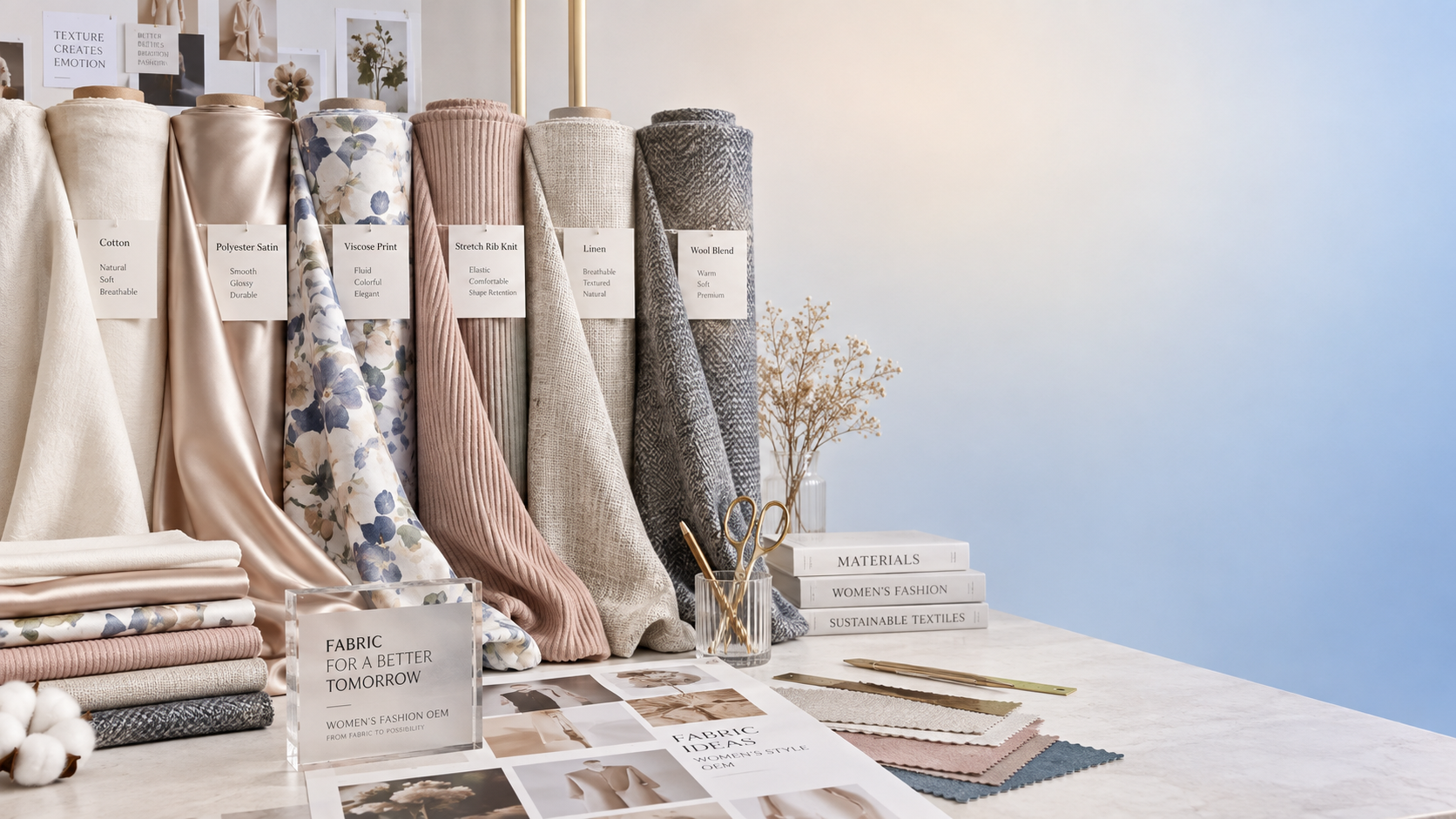
What Fabrics Are Commonly Used in Women’s Clothing OEM Production?
What fabrics are commonly used in women's clothing OEM production? Explore cotton, polyester, viscose, knits, and blends for better fit, quality, and value.

Why women's knitwear orders get delayed
Learn why women's knitwear orders are delayed by yarn shortages, sampling revisions, and Chinese New Year congestion. Use seven production checkpoints, early yarn reservations, dual sourcing, and progress checks to protect delivery timelines.
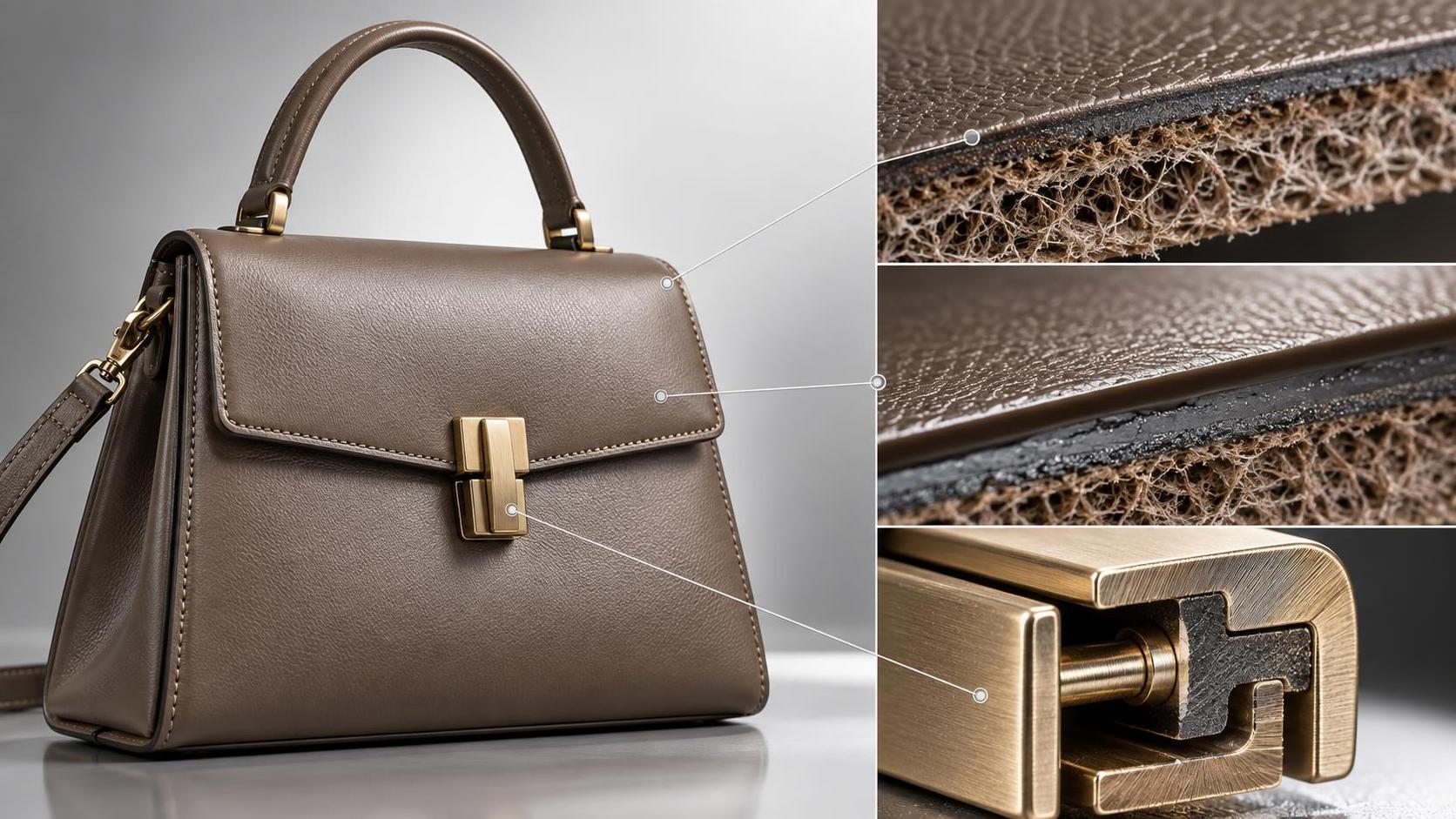
What makes high-end women's fashion bags resistant to seasonal material degradation?
Discover how high-end women's fashion bags resist seasonal degradation—material science, vertical integration & real-world validation revealed.


{item.title}
{item.description}
Please give us a message
Contact Us
8th Floor, Building 5, Meinian Plaza, Xinggong Road, Nanshan District, Shenzhen
+86-15989383372
+86-0755-86708380
sylvain@68666@gmail.com