
What Fabrics Are Most Common in High-End Women's Apparel Manufacturing?
What fabrics define true luxury in women’s fashion, and how do they affect quality, comfort, and brand value? For buyers asking, “Are there risks in ordering high-end women's apparel from overseas agents”, fabric selection is one of the first factors to examine. From silk and cashmere to premium wool blends and fine cotton, understanding the most common materials used in high-end women’s apparel manufacturing helps reduce sourcing risks and support smarter purchasing decisions.
Why Fabric Choice Matters More Than Most Buyers Expect
For high-end women’s apparel, fabric is not a background detail. It shapes drape, comfort, durability, seasonal performance, and the price customers are willing to pay at retail.
That is why buyers sourcing premium garments should look beyond design sketches and sample photos. In luxury-oriented production, the fabric often determines whether a product feels refined or disappointing.
When people ask, “Are there risks in ordering high-end women's apparel from overseas agents,” the answer is yes, but many of those risks begin with incomplete fabric verification.
An overseas agent may provide attractive images and broad material descriptions, yet terms like “silk blend,” “premium wool,” or “soft knit” can hide major differences in grade and performance.
Understanding the fabrics most commonly used in high-end women’s apparel manufacturing gives buyers a practical framework. It helps them assess quality, question vague specifications, and compare suppliers with more confidence.
What Fabrics Are Most Common in High-End Women’s Apparel Manufacturing?
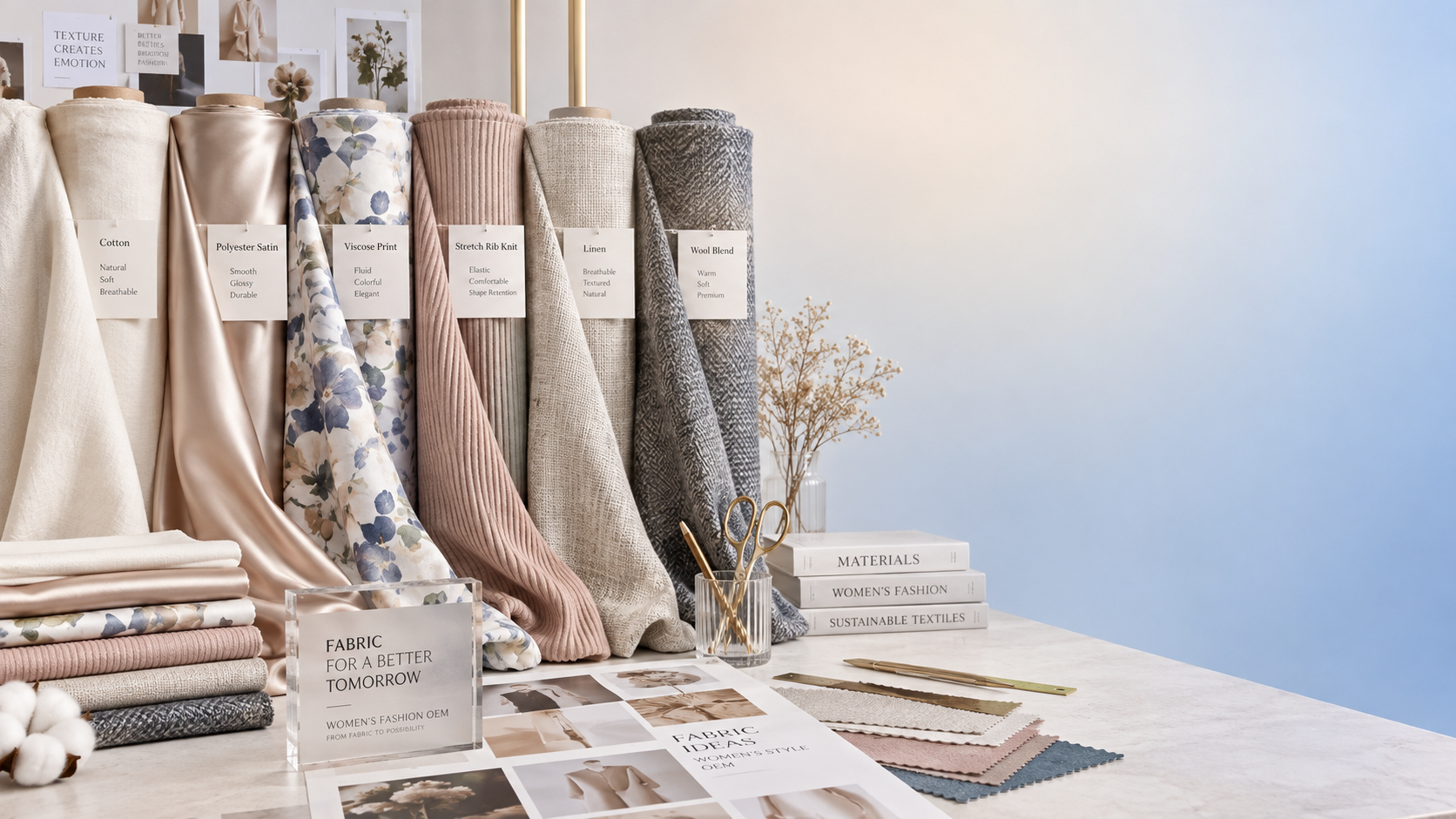
The most common fabrics in high-end women’s apparel manufacturing include silk, cashmere, wool, fine cotton, linen, viscose blends, cupro, and carefully selected knit materials.
These fabrics are widely used because they balance visual elegance with comfort, tailoring performance, and brand positioning. However, each material carries different sourcing standards and different quality risks.
For buyers, the key is not only knowing the fabric name. The real issue is understanding fiber quality, fabric construction, finishing methods, and whether the material suits the intended garment category.
Silk
Silk remains one of the most recognized luxury fabrics in women’s fashion. It is valued for its natural sheen, smooth hand feel, breathability, and fluid drape.
High-end brands commonly use silk for blouses, dresses, skirts, linings, and occasionwear. Charmeuse, crepe de chine, georgette, and silk satin are frequent choices.
The sourcing risk is that not all silk sold as premium is equal. Differences in momme weight, weave density, dye quality, and finishing can strongly affect touch and longevity.
Cashmere
Cashmere is associated with softness, warmth, and quiet luxury. It is often used in sweaters, knit dresses, shawls, and outerwear blends for premium women’s collections.
Its value depends heavily on fiber length, fineness, pilling resistance, and yarn consistency. Lower-grade cashmere may feel soft at first but lose shape after limited wear.
This is one reason buyers should be cautious when ordering through overseas agents. A label may say cashmere, while the actual composition or yarn quality does not match luxury expectations.
Wool and Wool Blends
High-end women’s tailoring frequently depends on wool. Fine wool supports structure, wrinkle recovery, insulation, and a polished appearance for coats, trousers, dresses, and suiting.
Merino wool, wool-silk blends, and wool-cashmere blends are especially common. These combinations can improve softness, drape, or warmth depending on the garment’s purpose.
Quality differences often come from fiber grade, spinning quality, and finishing. Two garments labeled wool blend can perform very differently in terms of comfort, shape retention, and surface smoothness.
Fine Cotton
Cotton is not only a mass-market fabric. In high-end women’s apparel, long-staple cotton and premium cotton blends are widely used for shirts, dresses, skirts, and refined casualwear.
Luxury cotton fabrics are chosen for softness, breathability, cleaner texture, and better durability. Poplin, sateen, voile, twill, and double-gauze constructions may all appear in premium collections.
Buyers should pay attention to fiber length, fabric density, shrinkage control, and finishing. Cotton becomes high-end through material selection and processing, not by label alone.
Linen and Linen Blends
Linen plays an important role in premium spring and summer apparel. It offers breathability, a natural texture, and an understated elegance that suits modern high-end dressing.
Pure linen can wrinkle easily, so luxury manufacturers often use linen blends with cotton, viscose, or silk to improve drape and wearing comfort while preserving the natural look.
Here the risk is inconsistency. Poorly processed linen may feel stiff, unstable, or overly coarse, which weakens the premium impression and can lead to higher return rates.
Viscose, Rayon, and Cupro Blends
Not every luxury garment is made from fully natural fibers. High-end manufacturers also use regenerated cellulose fabrics such as viscose and cupro for drape, softness, and color depth.
These fabrics are common in dresses, blouses, linings, and fluid separates. Cupro in particular is appreciated for its smooth surface and elegant movement.
The key is responsible selection. Lower-grade viscose may shrink, twist, or lose strength, while high-quality versions can perform beautifully in premium women’s fashion.
Premium Knits
Luxury knitwear often uses cashmere, merino wool, cotton-silk blends, viscose blends, and fine-gauge yarns. The appeal comes from comfort, recovery, and a sophisticated silhouette.
In knitting, quality depends not only on fiber but also on gauge, yarn twist, stitch stability, and finishing. A soft knit that stretches out quickly will not support a premium brand image.
Are There Risks in Ordering High-End Women’s Apparel from Overseas Agents?
Yes, there are real risks in ordering high-end women's apparel from overseas agents, especially when fabric communication is indirect or simplified during quotation and sampling stages.
The first risk is material substitution. A buyer may approve one hand feel in a sample, then receive bulk goods made from a lower-cost fabric with similar appearance.
The second risk is incomplete specification control. If details such as weight, composition tolerance, finishing, shrinkage, and colorfastness are not documented, disputes become difficult to resolve.
The third risk is category mismatch. A fabric may be acceptable for mid-range apparel but not for high-end positioning, where customers expect superior touch, drape, and stability.
The fourth risk is inconsistent sourcing across production batches. This becomes more likely when an agent manages production through multiple factories without strong central quality control.
The fifth risk concerns lead time and replacement difficulty. If a fabric issue appears late, changing materials across borders can delay launch windows and raise overall costs significantly.
How Buyers Can Judge Fabric Quality Before Placing Large Orders
Buyers do not need to be textile engineers to reduce risk. They need a disciplined evaluation process that turns fabric selection into a measurable sourcing decision.
Ask for Complete Fabric Specifications
A serious supplier should provide composition, weight, width, construction type, finishing details, shrinkage expectations, and recommended care instructions. Broad descriptions are not enough for premium orders.
Request Fabric Swatches and Garment Samples Together
A swatch shows surface and hand feel, but a finished sample reveals drape, seam behavior, lining compatibility, and how the fabric performs in the actual design.
Check Performance, Not Only Appearance
Luxury buyers should evaluate pilling resistance, wrinkle recovery, opacity, stretch recovery, seam slippage, and wash or dry-clean response where relevant. Premium visual appeal alone does not guarantee product success.
Confirm Bulk Fabric Consistency
Before production begins, it is wise to confirm that the approved sample fabric and the bulk fabric are the same in composition, texture, color, and finishing standard.
Use Third-Party Testing When the Order Value Justifies It
For higher-value programs, third-party textile testing can verify composition, colorfastness, shrinkage, and other quality indicators. This is often a practical safeguard, not an unnecessary expense.
Which Fabrics Best Support High-End Brand Positioning?
The answer depends on the brand’s customer, season, and product architecture. There is no single luxury fabric that works for every collection or every retail strategy.
Silk and cupro-based fabrics support fluid elegance and premium femininity. Wool and cashmere support refined knitwear and outerwear positioning. Fine cotton and linen blends support modern, elevated daily wear.
The strongest collections usually mix materials intelligently instead of chasing prestige labels. A well-chosen premium cotton dress can outperform a poorly executed silk dress in both sales and customer satisfaction.
For retailers and wholesalers, this matters because fabric should align with end-market expectations. True product value comes from the right fabric for the right design, not the most expensive fiber on paper.
What a Reliable Manufacturing Partner Should Be Able to Do
When sourcing high-end women’s apparel, the supplier’s fabric capability matters as much as the fabric list itself. Reliable production requires technical understanding, not only trading capacity.
A capable manufacturer should be able to support design interpretation, pattern development, accessory coordination, knitting execution, and bulk production under consistent quality standards.
They should also communicate clearly about fabric suitability, minimums, replacement options, and quality tradeoffs. This is especially important when buyers are evaluating overseas sourcing channels.
Companies with integrated development and production functions are often better positioned to manage luxury apparel requirements. They can coordinate sample correction, fabric matching, and workmanship more efficiently.
For example, a manufacturer with in-house design, pattern making, accessory production, knitting processing, and bulk garment production can usually control premium fabric execution more effectively than a loosely connected sourcing chain.
How Fabric Knowledge Helps Reduce Overseas Sourcing Risk
Fabric knowledge does not remove every sourcing challenge, but it gives buyers a stronger basis for decision-making. It helps them compare offers beyond price and presentation.
When a buyer understands common high-end fabrics, they can ask sharper questions. They can challenge vague descriptions, identify unrealistic claims, and recognize where premium value is actually created.
This is particularly useful for anyone concerned about whether there are risks in ordering high-end women's apparel from overseas agents. The answer becomes more manageable when fabric standards are clear.
Instead of evaluating a supplier only by catalog aesthetics or quoted cost, buyers can assess technical credibility. That shift often prevents expensive mistakes before production starts.
Conclusion
The fabrics most common in high-end women’s apparel manufacturing are silk, cashmere, fine wool, premium cotton, linen blends, and quality regenerated fiber fabrics such as viscose and cupro.
Each of these materials can support luxury positioning, but only when the grade, construction, and finishing meet the intended product standard. Fabric name alone is never enough.
For buyers asking, “Are there risks in ordering high-end women's apparel from overseas agents,” the practical answer is yes, but those risks can be reduced through better fabric knowledge and stricter verification.
In premium women’s fashion, fabric is where quality becomes tangible. Buyers who understand that are better equipped to protect margins, brand reputation, and long-term customer trust.
Previous:No more content
Next:No more content

What Fabrics Are Commonly Used in Women’s Clothing OEM Production?
What fabrics are commonly used in women's clothing OEM production? Explore cotton, polyester, viscose, knits, and blends for better fit, quality, and value.

Why women's knitwear orders get delayed
Learn why women's knitwear orders are delayed by yarn shortages, sampling revisions, and Chinese New Year congestion. Use seven production checkpoints, early yarn reservations, dual sourcing, and progress checks to protect delivery timelines.
What makes high-end women's fashion bags resistant to seasonal material degradation?
Discover how high-end women's fashion bags resist seasonal degradation—material science, vertical integration & real-world validation revealed.


{item.title}
{item.description}
Please give us a message
Contact Us