
Can a High-End Women's Apparel Supplier in China Support Custom Collections
Looking for a high-end women's apparel supplier China brands can trust for custom collections? Shenzhen Meiwuzhi Garment Co., Ltd. combines in-house design, pattern making, knitting, and bulk production with a strong multi-factory network, helping fashion businesses turn concepts into premium women’s wear efficiently. For decision-makers seeking quality, flexibility, and scalable supply, this is a partner worth exploring.
What makes a high-end women's apparel supplier China buyers can rely on?
For fashion brands, distributors, and retail groups, supplier choice is rarely about price alone. The real question is whether a partner can translate a design direction into commercially viable garments without losing quality, timing, or brand consistency.
A dependable high-end women's apparel supplier China sourcing teams evaluate should have pattern development capability, fabric understanding, trim coordination, fit control, and production planning. If one of these links is weak, custom collections often miss delivery windows or fail in repeat orders.
Shenzhen Meiwuzhi Garment Co., Ltd. stands out because it is not limited to a single processing step. Its own factory in Changping Town, Dongguan, covers design, pattern making, accessory production, knitting processing, and bulk garment manufacturing, while a cooperative network of more than ten factories across Dongguan, Zhongshan, and Suzhou expands capacity.
- In-house design and pattern support help shorten the path from concept sketch to approved sample.
- Knitting and bulk production capability improve control over fabric behavior, fit, and finishing.
- A multi-factory structure provides flexibility for different order sizes, categories, and seasonal peaks.
- A Shenzhen showroom supports style presentation and faster commercial evaluation for buyers.
For decision-makers, this means lower coordination burden. Instead of managing separate vendors for design support, sample development, and production, they can work with a supplier that already connects those functions inside one operating framework.
Why scale and market experience matter
Meiwuzhi’s market footprint also matters in procurement evaluation. Over 12 years on the Alibaba platform, Taolaichu achieved sales exceeding 350 million yuan, built cooperation with more than 130 physical stores across multiple Chinese cities, and supported over 45,000 online cooperative WeChat business partners and online store clients.
Those figures do not replace product audits, but they do suggest operating continuity, commercial responsiveness, and an ability to serve both offline retail and online wholesale channels. For a buyer building custom collections, this kind of operating history reduces the risk of choosing an inexperienced factory partner.
How does Shenzhen Meiwuzhi support custom collections in practice?
Custom collection development usually breaks down when communication is fragmented. Design intent may be clear, but fit comments, fabric substitutions, trim changes, and production realities can pull the final result away from the original plan. That is why process visibility is essential.
Meiwuzhi supports custom collections through a chain that links concept development with manufacturability. The company’s own factory handles design, pattern making, accessory preparation, knitting processing, and bulk garment production, which helps reduce handoff losses between departments and suppliers.
Typical support flow for a custom women’s wear program
- Initial brief review: target market, price architecture, collection theme, expected quantity, and fabric direction are aligned.
- Design and sampling stage: silhouettes, pattern blocks, trims, and fit points are translated into first samples.
- Revision stage: comments on drape, shoulder line, sleeve balance, neckline, and measurements are incorporated.
- Pre-production confirmation: fabrics, accessories, grading, labeling, workmanship, and packaging details are locked.
- Bulk production and delivery planning: output is distributed according to order scale and timeline requirements.
This structure is especially valuable for premium women’s apparel, where visual refinement alone is not enough. The supplier must manage touch, fall, shrinkage behavior, stripe matching, neckline resilience, and silhouette consistency through production.
A practical product example inside a premium collection
In a high-end casual or elevated basics range, a style such as ZT5866 PRAD*26SS shows how details influence both brand image and sell-through. Built around premium washed long-staple cotton, it features a low-saturation blue base with thin brown and white stripes, a soft crew neck, a classic mini chest pocket, and a slightly loose dropped shoulder cut.
Its appeal is not only aesthetic. The breathable hand feel, fluid drape, and inclusive fit profile make it suitable for retail programs targeting vintage collegiate charm or Italian casual aesthetics. For buyers, this type of item demonstrates how a high-end women's apparel supplier China fashion businesses work with can merge design language and wearable commercial value.
Which procurement criteria matter most for enterprise buyers?
Decision-makers often compare several factories at once, yet many evaluations stay too general. “Good quality” or “strong service” is not enough for a sourcing decision. A structured matrix makes supplier selection more objective and reduces downstream disputes.
The table below highlights the most important criteria when screening a high-end women's apparel supplier China brands may use for custom women’s collections.
For Meiwuzhi, the advantage is that these criteria connect to actual internal functions. Design, pattern work, knitting, accessory coordination, and production are not isolated claims. They are part of the company’s owned factory operations, reinforced by a broader cooperative manufacturing network.
Questions buyers should ask before placing an order
- Can the supplier interpret our reference samples into original production-ready patterns?
- How are fabric substitutions handled if a selected material becomes unavailable?
- What is the communication method for fit comments and sample revisions?
- Can the supplier support mixed category development across knit tops, dresses, and seasonal layering pieces?
- What production path is used when a successful style needs rapid replenishment?
Supplier comparison: single factory vs integrated network
Not every supplier model fits premium custom work. Some buyers prefer a small single-unit workshop for direct contact, while others need a broader production structure. The right choice depends on collection complexity, expected reorder volume, and timeline pressure.
The comparison below shows why an integrated high-end women's apparel supplier China brands source from can be a stronger fit for growing collections.
Meiwuzhi fits the third model. Its owned factory anchors development and core processes, while the wider network supports output expansion. For enterprise buyers, that balance can be more practical than working with a trader lacking factory depth or a single workshop with limited scalability.
How to manage cost, lead time, and premium quality without compromise
Premium sourcing does not mean ignoring cost. The challenge is different: buyers must protect fabric hand feel, silhouette, and finish while keeping development waste and late-stage changes under control. Most budget overruns in women’s wear come from revisions, not from one visible unit price line.
Common cost drivers in custom women’s collections
- Frequent fit corrections caused by weak first-pattern accuracy.
- Fabric changes after sample approval because commercial targets were not aligned early.
- Low production efficiency on complex styles with poorly defined workmanship.
- Delayed approvals that push production into peak capacity windows.
A supplier with integrated development and production can reduce these cost leaks. For example, if a striped long-sleeve tee like ZT5866 PRAD*26SS is being adapted into a custom range, early alignment on stripe direction, neckline softness, shoulder drop, and size set can prevent unnecessary remake cycles.
Lead-time discipline for decision-makers
Lead time should be reviewed as a chain, not a single promise. Sample development, comment turnaround, trim confirmation, fabric booking, bulk scheduling, and final inspection all affect the delivery date. A realistic supplier will discuss these nodes openly rather than offering an attractive but risky blanket timeline.
Because Meiwuzhi combines factory ownership with a coordinated partner network, it is better positioned to organize production routing for urgent or layered order structures. That matters when brands launch seasonal drops, test a new capsule in limited quantities, then scale winning styles quickly.
What compliance and quality checks should buyers expect?
When sourcing from a high-end women's apparel supplier China partners should also look beyond aesthetics. Premium products still need practical quality discipline. Even when a buyer does not require a named third-party program, internal control points should be clearly defined.
The table below outlines useful quality and compliance checkpoints commonly reviewed in women’s apparel projects.
This does not require unnecessary bureaucracy. It simply means converting quality expectations into measurable checkpoints. For premium women’s wear, that discipline is often what separates a smooth launch from costly after-sales issues.
FAQ for brands evaluating a high-end women's apparel supplier China offers
How do I know if a supplier can truly support custom collections?
Look for evidence of internal development capability, not just finished-garment trading. A supplier should be able to discuss pattern adjustment, sizing logic, trims, construction, and fabric behavior in detail. Meiwuzhi’s owned factory structure is relevant here because it covers design, pattern making, knitting, accessories, and bulk production under connected management.
Is a multi-factory network a risk or an advantage?
It can be either, depending on coordination quality. A loose network with no central control may create inconsistency. But an owned-factory-led network can be an advantage because it adds production flexibility for different order types. For buyers with seasonal peaks or replenishment risk, this structure can improve delivery resilience.
What order types are best suited to this supplier model?
This model is well suited to premium womenswear brands, multi-store retailers, online wholesalers, and businesses launching exclusive capsules. It works especially well when a buyer needs both development support and the ability to scale successful styles after initial market testing.
What should be confirmed before asking for a quotation?
Provide target category, estimated quantities, size range, desired materials, reference images, finishing expectations, and target delivery window. The clearer the brief, the more accurate the quotation and development advice will be. For enterprise buyers, this also speeds up internal approval and supplier comparison.
Why many brands choose a partner with both development depth and channel experience
A supplier may produce attractive samples yet still fail at commercial execution. What brands need is a partner that understands not only garment construction, but also retail reality: style turnover, repeatability, mixed order sizes, and channel-specific presentation needs.
Meiwuzhi’s long operating history, showroom presence in Shenzhen, nationwide physical store cooperation, and extensive online client network indicate familiarity with how garments move from development to market. For enterprise decision-makers, that combination is useful because it aligns production decisions with actual selling environments.
Why choose us for custom high-end women’s wear programs?
If your team is evaluating a high-end women's apparel supplier China can offer for custom collections, Shenzhen Meiwuzhi Garment Co., Ltd. brings together the elements that matter most: in-house design and pattern capability, knitting and bulk production control, a cooperative manufacturing network for scale, and real market experience across offline and online channels.
You can contact us to discuss concrete project needs, including sample development, fabric and trim direction, product selection, fit revision workflow, delivery planning, packaging requirements, and quotation structure. If you already have sketches, reference garments, or a seasonal concept board, those materials can be reviewed to assess development feasibility and production routing.
For buyers comparing suppliers, the most productive next step is not a generic inquiry. It is a focused discussion around collection scope, target price level, expected order volume, lead-time requirements, and sample support. That is how a serious custom women’s wear program starts with fewer surprises and better results.
Previous:No more content
Next:No more content

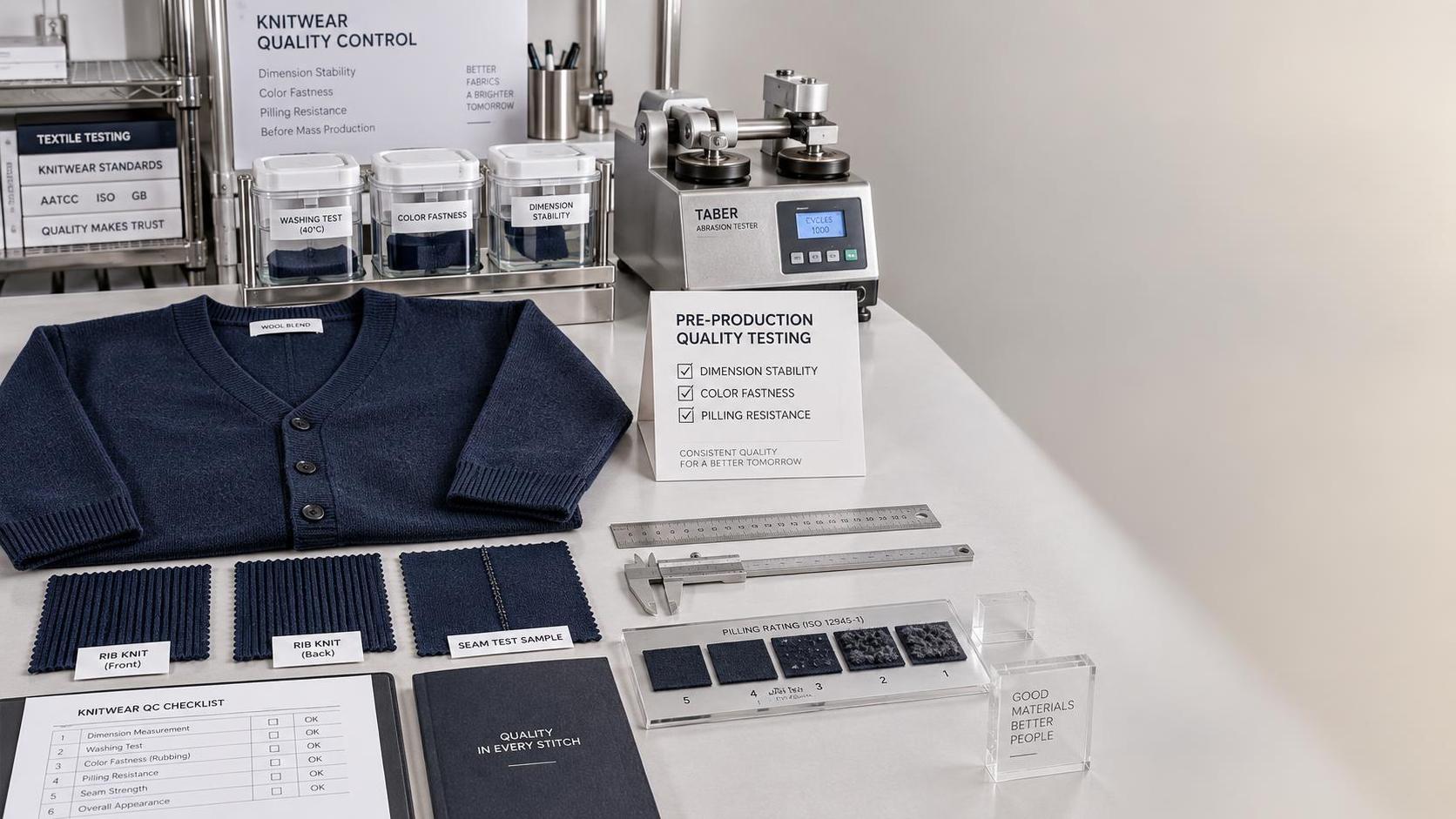
Private Label Knitwear Quality Control: Tests to Set Before Production Starts
Private label knitwear quality control guide: set pre-production tests for fiber content, shrinkage, colorfastness, pilling, seams, and compliance.
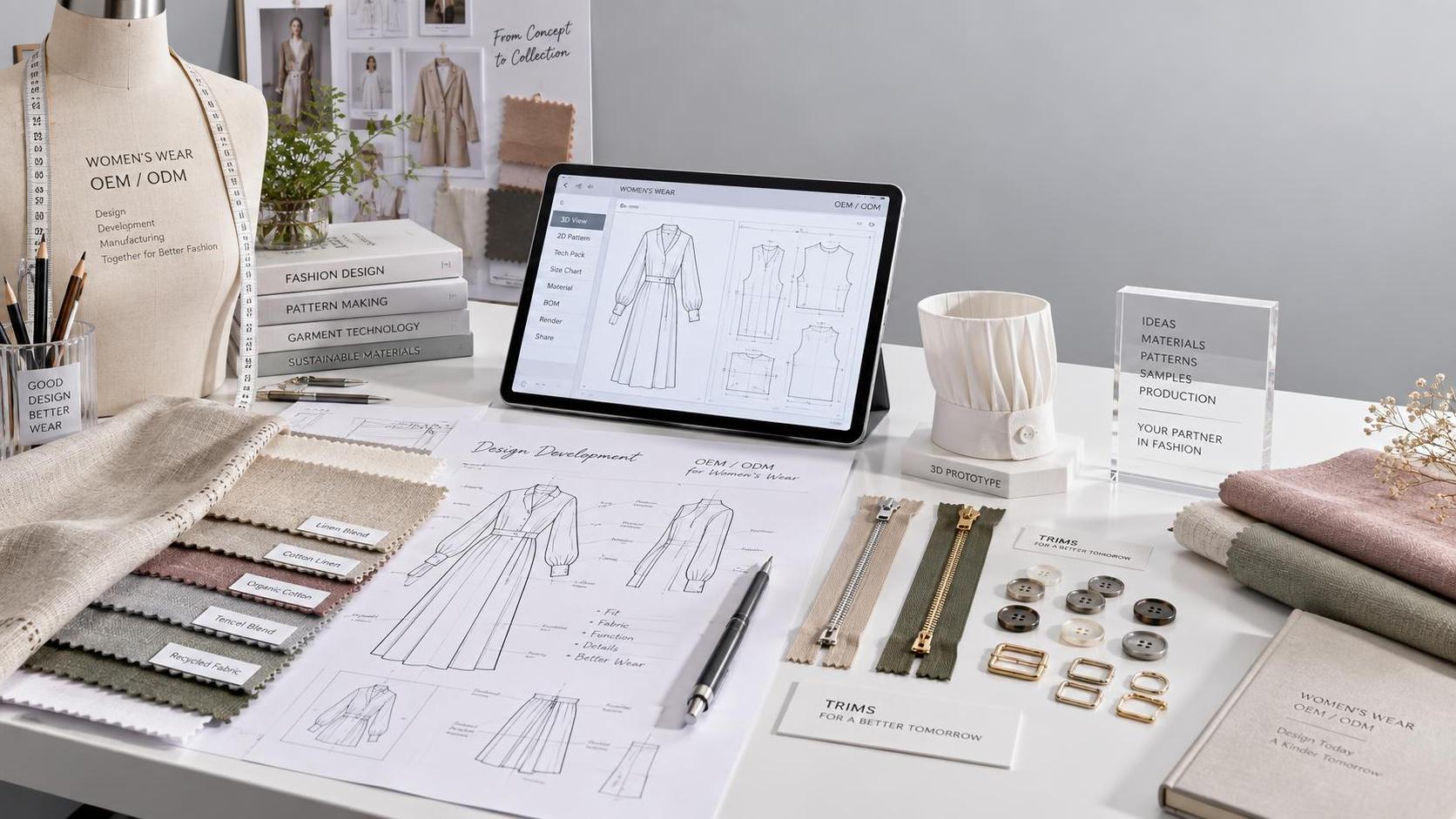
Do women's clothing OEM factories provide design development support for new collections?
Do women's clothing OEM factories offer design support for new collections? Discover how top-tier partners like Meiwuzhi integrate design into production—speeding up development, improving fit, and reducing revisions.
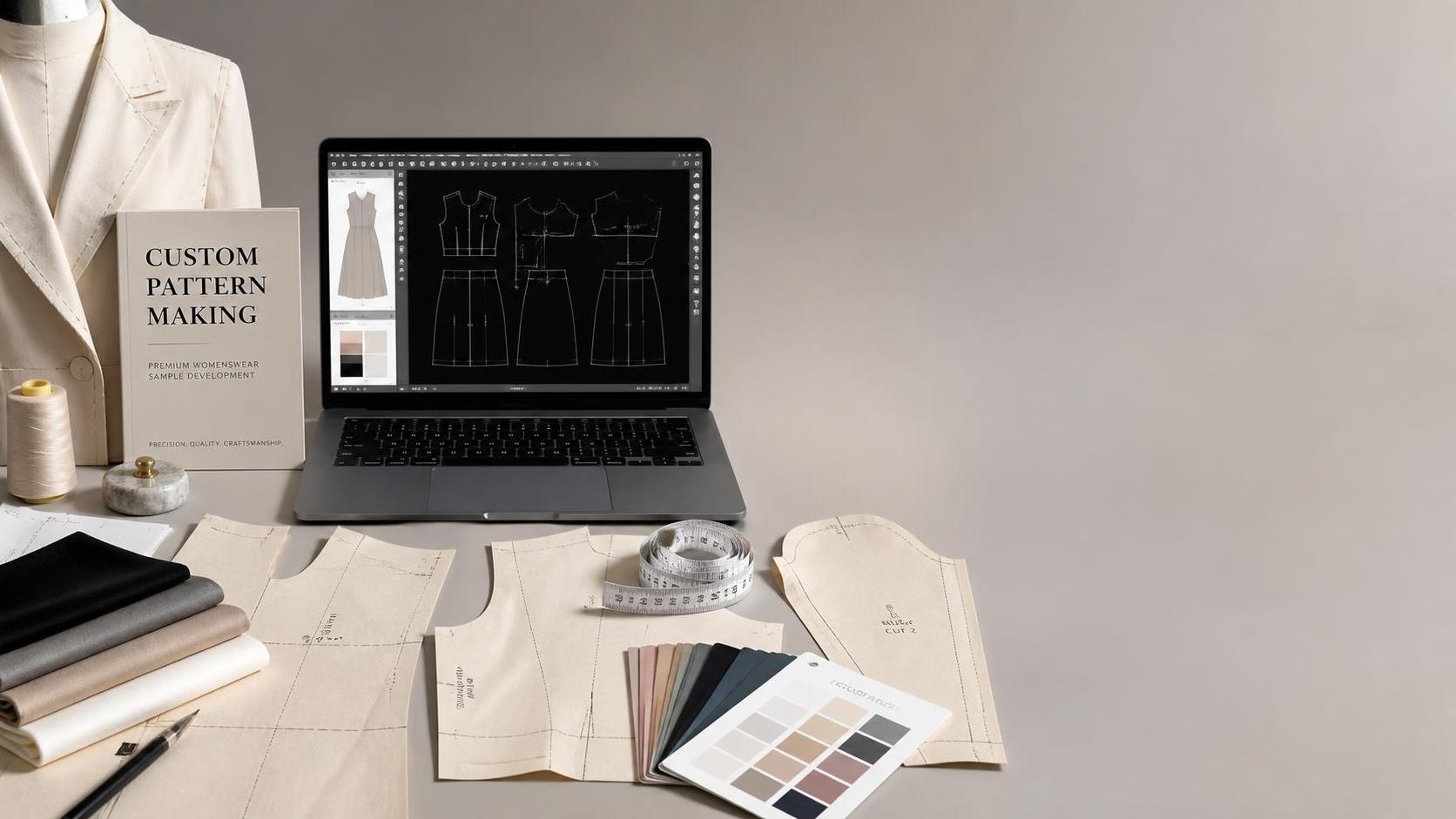
Do High-End Women’s Apparel Factories Accept Custom Pattern Making
Do high-end women's apparel factories accept custom pattern making? Yes—when fabric, fit, and sampling align. Learn what premium factories require and how to improve development success.

{item.title}
{item.description}
Please give us a message
Contact Us