
Do High-End Women's Apparel Factories Offer Custom Pattern Making?
Do High-End Women's Apparel Factories Offer Custom Pattern Making?
Yes, many of them do. But the more useful answer is this: not every factory that says it can make premium women’s wear is actually equipped to handle custom pattern making well.
In high-end women’s apparel, pattern making is not a side service. It sits right in the middle of fit, silhouette, cost control, and production stability. A beautiful sketch means very little if the block is weak, the fabric behavior is misunderstood, or the grading falls apart once sizes go into bulk.
That is why brands often ask a more specific question than “Do high-end women's apparel factories accept custom pattern making?” They want to know whether the factory can translate a design idea into a wearable, repeatable, and commercially viable garment without flattening the original concept.
A serious factory usually can. A trading company without technical depth usually cannot, or it has to outsource the hard parts and hope communication survives the handoff.
What custom pattern making really means in premium women’s wear
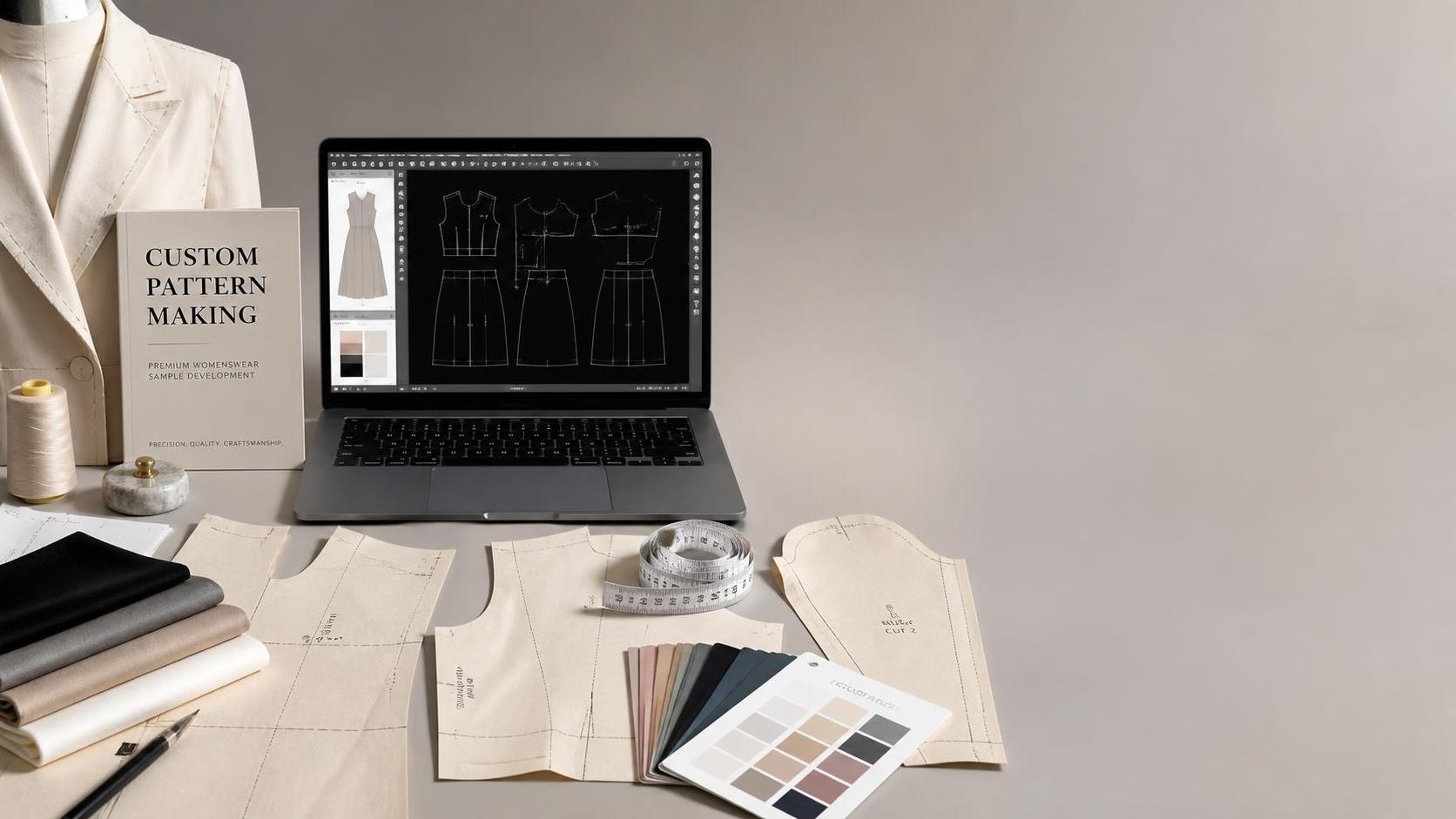
Custom pattern making is not just drawing a pattern from a reference photo. In better factories, it starts with interpretation: what is essential in the design, what can be engineered cleanly, and what needs to be adjusted because fabric, trim, construction method, and price point all affect the final shape.
For example, a draped blouse in silk satin, a structured wool jacket, and a knit dress may all look refined on a mood board, but they demand very different pattern logic. One relies on fluid balance and seam control, one depends on internal structure and tolerances, and one has to account for stretch recovery and knitting behavior. A factory that works only from basic templates will struggle here.
In practice, custom pattern making may include:
- developing first patterns from a sketch, tech pack, or physical sample
- modifying existing blocks for a brand’s target customer
- solving fit issues after first sampling
- grading for a selected size range
- adjusting pattern details for specific fabric shrinkage, weight, or drape
- balancing style intent with production efficiency
That last point is easy to overlook. In high-end apparel, the goal is not simply “make it possible.” The goal is to make it possible in a way that still looks premium after pressing, packing, transport, and repeat production.
Why some factories can do it well, and some really cannot
The gap usually comes down to in-house technical capability.
If a factory has its own design team, pattern makers, sample room, accessory coordination, and bulk production line, communication is shorter and corrections happen faster. When pattern, sewing, and sourcing are disconnected, mistakes become more expensive. A sleeve issue gets blamed on fabric. A neckline problem gets blamed on sewing. A poor drape gets blamed on the designer. In reality, those departments should be solving the problem together.
This is one reason integrated operations tend to serve premium brands better. Shenzhen Meiwuzhi Garment Co., Ltd., for instance, operates its own factory in Changping Town, Dongguan, and handles design, pattern making, accessory production, knitting processing, and bulk garment production within its own system, while also coordinating with more than ten partner factories across Dongguan, Zhongshan, Suzhou in Guangdong, and Suzhou in Jiangsu. That kind of structure matters because custom work rarely moves in a straight line. Some styles need tight internal development; others need flexible capacity once the sample is approved.
The factory’s category focus matters too. Women’s high-end fashion is a technical field of its own. Fit expectations are more sensitive, fabric range is wider, and styling details are less forgiving than in basic uniform or commodity apparel. A manufacturer that mostly produces simple casualwear may technically “accept” custom patterns, but that does not mean it will manage contour shaping, bias issues, fine seam finishes, or boutique-level silhouette consistency well.
How the process usually works
Brands often imagine custom pattern making as one step between design and sample. In reality, it is a sequence of decisions.
A typical process begins with a sketch, reference garment, or tech pack. The stronger the input, the better the first pattern tends to be. If the brand provides clear measurements, intended fit, fabric composition, construction notes, and key visual priorities, the factory can make smarter trade-offs early.
Then comes pattern development and sample making. This is where experienced factories often save time. They do not just copy dimensions; they read risk points before the sample is cut. A good pattern maker will spot where a fabric may collapse at the hip, where a collar may not roll properly, or where a pocket placement looks balanced on paper but not on body.
After the first sample, fittings usually reveal what the drawing did not. Maybe the shoulder line is elegant on a mannequin but too sharp on a live body. Maybe the waist seam is technically correct but visually too high for the target customer. Maybe a luxury fabric introduces drag lines that require pattern correction rather than sewing adjustment.
Only after these revisions should grading and pre-production decisions move forward. Rushing into bulk after a promising first sample is one of the most common mistakes in women’s fashion manufacturing.
What to ask before choosing a factory
If you are evaluating whether a factory truly accepts custom pattern making in a meaningful way, ask practical questions rather than broad ones.
- Is pattern making done in-house or outsourced?
- Can the factory develop from sketch, tech pack, or only from a physical sample?
- Who handles fit corrections after the first sample?
- Does the team have experience with your fabric category: woven, knit, tailored, draped, embellished?
- How are sample comments recorded and translated into pattern revisions?
- Can the factory support both development and stable bulk production?
These questions sound simple, but they reveal the operating model quickly. A factory that answers clearly usually has a working process. A factory that stays vague often depends on external technicians and fragmented communication.
It is also worth asking to see how they manage multiple style types. Companies with broader experience across design, sampling, knitting, and bulk coordination tend to be better at handling premium women’s collections that mix dresses, tops, knitwear, and tailored items within one season.
Where custom pattern making adds the most value
Not every style needs a fully original pattern from zero. Sometimes a modified base block is the smarter route. Sometimes a premium brand should insist on full custom development.
Full custom pattern making becomes especially valuable when:
- the brand has a distinct fit identity
- the garment uses difficult or unstable fabrics
- the silhouette depends on subtle shaping
- the style includes mixed materials or complex construction
- the product is intended to become a repeat best-seller
For simpler fashion basics, adapting a proven block may be more efficient. Good factories will tell you this honestly. They do not force complexity where it is unnecessary, because overengineering can add cost without improving the garment.
That judgment call is one of the clearest signs that you are dealing with people who understand the business, not just the sewing line.
Common misunderstandings brands run into
One misunderstanding is assuming custom pattern making guarantees perfect fit immediately. It does not. Fit is iterative, especially in women’s wear where body expectations, market preferences, and styling direction vary so much by brand.
Another is treating pattern making as separate from sourcing. In premium apparel, fabric selection changes the pattern outcome. A viscose blend and a dense crepe may behave differently even if the style sketch is identical. Trims matter too. Button weight, zipper stiffness, lining slip, fusible response, and shrinkage behavior can all force pattern or construction changes.
There is also the issue of scale. Some factories are very good at making beautiful development samples but less consistent in bulk. Others are efficient in production but weak in the sample room. Ideally, the same organization should be able to support both. Meiwuzhi’s model is interesting in this regard because its own factory covers technical development functions while its wider manufacturing network across several cities adds production flexibility. For brands growing from small-batch testing into larger runs, that balance can be more useful than a single workshop with limited capacity.
Why experience in the sales channel also matters
Factories that stay close to the retail market often make better pattern decisions. They see what returns, what hangs too long on the rack, what fits well across regions, and what details customers notice in person.
Meiwuzhi’s ecosystem includes a Shenzhen showroom for current styles and stock items, over 130 cooperative physical stores nationwide, and more than 45,000 online cooperative WeChat business partners and online store clients. That does not automatically prove pattern quality style by style, but it does suggest regular exposure to real sell-through feedback rather than development in isolation. In women’s fashion, that feedback loop is valuable. A technically correct pattern that misses actual customer preference is still a commercial problem.
So, do high-end women's apparel factories accept custom pattern making?
The better ones do, and they usually treat it as part of product development rather than a separate line item.
If you are sourcing premium women’s wear, the real question is not whether a factory says yes. It is whether the factory has the internal pattern expertise, sample discipline, fabric understanding, and production coordination to carry that custom work from sketch to bulk without losing the shape, fit, and feel that made the design worth developing in the first place.
When evaluating a partner, look past the sales language. Ask how the first pattern is built, how revisions are managed, who owns the fit decision, and what happens when the sample and the fabric disagree. The answers to those questions tell you far more than a catalog ever will.
Previous:No more content
Next:No more content

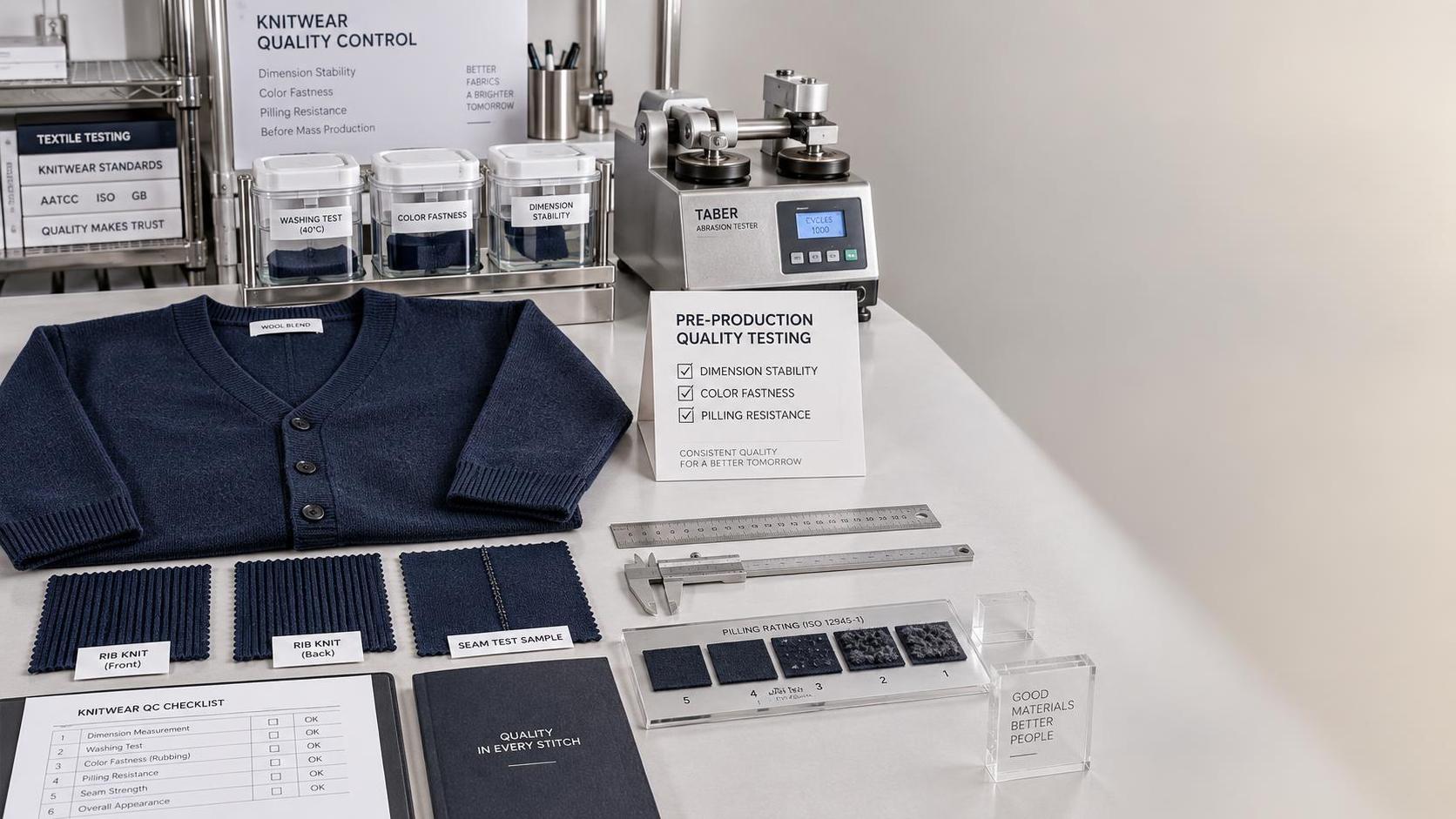
Private Label Knitwear Quality Control: Tests to Set Before Production Starts
Private label knitwear quality control guide: set pre-production tests for fiber content, shrinkage, colorfastness, pilling, seams, and compliance.
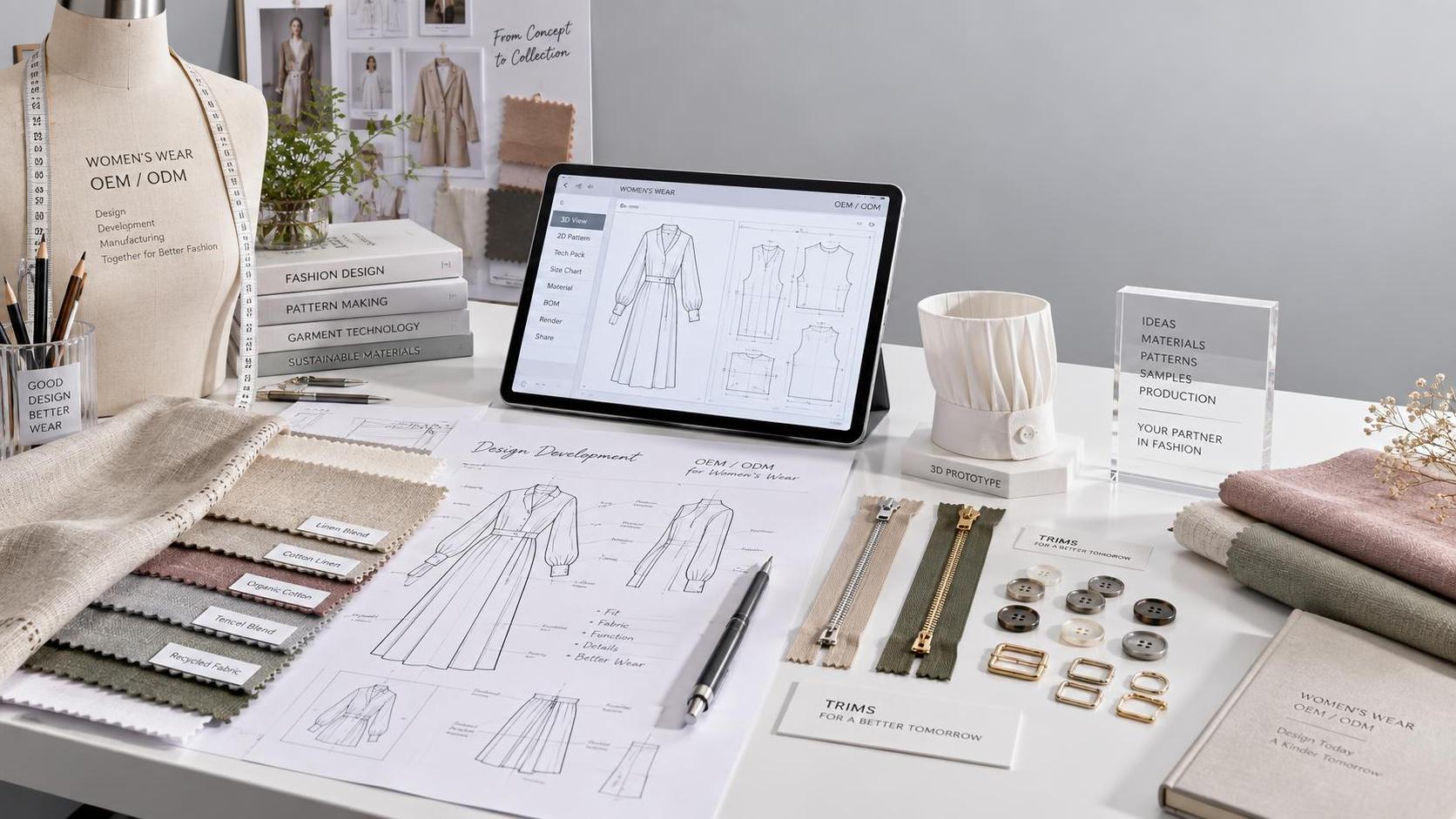
Do women's clothing OEM factories provide design development support for new collections?
Do women's clothing OEM factories offer design support for new collections? Discover how top-tier partners like Meiwuzhi integrate design into production—speeding up development, improving fit, and reducing revisions.
Do High-End Women’s Apparel Factories Accept Custom Pattern Making
Do high-end women's apparel factories accept custom pattern making? Yes—when fabric, fit, and sampling align. Learn what premium factories require and how to improve development success.

{item.title}
{item.description}
Please give us a message
Contact Us