
What to Do if Bulk Luxury Womenswear Arrives With Quality Issues
If you are wondering what to do if luxury women's wear quality is bad after receiving bulk order, the first step is to stay calm and act systematically. Quality issues in bulk luxury womenswear can affect your brand reputation, customer trust, and cash flow. This guide explains how to inspect the shipment, document defects, communicate with suppliers, and protect your business while resolving the problem quickly and professionally.
For boutiques, online sellers, importers, and multi-store apparel buyers, one poor shipment can disrupt a full season. In premium fashion, defects are rarely minor. A color mismatch, unstable sizing, poor stitching, or fabric inconsistency can trigger returns, discounting, and lost repeat orders within 7 to 30 days.
The good news is that most bulk order quality problems can be managed if you follow a structured process. In the high-end womenswear sector, speed matters, but documentation matters even more. The right response can help you secure rework, replacement, compensation, or better protection on future orders.
Why Bulk Luxury Womenswear Quality Problems Need Immediate Action
When buyers search for what to do if luxury women's wear quality is bad after receiving bulk order, the real concern is not only product quality. The larger issue is business risk. In fashion wholesale, delays of even 3 to 5 days can affect launches, influencer drops, live-selling calendars, and in-store display timing.
Luxury womenswear also has tighter tolerance than basic apparel. Customers paying for premium dresses, knitwear, blouses, or tailored sets expect clean finishing, balanced silhouettes, stable trims, and refined fabric hand feel. A 1 cm measurement deviation may be acceptable in some categories, but in fitted premium garments it can become a sell-through problem.
Common quality failures in premium women’s apparel
- Fabric shade variation between cartons or production lots
- Loose threads, skipped stitches, puckering, or seam slippage
- Inaccurate size grading across S, M, L, or numeric sizing
- Trim defects such as weak zippers, poor buttons, or uneven beading
- Labeling errors, wrong care tags, or missing branded packaging
- Odor, stains, pressing marks, or storage damage during shipping
What is at stake for buyers
If 10% to 20% of a bulk shipment is defective, the impact is usually broader than the defect ratio itself. Teams spend extra time on sorting, customer service, returns, quality explanations, and emergency sourcing. In high-margin fashion, markdown pressure can erase expected profit on the entire order, not just on the defective units.
For this reason, your first 24 to 48 hours after delivery are critical. You need to isolate inventory, verify the scale of the issue, and preserve all evidence before goods are mixed into active stock.
The First 48 Hours: A Practical Response Plan
If you need a direct answer to what to do if luxury women's wear quality is bad after receiving bulk order, begin with a controlled inspection protocol. Do not rush into emotional supplier discussions before you know the exact defect type, quantity, and commercial impact.
Step 1: Stop distribution immediately
Freeze receiving and prevent the shipment from entering retail or online fulfillment. Separate cartons by SKU, color, and size. Mark affected units with batch notes. If products are already partly distributed, identify how many units have moved and where they are located.
Step 2: Inspect by AQL-style sampling and full checks where needed
For small shipments, a 100% inspection may be practical. For larger quantities, use a sampling method first, then expand to full inspection if failure rates exceed your threshold. In premium apparel, many buyers set stricter internal standards than mass-market garments, especially for appearance defects.
The table below shows a simple field framework buyers can use when checking bulk luxury womenswear after receipt.
This framework helps buyers avoid vague complaints. Instead of saying the order is bad, you can state that 32 out of 120 dresses failed the waist tolerance, 18 units had zipper issues, and 11 units showed visible color variation under standard lighting.
Step 3: Record evidence in a supplier-usable format
Take date-stamped photos, close-up defect images, carton images, packing labels, and short videos. Use a spreadsheet to list SKU, size, carton number, defect type, quantity, and severity. If possible, compare the received item with the approved sample or production confirmation sample.
Your evidence package should be ready within 24 hours. That reduces back-and-forth and improves the chance of a commercial solution within 2 to 5 business days.
How to Classify Defects and Decide the Right Remedy
Not every problem requires the same response. When asking what to do if luxury women's wear quality is bad after receiving bulk order, buyers should first classify the issue into critical, major, and minor defects. This keeps discussions commercial and fact-based.
A practical 3-level defect system
- Critical defects: unsafe trims, broken needles found, severe contamination, or issues making the product unsellable.
- Major defects: visible sewing problems, incorrect sizing, serious shade variation, or functional trim failure.
- Minor defects: light pressing marks, small thread issues, or packaging inconsistencies that can be corrected quickly.
In luxury apparel, major defects often deserve almost the same urgency as critical ones because presentation and fit directly influence conversion rates. A blouse that looks acceptable in a warehouse may still fail on a retail rack or on camera during live selling.
Choosing between rework, replacement, discount, or return
The best remedy depends on defect ratio, sales urgency, repair feasibility, and freight cost. If defects affect less than 5% of units and can be fixed locally in 2 to 4 days, rework may be the fastest path. If sizing or color is fundamentally wrong, replacement is usually safer than repair.
Use the decision table below to align your response with actual apparel business conditions.
This approach reduces conflict and keeps negotiations practical. A supplier is more likely to cooperate when your request matches the technical reality of the order and the cost of correction.
How to Communicate With the Supplier Without Delaying the Solution
Once your inspection is complete, contact the supplier with a concise claim summary. Do not send only scattered photos in chat. Present a clear file package with order number, receipt date, affected styles, defect counts, proposed remedy, and requested response time, usually within 24 to 72 hours.
What your first supplier message should include
- PO number, shipment date, and received quantity
- Defect summary by style, size, and quantity
- Photo and video references linked to each issue
- Comparison with approved sample or tech pack where available
- Your requested solution and deadline for confirmation
Keep emotion out of the claim
Professional language works better than blame. If you state that 14 out of 80 jackets failed chest measurement by more than the agreed tolerance and 9 units had visible puckering at the armhole, the discussion stays evidence-based. That is far more effective than saying the whole order is unacceptable without detail.
Escalate based on contract and evidence
If the supplier delays, refer to agreed specifications, sample approvals, payment terms, and inspection clauses. If you paid through a trade assurance mechanism or documented purchase contract, use those channels early rather than waiting until the dispute becomes harder to prove after 10 to 15 days.
How Reliable Apparel Manufacturers Reduce Repeat Quality Issues
Long-term prevention matters as much as short-term recovery. In high-end women’s apparel, buyers benefit most from suppliers with integrated design and production coordination, stable factory networks, and visible showroom or sampling capabilities. These features make communication faster and quality standards easier to control.
Shenzhen Meiwuzhi Garment Co., Ltd. focuses on the production and sales of high-end women’s apparel. Its own factory handles design, pattern making, accessory production, knitting processing, and bulk garment production, while cooperating with more than ten factories across Dongguan, Zhongshan, Suzhou in Guangdong, and Suzhou in Jiangsu. For buyers, this kind of supply structure can support stronger process coordination across multiple production stages.
Why process visibility matters in premium womenswear
Luxury women’s fashion usually involves more complex fabrics, trims, drape requirements, and fit expectations than basic wholesale apparel. A supplier with in-house pattern making and accessory coordination can often identify risk points earlier, before they become expensive bulk defects.
Meiwuzhi also operates a showroom in Nanshan District, Shenzhen, used to display the latest styles and in-stock items for retail stores and online wholesalers. For B2B buyers, showroom review and sample confirmation can reduce misunderstandings on silhouette, fabric feel, trim quality, and styling details before a larger commitment is placed.
Signs a supplier may be better prepared for quality control
- Clear pre-production sample approval and size spec confirmation
- Defined workmanship standards for seams, trims, labels, and pressing
- Inline inspection during production, not only final inspection
- Ability to support both rework decisions and replacement planning quickly
- Stable cooperation across multiple factories without losing process control
For wholesalers serving many stores or online partners, supplier stability is especially important. Meiwuzhi’s broad operating experience, including more than 12 years on the Alibaba platform and a nationwide network of cooperative stores and online clients, reflects a business model built around ongoing apparel distribution rather than one-off transactions. For buyers, that often means stronger motivation to maintain quality consistency and resolve issues in a practical way.
How to Prevent the Same Problem on Future Bulk Orders
The most effective answer to what to do if luxury women's wear quality is bad after receiving bulk order is to improve prevention on the next order. A good supplier relationship should produce not only a settlement, but also a tighter quality system for future runs.
Build a 5-point pre-bulk control checklist
- Approve a sealed sample with exact fabric, trims, color, and measurements
- Confirm tolerance by category, such as ±0.5 cm to ±1 cm for key points
- Define packaging, labeling, and barcode requirements before production
- Schedule inline and final inspection milestones for larger orders
- Agree in writing on claim handling, rework cost, and replacement timing
Use category-specific standards
Different products need different controls. A satin dress needs stronger checks on snagging, shade variation, and seam puckering. A knit set needs recovery, gauge consistency, and shape stability. A blazer needs shoulder balance, lining finish, and sleeve pitch control. One generic checklist is usually not enough for premium categories.
Plan for timing, not only price
Many bulk order problems happen because buyers compress sampling and production into an unrealistic calendar. Leaving only 3 to 5 days for pre-production approval in complex luxury womenswear increases defect risk. A more realistic structure is sample confirmation, pre-production review, inline check, and final inspection across a 2 to 6 week cycle depending on quantity and style complexity.
FAQ for Buyers Handling Defective Bulk Women’s Apparel
Should I pay the remaining balance before the issue is settled?
If the contract allows, it is usually better to document the issue first and hold discussion on the unsettled balance until a remedy is agreed. Always follow your actual purchase terms and local legal requirements.
What if only part of the shipment is defective?
Separate good stock from bad stock and quantify both clearly. Partial claims are often easier to settle because they allow the supplier to propose credit, local repair, or partial replacement without disputing the entire order.
How much defect is too much in luxury womenswear?
There is no single number for every buyer, but premium apparel generally requires stricter tolerance than basic wholesale garments. The right threshold depends on style, price point, sales channel, and customer expectation.
Can local rework damage the brand image?
Yes, if rework is poorly managed. Only choose local repair when the defect is limited, the repair method is controlled, and the final product can still meet your intended premium presentation standard.
When bulk luxury womenswear arrives with quality issues, the smartest response is structured, documented, and commercially realistic. Inspect fast, classify defects clearly, communicate with evidence, and choose a remedy based on defect severity, timing, and sell-through impact.
For buyers sourcing high-end women’s apparel, working with a supplier that understands design, pattern making, accessories, knitting, and bulk production coordination can reduce both quality risk and resolution time. If you are evaluating future suppliers or need a more controlled womenswear production workflow, Shenzhen Meiwuzhi Garment Co., Ltd. offers a business model aligned with premium apparel sourcing and wholesale distribution needs.
To discuss high-end women’s apparel sourcing, sample confirmation, or bulk order quality control support, contact us now to get a tailored solution and learn more about reliable production options for your next order.
Previous:No more content
Next:No more content

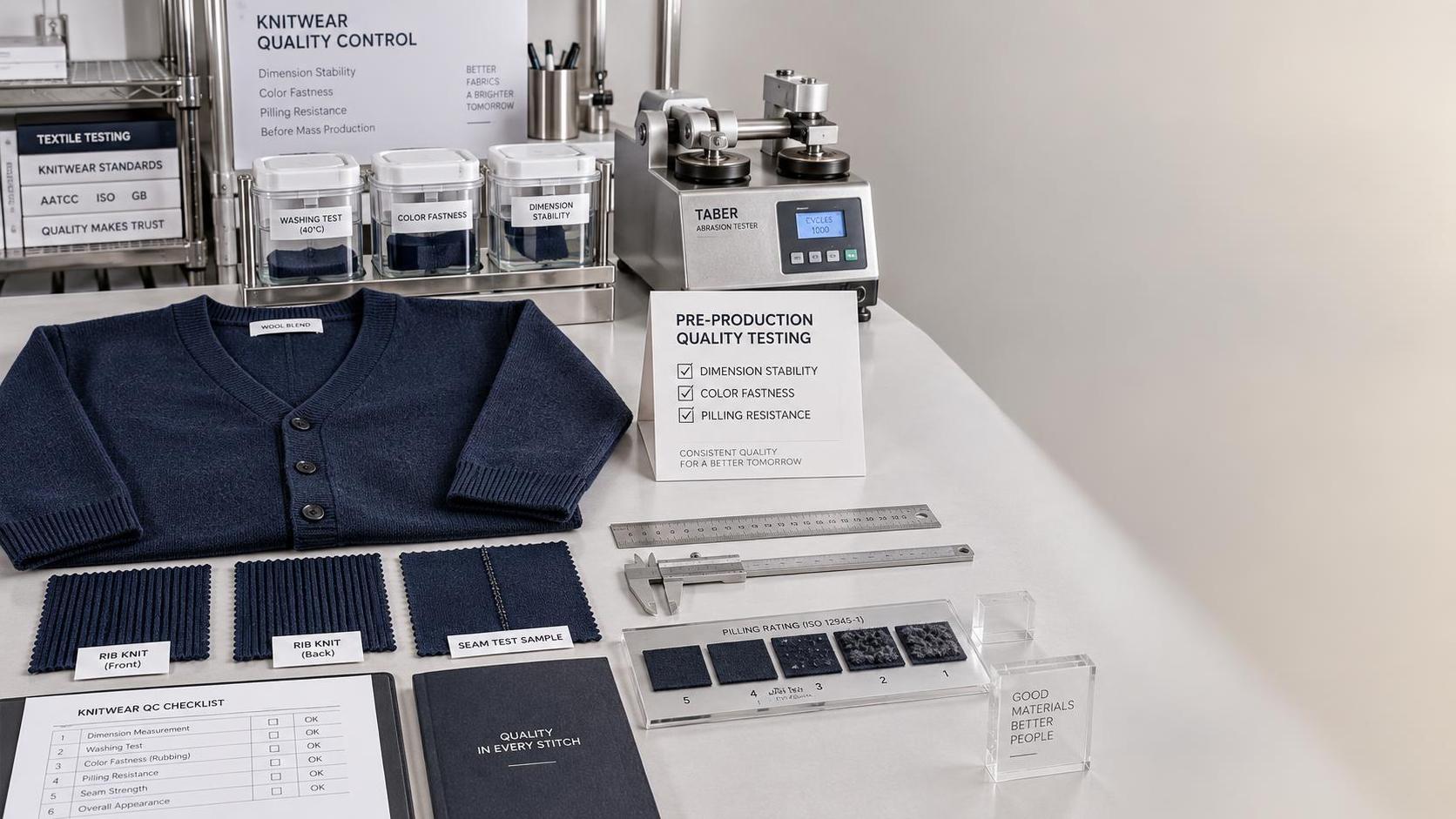
Private Label Knitwear Quality Control: Tests to Set Before Production Starts
Private label knitwear quality control guide: set pre-production tests for fiber content, shrinkage, colorfastness, pilling, seams, and compliance.
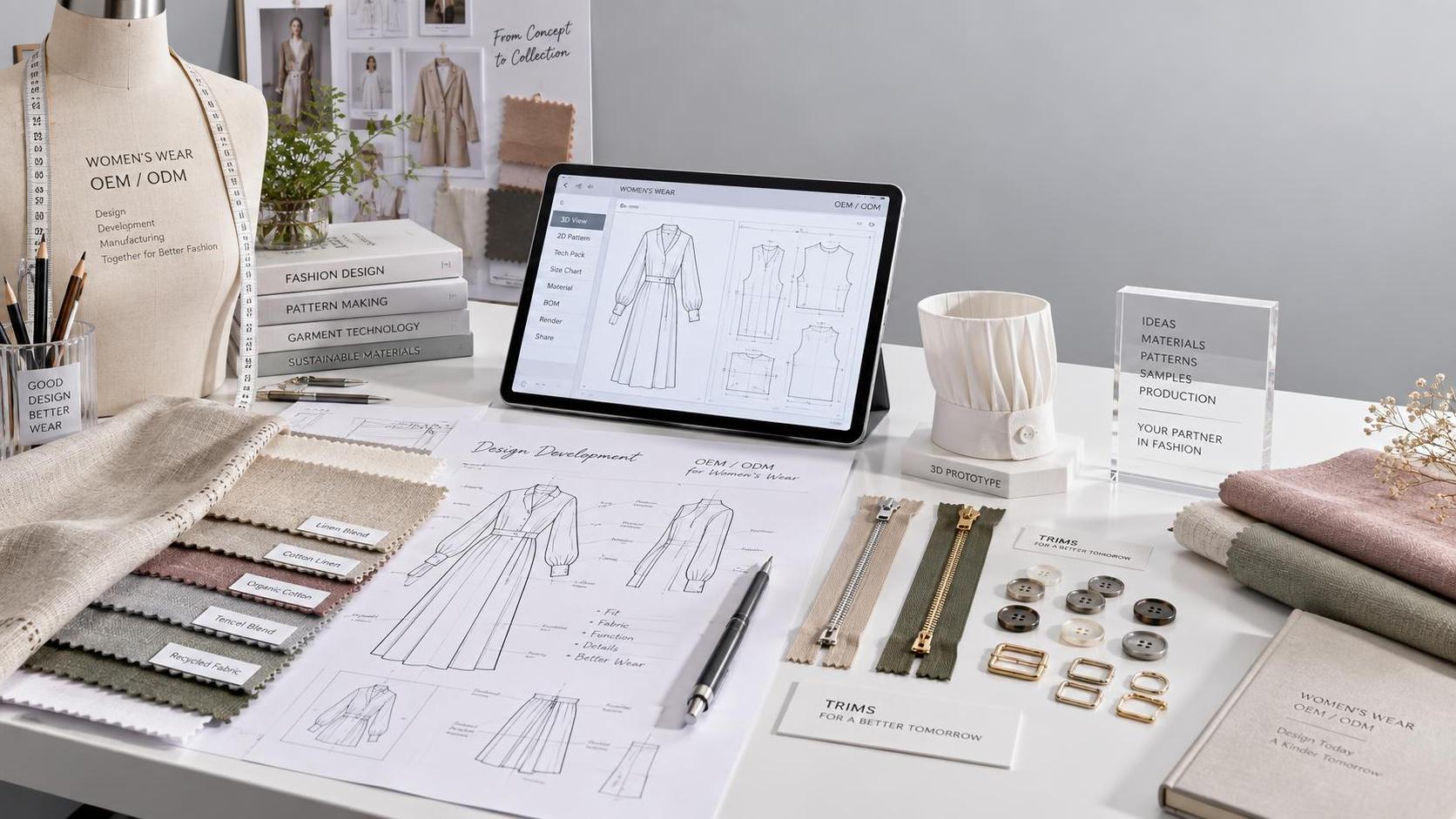
Do women's clothing OEM factories provide design development support for new collections?
Do women's clothing OEM factories offer design support for new collections? Discover how top-tier partners like Meiwuzhi integrate design into production—speeding up development, improving fit, and reducing revisions.
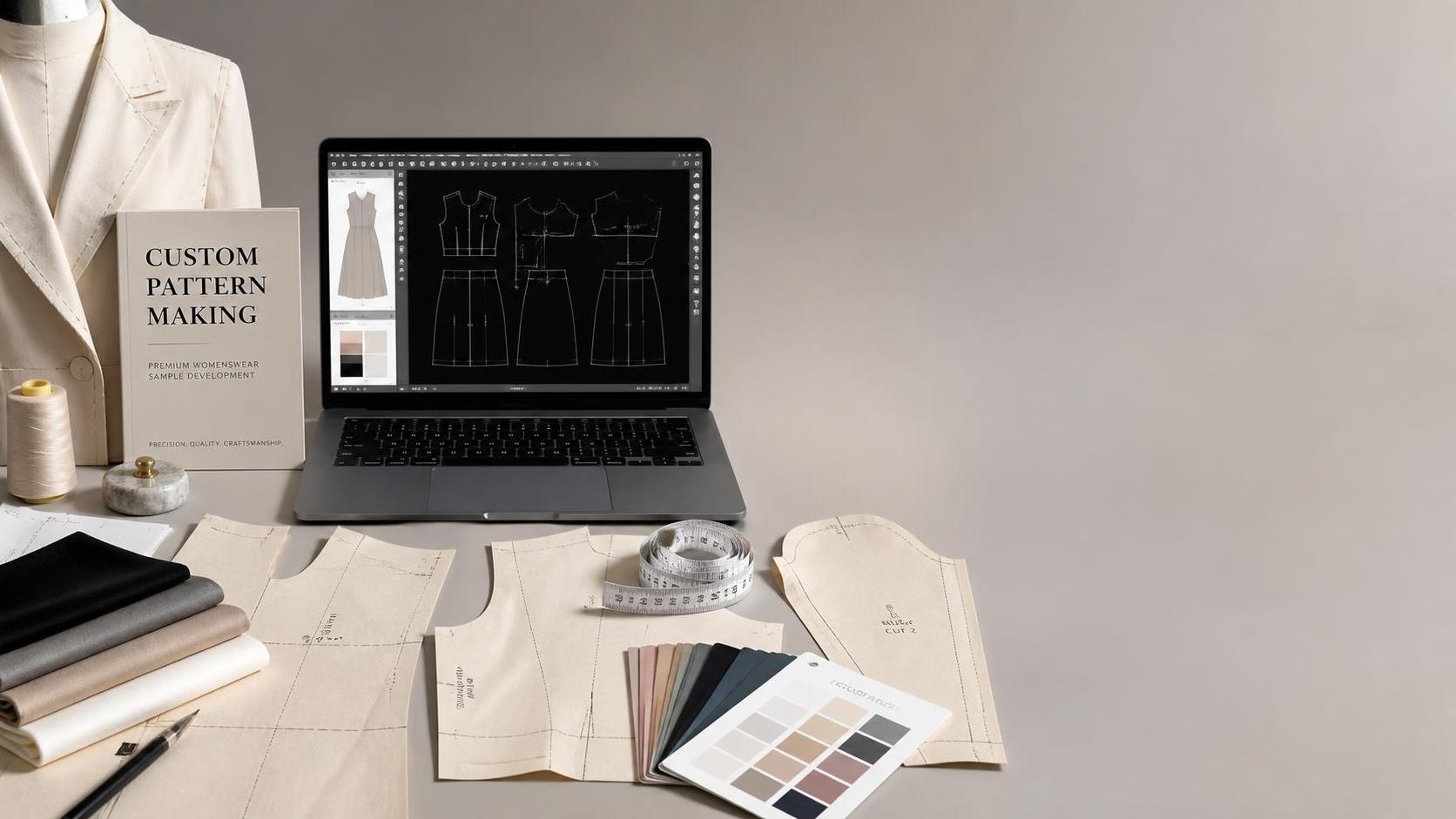
Do High-End Women’s Apparel Factories Accept Custom Pattern Making
Do high-end women's apparel factories accept custom pattern making? Yes—when fabric, fit, and sampling align. Learn what premium factories require and how to improve development success.

{item.title}
{item.description}
Please give us a message
Contact Us